Choosing a wind turbine for a camper or RV means balancing portability, ease of use, safety, and the ability to generate meaningful power in varied wind conditions. This guide reviews five starter-to-mid range options that suit camping journeys, tailgates, or off-grid adventures. Each product is evaluated on durability, ease of setup, and energy potential in real-world camping environments.
Summary of Selected Products
| Product | Brand | Approx. Power Capability | Best For | Note |
|---|---|---|---|---|
| Thames & Kosmos Wind Power V4.0 STEM Experiment Kit | Thames & Kosmos | Small to moderate (3 ft turbine) | Educational setup and demonstration of wind energy | Weatherproof for outdoor use; portable assembly |
| OSKOPWRC 800W Wind Turbine Generator Kit | OSKOPWRC | ~800W | Off-grid camping, RVs, homes | Low start-up wind speed; durable fiberglass nylon blades |
| HUIZHITENGDA 220V Wind Turbine Kit | HUIZHITENGDA | High (suitable for hybrid systems) | RVs and marine setups | Long service life with high-strength blades |
| Mdxtog 3KW Wind Turbine Kit | Mdxtog | 3 kW | Higher energy needs, stationary setups | Vertical axis design; versatile voltage options |
| QINIZX Small Wind Turbine Generator Kit | QINIZX | Low power (model-scale) | DIY learning and demonstrations | Requires fan or blower for testing; not natural wind dependent |
The following sections detail five products most relevant to camping and mobile use. Each section provides a concise overview, key features, and practical considerations for camper setups.
Thames & Kosmos Wind Power V4.0
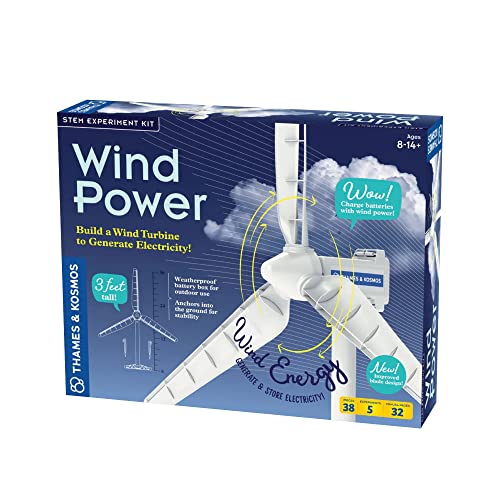
The Thames & Kosmos Wind Power V4.0 STEM kit features a real, working 3-foot wind turbine designed to demonstrate how wind can generate electricity. It emphasizes durable, single-piece blade construction for improved aerodynamics and durability. Students and hobbyists can charge a battery and power a small model car, making it a practical, hands-on learning tool that doubles as a compact, outdoor-ready turbine for demonstrations at a campsite or park.
Key considerations for campers:
- Travel-friendly size and weatherproof design support outdoor use.
- Educational components help explain wind energy basics while providing real power output for small devices.
- Assembly requires some space and careful handling in windy conditions.
OSKOPWRC 800W Wind Turbine Generator Kit

This kit delivers a robust 800W output and is designed for off-grid use, including RVs and small homes. Its six-blade configuration supports efficient wind capture, while the reinforced fiberglass nylon construction provides weather resistance. Start-up wind is relatively low, making it more practical in variable camping environments where wind may be inconsistent but present.
Practical camping notes:
- Best used in steady breezes to maximize output without excessive noise or vibrations.
- Durability under outdoor conditions reduces maintenance needs while traveling.
- Due to higher power capability, ensure proper mounting and safety precautions on uneven terrains or trailer roofs.
HUIZHITENGDA 220V Wind Turbine Kit

The HUIZHITENGDA kit targets higher-capacity scenarios such as RVs and marine settings, offering a durable design with a coreless permanent magnet generator and three high-strength blades. Aerodynamically designed spiral blades and low-vibration operation contribute to stable electricity generation. It is built for all-weather performance and is suitable for hybrid solar-wind setups in campers who require more reliable power in exposed camping locations.
Important camper considerations:
- Higher voltage and power capacity can support larger loads, but installation must be secure and weatherproof.
- Quiet operation and low vibration improve the campsite experience.
- Weight and mounting hardware should be factored into roof or rack installations.
Mdxtog 3KW Wind Turbine Kit

The Mdxtog 3KW wind turbine is a more powerful option that may be suitable for campers with higher energy use or for those who want to supplement a larger off-grid system. It uses a three-phase AC permanent magnet instrument and a high-power tracking microprocessor to optimize current and voltage. Its blade arc design helps maximize wind resource utilization, and aluminum alloy blades offer corrosion resistance and wind endurance. This unit is best for campers planning longer stays in areas with dependable wind or those expanding a portable power system into a more substantial setup.
Considerations for camper use:
- Higher power output requires a solid mounting solution and professional wiring planning.
- Weight and portability decrease compared to smaller kits; evaluate vehicle payload and storage space.
- System efficiency depends on wind consistency and integration with battery storage.
QX Electronics 1PC Micro Wind Turbine

The QX Electronics micro wind turbine is a compact option designed to produce low-voltage AC power. It’s suitable for educational projects or as a lightweight demonstration unit on a campsite. While not intended to be a primary power source, it can illustrate wind-to-electrical energy conversion in a portable, low-power context, especially when paired with a small battery or display device.
Camping and educational insights:
- Ideal for demonstrations or as a supplementary indicator of wind activity at a site.
- Low power output means limited practical charging capabilities for campers.
- Simple installation and testing make it a good starter project for hobbyists.
SWONVI Micro Wind Turbines (2 Pack)

The SWONVI two-pack offers micro wind turbine modules suitable for DIY projects and classroom-style demonstrations. They feature 0.55 W output and a 5.5 V rating, with 100mm diameter blades. These micro turbines can be useful for campers who want to experiment with wind power in a controlled setting or as part of a small, educational weather station on a campsite.
Useful camper tips:
- Compact size makes them easy to transport and store in a travel kit.
- Low output means practical charging is limited to small devices or as a teaching aid.
- DIY assembly provides a hands-on understanding of turbine mechanics.
Buying Guide: Key Purchase Considerations for Camper Wind Turbines
When selecting a wind turbine for camping, several factors influence performance and practicality. Consider the following perspectives to determine the best fit for your setup.
- Portability and weight: Choose lighter, compact units if you travel with limited storage space or need to mount on a vehicle roof rack or tent frame. Larger turbines may require more substantial mounting and can add weight to your rig.
- Power needs and voltage: Campers typically require lower-voltage, battery-charging capability. Assess whether the turbine can charge common camping battery banks or power inverters without overwhelming your system.
- Wind conditions and start-up speed: A turbine that starts spinning at lower wind speeds will be more effective in the variable wind conditions often encountered at campsites. Consider blades designed for low wind start-up and stability in gusty environments.
- Durability and weather resistance: Outdoor use demands weatherproof components, corrosion resistance, and robust mounting. Fiberglass nylon blades and sealed housings are common for off-grid setups.
- Noise and vibration: Quiet operation is important for camping comfort. Look for designs with low vibration and smooth rotation to minimize campsite disturbance.
- Ease of installation and maintenance: Simple, tool-light assembly with a clear warranty and straightforward maintenance reduces on-site setup time and upkeep during trips.
- System integration: If you plan to combine wind with solar, ensure compatibility with existing battery storage, charge controllers, and inverters. Some kits are designed for hybrid solar-wind setups.
- Safety and reliability: Ensure mounting hardware, guy lines, and electrical connections are secure and compliant with local safety guidelines, especially on elevated racks or vehicle roofs.
Bottom line for campers: select a turbine that matches your anticipated wind environment, storage capacity, and vehicle setup. For light, educational demonstrations or occasional charging, smaller kits or micro turbines may suffice. For campers who regularly encounter reliable wind and want meaningful charging potential, mid-range options with robust mounting solutions and higher power outputs are worth considering.