Choosing the right vacuum chamber is essential for resin degassing, silicone work, and other precision projects. This guide highlights five reliable options from trusted brands, focusing on capacity, lid type, pump power, and observed performance. Each product below is selected for American hobbyists and professionals who need consistent bubble-free results, clear observation, and lasting durability. Explore practical details, observing how lid material and chamber size influence your workflow, maintenance, and outcomes.
| Product | Chamber Capacity | Lid Type | Key Advantage |
|---|---|---|---|
| BACOENG 3 Gallon Vacuum Chamber Kit | 3 Gallon | Acrylic | Clear observation, durable silicone gasket |
| BACOENG 3 Gallon Tempered Glass Lid Vacuum Chamber | 3 Gallon | Tempered Glass | High visibility with glass lid |
| VEVOR 5 Gallon Vacuum Chamber | 5 Gallon | Glass lid, stainless steel | Wide interior for larger batches |
| VIVOHOME 1.5 Gallon Vacuum Chamber | 1.5 Gallon | Clear acrylic lid | Compact, versatile for silicone and resins |
| BACOENG 1.5 Gallon Vacuum Chamber | 1.5 Gallon | Acrylic lid | Durable chamber with easy observation |
BACOENG 3 Gallon Vacuum Chamber Kit With Acrylic Lid

The BACOENG 3 Gallon Vacuum Chamber Kit combines a compact chamber with an integrated 3.6 CFM vacuum pump. Built around a stainless steel container and a square silicone gasket, this kit supports resin degassing while offering reliable seating against air leakage. The acrylic lid provides clear visibility during defoaming, allowing users to monitor progress and adjust flow in real time. Suitable for resin and silicone applications, though not recommended for wood stabilization or lure creation.
BACOENG 3 Gallon Tempered Glass Lid Vacuum Chamber
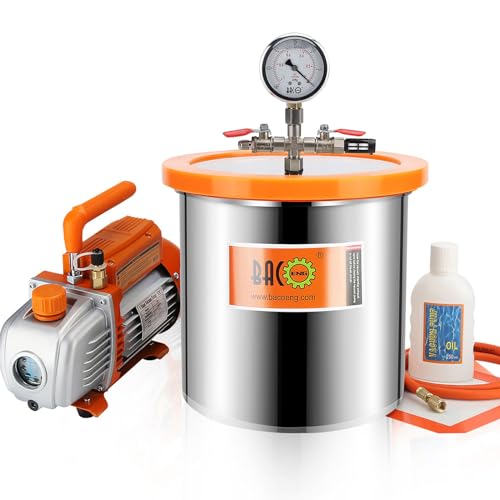
This BACOENG model features a 3.6CFM pump and a 3-gallon stainless steel chamber with a tempered glass lid. The glass lid offers 92% light transmittance for easy process monitoring, while the silicone gasket promises durability for repeated use. The kit includes a robust vacuum hose and gauges that read 0-30 inHg, making it a practical choice for resin work, silicone degassing, and other debubbling tasks.
VEVOR 5 Gallon Vacuum Chamber

The VEVOR 5 Gallon chamber offers a spacious interior ideal for larger resin batches or multi-material projects. It uses a corrosion-resistant stainless steel body and comes with a high-transparency lid that supports close scrutiny of degassing. The system can reach vacuum levels up to -29 inHg, and the design emphasizes airtight seals with threaded connections to minimize leaks over long runs. This option suits users handling volatile substances or requiring extended degassing timelines.
VIVOHOME 1.5 Gallon Vacuum Chamber
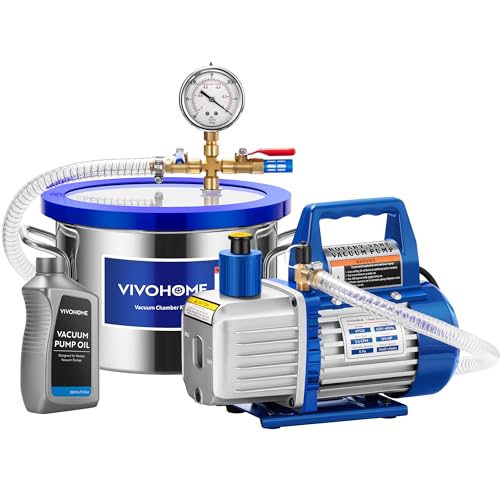
The VIVOHOME 1.5 Gallon kit pairs a 3.5 CFM copper-motor pump with a 1.5-gallon stainless steel chamber. It features a 0.5-inch ACME and 1/4″ SAE fittings, plus an anti-backflow design and an oil-exhaust filter for cleaner operation. The 0.59-inch thick acrylic lid enables clear observation of the degassing process, while a gasket and O-ring ensure a strong airtight seal. This setup is well-suited for small-batch resin, silicone, and epoxy work where space is at a premium.
BACOENG 1.5 Gallon Vacuum Chamber

The 1.5-gallon BACOENG chamber presents a durable stainless steel interior with a silicone gasket and an acrylic lid. At 0-30 inHg measuring range, it supports efficient degassing for resins and silicones. The kit emphasizes long-term seal integrity and repeatable performance, with gasket longevity rated for thousands of uses. Its compact footprint makes it a flexible choice for hobbyists who want a reliable unit without occupying extra bench space.
Buying Guide
Capacity matters: Larger chambers enable bigger batches but require more powerful pumps and careful heat management. For resin degassing, a -29 to -30 inHg capability is common; verify the vacuum pump’s CFM and the chamber’s seal quality to minimize leaks over time.
Lid material influences visibility and durability. Acrylic lids offer clear observation at a lower cost, while tempered glass and high-grade acrylic provide better scratch resistance and long-term clarity. Consider whether you routinely watch the process or need glare-free visibility for precise timing.
Chamber material and gasket design impact longevity. Stainless steel interiors resist corrosion, especially when working with solvents or volatile substances. Silicone gaskets rated for thousands of uses reduce maintenance and improve airtightness across cycles.
Connection hardware matters. A robust 5-foot reinforced vacuum hose and 1/4″ SAE connections ensure compatibility with standard pumps and reduce clogging or leaks. Threaded seals and integrated gauges simplify setup and monitoring during long degassing runs.
Observability and workflow efficiency are practical considerations. A large view window or high-transparency lid helps gauge foaming activity and speed adjustments. If you run repeated cycles, an airtight seal with reliable gasket quality minimizes downtime for re-sealing between uses.
Price and size balance. While larger units offer便 more capacity, consider whether your typical projects require frequent full-batch degassing or mostly small, quick runs. Choose a model whose footprint fits your workspace while still meeting maximum batch needs.
Maintenance and safety. Ensure the pump has overheat protection and a built-in filtration path to reduce debris in the exhaust. Regularly check seals, lids, and hoses for wear, and replace worn parts promptly to maintain performance.
Additional perspectives include choosing a chamber with a visible lid for process monitoring, a model with a proven gasket life cycle for heavy use, and a design that accommodates both resin degassing and silicone or polyurethane projects. For hobbyists focusing on small-batch tasks, a 1.5 to 2 gallon size with a clear acrylic lid can provide a balance of visibility, stability, and affordability. For larger projects or professional use, a 5 gallon system with glass lid and reinforced seals better supports continuous operation with fewer interruptions.