Answering the search intent for sheet metal rolling equipment, this guide highlights five reliable machines that cover slip rolling, bending, and shearing tasks. The top picks are suited for DIY makers, HVAC installers, automotive hobbyists, and small fabrication shops seeking compact, multi‑function units. The table below compares key attributes to help you decide which model fits your projects and space.
| Product | Best For | Key Benefit | Limitations |
|---|---|---|---|
| MechMaxx 52-inch 3-in-1 MMCB5220 | All‑in‑one versatility | Shear, brake, and slip roll in one | 20 gauge capacity varies by operation |
| KAKA INDUSTRIAL 40″ 3‑in‑1 | Room‑saving poweruser | Back gauge and segment fingers for complex bends | Heavier and takes more space than 12″ models |
| VEVOR Slip Roller 12.6″ | Compact bench setup | Detachable rollers and triple grooves | Smaller width limits large panels |
| VEVOR Slip Roll Machine 24″ | Mid‑size production | Upgraded wear‑resistant rollers and detaching shaft | Requires bench mounting |
| KAKA INDUSTRIAL Slip Roll Machine 36″ | Industrial capability | High width and 16 gauge capacity | Heavy and space‑intensive |
Buyer note: when choosing, consider sheet thickness, required bend radius, material breadth, and whether you need cutting or back‑gauge capabilities in addition to rolling. The following sections review five relevant options in detail, with practical guidance for each use case.
MechMaxx 52-Inch 3‑in‑1 MMCB5220

The MMCB5220 combines shear, brake, and slip roll into a single 52-inch machine. It is designed for bending, cutting, and rolling sheet metal, making it a compact, space‑saving option for small shops. The slip roll handles 20 gauge mild steel with a minimum roll diameter near 1.96 inches and includes wire grooves for forming small round stock, enabling cylinders, cones, and arcs. The shear cuts up to 20 gauge with a 52″ maximum length, with a reversible upper blade and a fixed lower blade for varied materials.
Best for: shops needing an all‑in‑one metalworking station that reduces tool swaps and footprint. Suitable for fabrication tasks requiring both rolling and controlled cuts. Avoid if you only need heavy plate bending beyond 20 gauge.
Caution: the 52″ wide setup can require substantial bench or stand planning; ensure stable mounting for accurate bends.
KAKA INDUSTRIAL 40″ 3‑in‑1
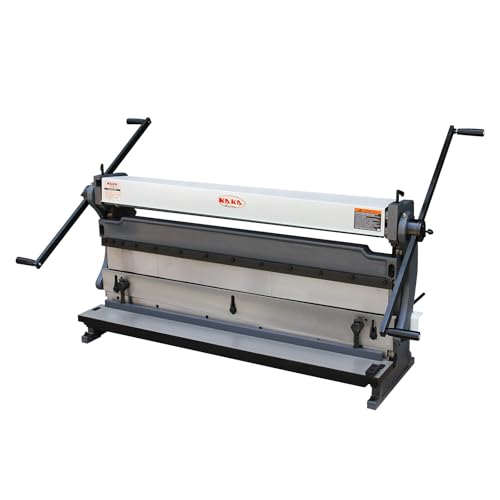
This 40‑inch 3‑in‑1 unit combines a heavy‑duty 20‑gauge shear, a 90° brake, and a slip roll with a 90″ minimum diameter. A back gauge and removable segment fingers support complex box and pan bends without swapping tools. With precision ground blades and a robust 429‑lb cast iron frame, it aims to deliver durable, repeatable cuts and bends for HVAC, automotive, and industrial fabrication tasks.
Best for: workshops needing a compact, power‑savvy machine that performs essential bending, shearing, and rolling with repeatable accuracy. Better for users who regularly produce boxed sections or need quick back‑gauge setups. Choose this if you want a single unit replacing three devices; avoid if you lack space for its footprint.
Caution: the 40″ width plus heavy frame may demand secure mounting and adequate floor space in smaller rooms.
VEVOR Slip Roller 12.6″

This compact slip roller uses precision ground steel rollers to deliver strong, stable rolling for up to 320 mm wide sheets and up to 1.0 mm thick, suitable for low‑carbon steel and other soft metals. The upper axis detaches for easy removal of finished workpieces, and the two detachable rollers provide three groove sizes (5/32″, 15/64″, 5/16″) for flexibility with small round stock.
Best for: bench‑top users who need a portable, low‑profile rolling option with straightforward setup. Better if you value quick part removal and multiple groove options. Avoid if you work with thicker stock or wider panels.
Caution: as a compact unit, capacity is lower than larger machines; ensure your project tolerance aligns with its 0.8–1.0 mm range.
VEVOR Slip Roll Machine 24″ (16 Gauge)
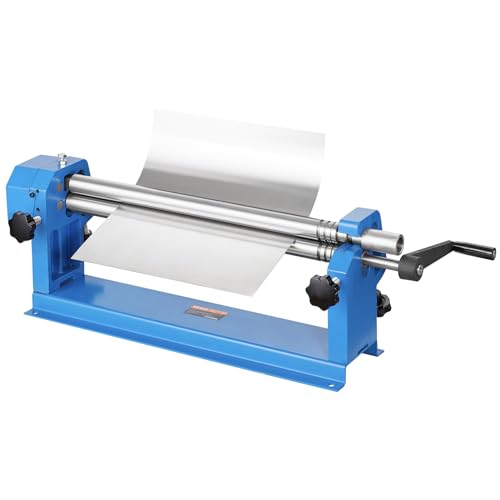
This 24″ slip roll increases working width while maintaining a 16 gauge capacity, making it suitable for mid‑size panels. It features upgraded roller surface finishing for smoother operation and reduced scoring, detachable rollers for easier part access, and improved gear alignment for smoother motion. The design targets efficient, reliable production in metal shops and hobby spaces alike.
Best for: projects that require wider panels than ultra‑compact units but without moving to industrial scale equipment. Better for mixed metal work on mid‑sized sheets. Avoid if you routinely bend thicker materials above 16 gauge.
Caution: its upgrade relies on proper bench mounting; ensure the mounting surface is solid to prevent chatter during forming.
KAKA INDUSTRIAL Slip Roll Machine 36″

This 36″ slip roll machine handles up to 16 gauge steel and offers a wide working width suitable for larger panels. The cast iron construction, three wire grooves, and a 50 mm roller diameter support steady curvature and better form control for HVAC and fabrication tasks. A swing‑out upper roll simplifies removal of finished pieces.
Best for: shops needing greater width and robust rolling for larger projects. Better for consistent rhythm in sheet metal shaping. Avoid if you only handle small parts or lack sufficient shop space for a 36″ machine.
Caution: heavier weight and broader footprint require reliable floor support and proper safety clearances in the workspace.
Buying Guide
What should you consider when selecting a sheet metal rolling equipment?
- Material thickness and type: Gauge compatibility determines whether the unit can handle mild steel, aluminum, copper, or brass. If you frequently work with thicker sheets, prioritize higher gauge capacity.
- Working width: Narrow units excel in tight spaces; wider machines process larger panels but need more space and a sturdy stand.
- Multi‑function vs dedicated: 3‑in‑1 machines save space and money for basic needs; dedicated rollers may deliver finer control for complex curves.
- Back gauge and segment fingers: Features such as back gauges improve repeatability for batch work; removable fingers support complex bends without tool swaps.
- Roller quality and grooves: Three grooves (or more) enable shaping different stock circles. Check roller diameter and surface finish for wear resistance and smoothness.
- Mounting and stability: Ensure the machine can be securely mounted on a bench or stand to prevent drift during forming.
- Maintenance and material compatibility: Cast iron frames offer rigidity; stainless or coated rollers reduce wear in aggressive environments.
Frequently Asked Questions
- What gauge is best for a slip roll machine? Most hobby and light‑industrial units handle up to 16–20 gauge steel; higher gauge capacity is available in larger machines.
- Can I use these machines for aluminum and copper? Yes, many models support aluminum and copper in addition to steel; verify the specific gauge and material recommendations in the product data.
- Do I need a back gauge? A back gauge improves repeatability for batch jobs, especially when producing multiple identical bends.
- Are 3‑in‑1 machines worth it? For space‑constrained shops, 3‑in‑1 units offer versatility and cost savings; for dedicated, high‑precision work, a single‑purpose roller may be preferable.
- What safety steps are essential? Always wear eye protection, secure the machine to a stable surface, and keep hands clear of moving rollers during operation.
- How do I choose between a 12.6″ and a 24″ roller? The wider machine handles larger panels; choose based on the largest sheet you plan to roll and available workspace.