Self-aligning ball bearings are ideal for machines with shafts that may misalign during operation. They accommodate angular misalignment, reduce friction, and offer reliable life in compact spaces. This guide highlights five well-suited options for hobbyists, small shops, and light-industrial applications. Each pick is chosen for its balance of size, load capacity, and open or double-row design suitable for simple retrofits or new builds.
Buyer snapshot: The top picks here are best for compact setups where misalignment is possible, such as DIY projects, small gearboxes, and conveyor or motor assemblies. If you need high precision and ABEC1 accuracy, look for double-row, chrome steel versions with open types. The table below summarizes key details for quick comparison.
| Product | Inner/Outer Size | Material | Type | Best For |
|---|---|---|---|---|
| uxcell 1206 Self-Aligning | 30mm × 62mm × 16mm | Chrome steel | Double row, open | Compact assemblies with moderate loads |
| HARFINGTON 1096 | 6mm × 15mm × 5mm | Chrome steel | Double row, open | Small transmissions and tight spaces |
| ATN 1206 | 30mm × 62mm × 16mm | Unknown (steel common) | Double row | General purpose double-row bearing |
| 10Pcs 108 Self-Aligning | 8mm × 22mm × 7mm | Chrome steel | Open, compact | Motors, conveyors in tight spaces |
| Yuecoom 1201 | Not specified (Double row) | High carbon chromium steel | Open, double-row | Gearboxes and industrial machinery |
uxcell 1206 Self-Aligning Ball Bearings

Size: 1206 — inner diameter 30 mm, outer diameter 62 mm, thickness 16 mm. Chrome steel balls provide good hardness, load capacity, and wear resistance. Cage is stamping steel. Features double-row, open type with ABEC1 accuracy and normal clearance.
Best for: DIY projects and small assemblies where a reliable, open-bore, double-row bearing is needed. It balances ease of replacement with solid endurance in moderate-load applications.
Limitation: ABEC1 accuracy indicates standard tolerance; for ultra-precision tasks, consider higher-accuracy bearings.
HARFINGTON 1096 Self-Aligning Ball Bearings

Size: 1096 — inner diameter 6 mm, outer diameter 15 mm, thickness 5 mm. Chrome steel balls with good surface quality and wear resistance; cage is stamping steel. Double-row, open type with ABEC1 accuracy and normal clearance.
Best for: Small transmissions and compact gear setups where space is at a premium and a double-row bearing is advantageous.
Limitation: Very small size means lower load capacity; avoid high-load scenarios.
ATN 1206 30mm x 62mm x 16mm Self Aligning Bearing

Type: 1206 Self Aligning Bearing, Size: 30 mm × 62 mm × 16 mm. Double-row configuration supports moderate radial loads with allowance for angular misalignment, making it suitable for general-purpose use in small machinery and gearboxes.
Best for: General-purpose applications where a reliable, ready-to-fit double-row bearing is required without special tolerance needs.
Limitation: Manufacturer specifics on tolerance aren’t provided; verify fit in critical assemblies.
Generic 108 Self-Aligning Bearings 10Pcs
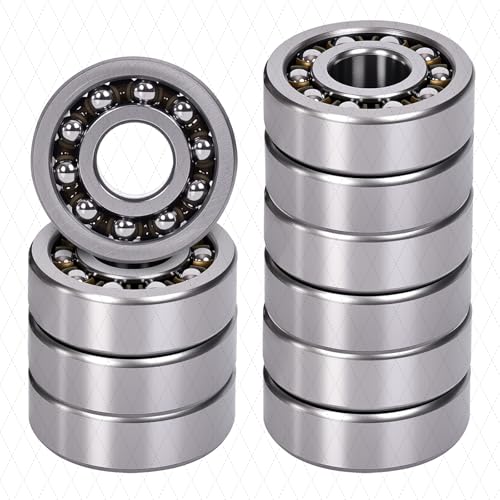
Size: 108 — inner diameter 8 mm, outer diameter 22 mm, thickness 7 mm. Chrome steel offers good hardness and wear resistance; suitable for compact equipment. Dynamic radial load about 2652 N; static radial load about 560 N.
Best for: Small motors and mini conveyors where space constraints demand compact, reliable double-row bearings with decent load handling.
Limitation: The data doesn’t specify ABEC grade; for high-precision tasks, check tight tolerances.
ATN 1205 Self Aligning Bearings

Size: 1205 — inner diameter 25 mm, outer diameter 52 mm, thickness 15 mm. Double-row configuration suitable for moderate-load equipment. Open type for easy lubrication and inspection.
Best for: Gearboxes and robotic joints that need stable radial support with some angular tolerance.
Limitation: Slightly larger than 1206 variants; ensure compatible housing size before purchase.
Yuecoom 1201 Double Row Bearings
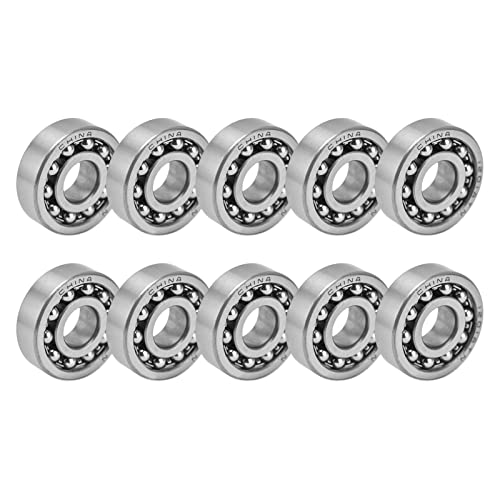
Size: 1201 — double-row, high carbon chromium steel. Features high-speed operation, glazed outer surface for waterproofing and dust prevention, and long service life. Designed for industrial machinery and conveyors.
Best for: Industrial machinery and gearboxes requiring robust double-row support and resistance to dust and moisture.
Limitation: Outer dimensions and exact tolerances aren’t listed; confirm compatibility for precision assemblies.
Buying Guide
Key considerations when selecting a self-aligning ball bearing:
- Size compatibility: Match inner and outer diameters to your shaft and housing; verify thickness for mounting clearance.
- Row configuration: Double-row designs provide higher load capacity and stability; single-row options may be smaller but adequate for lighter tasks.
- Material quality: Chrome steel offers good hardness and wear resistance; high carbon chromium steel variants may improve durability in dusty or demanding environments.
- Open vs closed: Open bearings are easier to lubricate and inspect but can be exposed to contaminants; consider shields if dust is prevalent.
- AXIAL and radial loads: Check dynamic and static radial load ratings to ensure longevity under expected loads.
- ABEC/precision: ABEC1 indicates standard precision. For high-precision needs, select higher tolerances or look for printed tolerances from the seller.
- Environmental suitability: Consider moisture, dust, and temperature exposure; choose materials and seals accordingly.
- Replacement strategy: Choose common sizes for easier replacements in mixed-tool setups.
FAQs
- What is a self-aligning ball bearing used for?
It accommodates shaft misalignment and reduces friction in rotating assemblies, commonly in gearboxes, conveyors, and small motors.
- What does ABEC1 mean in these bearings?
ABEC1 indicates standard precision; tolerances are suitable for general purpose use but not high-precision applications.
- Should I choose a double-row or single-row bearing?
Double-row bearings offer higher load capacity and better stability, making them preferable for most misalignment scenarios.
- Are chrome steel bearings good for outdoor or dusty environments?
Chrome steel performs well under normal conditions but consider dust seals or shields in dirty environments.
- How do I verify fit for a motor or gearbox?
Compare the bearing’s inner/outer diameters and thickness with your shaft and housing dimensions; ensure mounting clearances allow lubrication and heat dissipation.
- Can these bearings be assembled without special tools?
Many open-type bearings can be pressed into housings with standard bearing installation tools or manual presses; consult the housing manufacturer guidelines for torque and fit.