Choosing reliable secondary containers for chemical storage is essential for safety, spill prevention, and regulatory compliance. This guide highlights five durable, user-friendly options that meet common safety standards and work well in laboratories, workshops, and maintenance settings. Each entry includes key features to help you compare performance, compatibility, and ease of use.
Summary of Selected Products
| Product | Brand | Capacity | Key Feature |
|---|---|---|---|
| UN/DOT Tight Head Container | Foxx Life Sciences | 20L (5 gal) | UN 3H1, HDPE, blow mold tech |
| EZWaste Containment Tray | Foxx Life Sciences | 14L | Spill containment for carboys |
| 16.9oz Reagent Bottles (2 Pcs) | ASEVAT | 16.9 oz | HDPE, tight seal, narrow mouth |
| 16 oz Dilution Bottle (1 Pack) | Chemical Guys | 16 oz | Heavy-duty sprayer, chemical-resistant |
| 16 oz Dilution Bottle (3 Pack) | Chemical Guys | 16 oz each | Stock sprayer heads, clear bottle |
Foxx Life Sciences UN/DOT Tight Head Container

The Foxx Life Sciences UN/DOT Tight Head Container is designed for shipping, transport, storage, and waste handling. Made from HDPE and meeting UN 3H1 standards, it provides a robust secondary containment option for hazardous liquids. Its 70mm cap supports a secure seal, while blow mold technology contributes to durable construction and consistent performance in challenging environments. This container is suitable for chemicals requiring compliance with UN packaging guidelines and can serve as a reliable secondary container in many industrial settings.
Foxx Life Sciences EZwaste Containment Tray

The EZwaste Containment Tray is designed as a spill containment solution for 1L–10L carboys and other DOT waste containers. Constructed from HDPE, this tray offers a large containment capacity (14L) with a rugged, durable build suitable for lab and facility use. It helps prevent leaks and reduces clean-up time, making it a practical secondary containment option in environments where multiple containers are managed.
ASEVAT 16.9oz Reagent Bottles (2 Pcs)
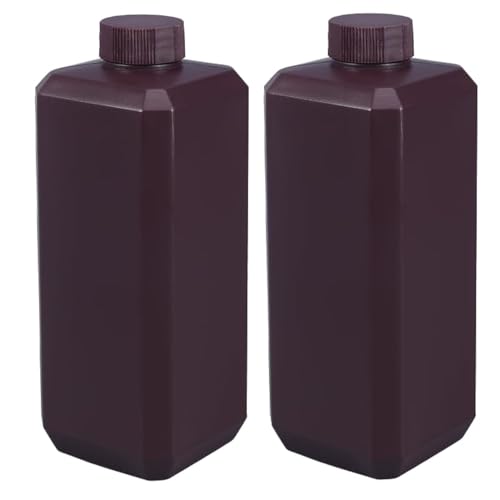
These 16.9-ounce square HDPE reagent bottles emphasize durability and leak prevention. They feature an inner-ring cap designed for a tight seal, reducing evaporation and exposure to external elements. The square design allows space-efficient storage and stable stacking, while the narrow mouth aids precise pouring and minimizes spills. The bottles are suitable for acids, alkalis, and a range of laboratory chemicals, making them a versatile secondary containment option for labs and workshops.
Chemical Guys ACC151 Secondary Dilution Bottle
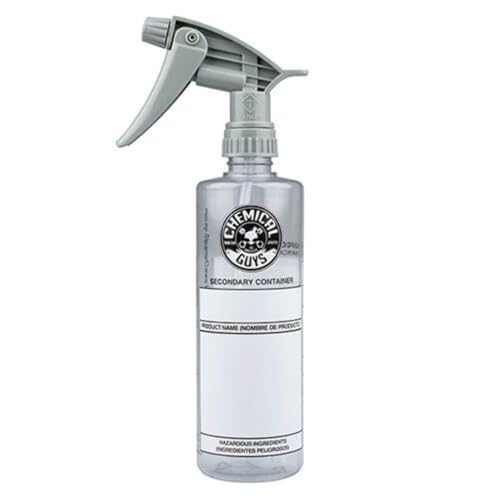
The ACC151 16 oz dilution bottle comes with a heavy-duty sprayer designed for high-output dispensing. It’s chemical-resistant, making it suitable for detailing products and other solvents. Each stroke delivers about 1.3 ml of product, offering efficient usage and reduced waste. The bottle’s clear body facilitates quick visual checks of remaining contents, and its robust construction is designed for repeated, demanding use in automotive and industrial environments.
ASEVAT 8.4oz Reagent Bottles (2 Pcs)

These 8.4-ounce square HDPE reagent bottles provide similar benefits to the 16.9-ounce version, including tight inner-ring caps for leak resistance and a space-saving shape. The range is well-suited for smaller-volume chemicals and routine sampling. The bottles share a durable construction designed to withstand chemical exposure and temperature variations, supporting reliable secondary containment across various workflows.
Chemical Guys ACC137 Secondary Dilution Bottle (3 Pack)

This 3-pack of 16 oz dilution bottles includes stock sprayer heads and clear bottles for easy product identification and level checking. Like the ACC151, these bottles are designed for chemical resistance and reliable dispensing, making them suitable for routine detailing products and other chemical applications. The clear body helps monitor usage, while the stock sprayers provide consistent spray performance across multiple units.
Buying Guide
Key considerations when selecting secondary containers for chemical storage include:
- Compliance and safety: Confirm the container meets applicable standards (e.g., UN packaging, DOT classifications) and is compatible with the chemicals you store. Look for corrosion resistance and leak-proof seals to minimize spills.
- Material and chemical compatibility: HDPE is widely used for chemical storage due to its balance of strength and chemical resistance. Ensure the material tolerates the specific solvents, acids, and bases you handle.
- Capacity and form factor: Choose containers with appropriate volumes and shapes that fit your storage space. Consider stackability and ease of transport for daily workflows.
- Seal integrity and closures: Tight-seal lids and inner-ring caps reduce evaporation and contamination. Verify caps aren’t prone to cross-threading or leakage under movement.
- Dispensing features: For dilution bottles, evaluate sprayer type, spray output, and reliability. For storage bottles, assess neck size and pour control to minimize spills.
- Durability and handling: Look for impact-resistant construction, especially for secondary containment trays and spill basins used in busy labs or workshops.
- Maintenance: Reusable containers should be easy to clean, resistant to residue buildup, and compatible with a range of chemicals to extend service life.
- Cost-per-use: Consider long-term value, including reusability, seal reliability, and the likelihood of reducing spills and waste.
In practice, selecting a combination of UN/DOT compliant primary secondary containers, spill containment trays, and reliable dilution bottles can improve safety and reduce incident risk. For environments with high turnover of hazardous chemicals, prioritize robust trays and containers with proven leak resistance and clear labeling capabilities to ensure quick identification and compliance.