Looking for a reliable screen print flash dryer to cure inks quickly and consistently? This guide highlights five top options that balance power, adjustability, and portability for small to mid-sized screen-printing operations. Each choice is well-suited to different workloads and skill levels, from beginners setting up a home shop to shops expanding color runs. Below, compare capabilities, ideal use cases, and any notable limitations so you can choose confidently.
Summary table of selected products
| Product | Best for | Drying Box | Power |
|---|---|---|---|
| EQCOTWEA 110V 1600W Flash Dryer | Multi-color setups, versatile height adjustability | 16×16 in | 1600W |
| TIANIUSEEN Screen Printing Flash Dryer | Small business novices, compact footprint | 15.7×15.7 in | 1600W |
| TECHTONGDA 16×16 Inch Flash Dryer | Reliable all-around performance | 16×16 in | 1600W |
| HayWHNKN 16×16 Inch Silk Screen Dryer | Mobility and ease of movement | 16×16 in | 1600W |
| KD-TEC 20×24 Inch IR Flash Dryer | Higher throughput, larger curing area | 20×24 in | 6000W |
EQCOTWEA 110V 1600W Flash Dryer
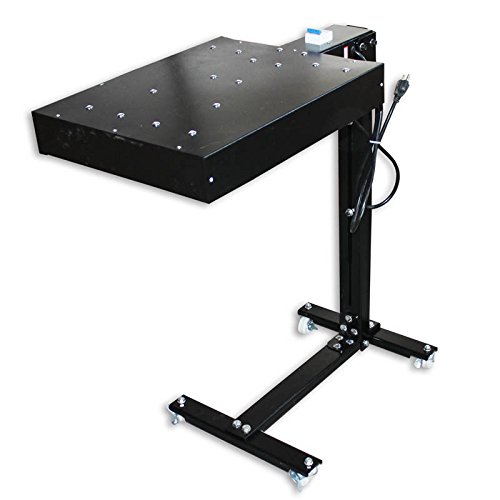
- Features: 1600W stainless steel heating tubes; heat-reflecting aluminum plate for even curing; 14.5 inch vertical adjustment; curing temperature range 320°F to 356°F.
This model is best for shops with intermediate color runs and multi-color presses that require a reliable, adjustable height dryer. The 16×16 inch drying surface supports a range of garment sizes in one pass, and the long tube life helps maintain consistent output over time. A noted limitation is the need to fine-tune height and distance to maintain precise temps for delicate inks.
TIANIUSEEN Screen Printing Flash Dryer

- Features: 15.7×15.7 inch drying box; 360-degree rotation; 110V, 1600W; stainless steel spiral heating tube; over 10,000 hours of expected life.
Best for small businesses or novices seeking a compact, easy-to-use option. The rotating capability adds flexibility during setup. A potential drawback is that the smaller footprint may limit very large designs, requiring multiple passes for bigger sheets.
TECHTONGDA 16×16 Inch Flash Dryer

- Features: 1600W heating tubes; aluminum plate improves thermal efficiency; powder-coated housing; movable universal locking casters; easy assembly.
Choose this for a dependable, mid-range option with sturdy construction and straightforward setup. The aluminum heat plate helps with even distribution, but users should ensure the caster setup remains locked during operation to avoid drift on busy benches.
HayWHNKN 16×16 Inch Silk Screen Dryer

- Features: 16×16 inch drying area; four universal locking casters; nickel-plated steel mesh platform; 1600W heating tubes; powder-coated housing.
Best for teams prioritizing mobility and easy placement around a small workshop. The locking casters help keep the unit stable once positioned. A limitation is that the platform height adjustability is modest, which may affect very tall or unusually placed prints.
KD-TEC US Stock 20×24 Inch Flash Dryer

- Features: 20×24 inch heating area; 220V; 6000W; infrared (IR) flash dryer with sensor and dual fan; large curing capacity.
Best for higher throughput and larger designs, or scenarios where a bigger curing surface is required between color layers. The higher power and larger size can demand more space and consistent electrical setup. Avoid this if your workspace needs a compact, low-power option or if electrical capacity is limited.
Buying Guide: How to Choose a Screen Print Flash Dryer
- Do you need a compact unit for small runs or a larger setup for high-throughput production? Size and heating area influence throughput and fit in your workspace.
- What power level suits your environment? Most models run on 110V with 1600W, while larger units like 6000W require appropriate electrical capacity.
- Is adjustable height important for ink types and platen sizes? Height adjustability helps maintain consistent temperatures across different print sizes.
- Do you prioritize mobility or a fixed installation? Units with locking casters are easier to move; consider stability features for busy workstations.
- How critical is temperature control accuracy? Look for a model with a precise temperature range and a stable heat source to avoid scorching or under-curing.
- What is your ink system and curing requirements? Inks with longer cure times or higher solid content may benefit from a dryer with more uniform heat distribution.
- What is your budget and space? Larger, more powerful dryers deliver faster curing but take more space and might exceed budget for hobby setups.
FAQ
- What should I consider first when selecting a flash dryer? The drying surface size, power, and temperature range are the most critical factors for consistent curing.
- Can I use a flash dryer for different fabrics? Yes, most flash dryers are suitable for common textiles, but check material-specific curing temperatures for best results.
- Is 110V sufficient for most businesses? Yes for smaller operations, but larger shops may require higher power or dedicated circuits.
- Do flash dryers require special maintenance? Regularly inspect heating elements, clean dust from the housing, and ensure casters and height adjustments work smoothly.
- Which dryer is best for beginners? A compact 15.7×15.7 to 16×16 inch unit with straightforward assembly and 110V power is usually beginner-friendly.
- Can I upgrade later? Yes, many models offer upgrade paths by expanding work surface, adding more exposure units, or integrating with multi-color presses.