Finding the right sand for aluminum casting is crucial for achieving fine detail, smooth surfaces, and reliable reuse. The sands below are selected for their ultra-fine grain, oil-free formulations, and compatibility with both precious and non-precious metals. Whether you’re crafting jewelry, statues, coins, or functional components, these options offer consistent detail and repeatable results across multiple pours.
| Product | Brand | Notes |
|---|---|---|
| 10 Lb Petrobond Casting Sand Ultra-Fine (190 Mesh) | PMC Supplies LLC | High detail, versatile metal compatibility |
| 7 Lbs Premium Ultra-Fine 400 Mesh Oil-Free Casting Sand | holama | Oil-free for precise handling and detailed replicas |
| 14 Lbs Premium Ultra-Fine 400 Mesh Oil-Free Casting Sand | holama | Oil-free, reusable, excellent surface finish |
| 6 LBs Natural Casting Sand Ultra-Fine (400 Mesh) | BoldWay | Natural sand, high silica content, reusable |
| 5 Lb Petrobond Casting Sand Ultra-Fine (190 Mesh) | PMC Supplies LLC | Compact option with near die-cast finish |
Across these picks, you’ll find both ready-to-use blends and reusable molding sands tailored for precision metal casting. Each product supports a range of metals—from gold and silver to aluminum and bronze—helping you reproduce intricate shapes with minimal defects. Consider compatibility with your casting process, desired surface finish, and whether you need oil-free formulations for safer handling or maximum detail retention in reuse cycles.
10 Lb Petrobond Casting Sand Ultra-Fine (190 Mesh)

Petrobond clay-based foundry sands are designed to deliver detailed castings close to die-cast finishes. This 10-pound bag emphasizes ultra-fine particles (190 mesh) that help reproduce fine jewelry, antiques, and coin-like items with high fidelity. The blend supports a wide metal range, including gold, silver, pewter, aluminum, zinc, and more, making it a versatile choice for mixed-metal projects. The clay base can aid in achieving smooth surfaces with minimal post-processing after casting.
7 Lbs Premium Ultra-Fine 400 Mesh Oil-Free Casting Sand
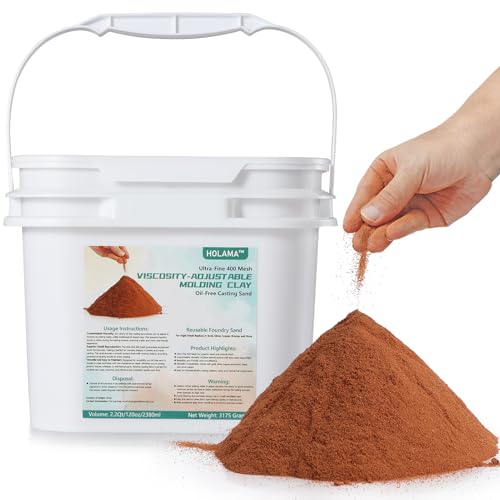
This oil-free sand is engineered for experienced users who need precise handling. The 400-mesh grain size yields exceptionally fine detail, suitable for intricate jewelry and high-detail replicas. It’s compatible with a wide range of metals, including gold, silver, pewter, aluminum, copper, brass, and bronze, giving you flexibility for both precious and non-precious casting. Proper technique—binder and water balance, as well as steam management—is emphasized to ensure safe, successful pours with minimal defects.
14 Lbs Premium Ultra-Fine 400 Mesh Oil-Free Casting Sand

This larger bag extends the oil-free, ultra-fine 400-mesh offering for higher-volume projects. The sand’s fine grain supports extremely smooth surfaces and sharp detail in jewelry casting and other delicate parts. It remains compatible with multiple metals, including gold, silver, pewter, aluminum, zinc, copper, brass, and bronze. The oil-free formulation facilitates cleaner handling and reduces potential residue on finished pieces, making it a practical option for repeated pours.
6 LBs Natural Casting Sand Ultra-Fine (400 Mesh)

BoldWay’s natural casting sand uses a high SiO2 content to deliver durability, fire resistance, and faithful mold detail reproduction. The 400-mesh grain is fine enough to capture fine features, while the natural composition supports reuse in a variety of casting scenarios, including sand and precision casting. It’s compatible with precious and non-precious metals—gold, silver, copper, zinc, brass, aluminum, and bronze—making it a versatile option for jewelry and small decor items. The sand’s viscosity characteristics support easy clay-like shaping and casting control.
5 Lb Petrobond Casting Sand Ultra-Fine (190 Mesh)
This compact Petrobond option mirrors the 10-lb variant’s ultra-fine 190-mesh clay-based foundry sand. It provides highly detailed castings with a near die-cast finish and broad metal compatibility. Ideal for smaller runs or pilot projects, the 5-pound bag is suitable for jewelry, antiques, statues, and coin-like items where precision matters. The blend supports a broad spectrum of metals and helps achieve consistent pours with detailed surfaces.
Teton-Bond Petrobond Fine (130 Mesh) Foundry Sand

Teton-Bond offers a Petrobond clay-based foundry sand designed for high-detail work. The 130-mesh variant focuses on maximizing detail retention while maintaining compatibility with both precious and non-precious metals. It’s suitable for decorative and functional items that require near-die-cast finishes, with an emphasis on reliable replication of complex shapes and textures across multiple pours.
Buying Guide: Key Considerations For Aluminum Casting Sands
Choosing the right sand depends on process details, end-use requirements, and workforce experience. Consider grain size, oil content, and the ability to reuse the sand. Ultra-fine meshes (such as 400 mesh) generally yield higher detail, but may require stricter process control to prevent defects from steam or binder inconsistencies. Oil-free formulations reduce surface contamination and simplify cleanup, but demand precise moisture levels to avoid poor fill or porosity. Clay-based Petrobond blends commonly deliver excellent surface finishes but may require longer prep times and material handling discipline.
Important factors to compare include:
- Grain size and distribution: Finer meshes capture details well but can collapse if not properly bound; coarser grades offer robustness for larger features.
- Binder and moisture control: Some sands require specific binders or water adjustments to achieve the right viscosity and pour characteristics.
- Metal compatibility: Ensure the sand supports the full range of metals you cast, especially if you work with both precious and non-precious metals.
- Reusability: Reusable sands save cost but may need cleaning and conditioning between pours to sustain performance.
- Handling and safety: Oil-free sands reduce residue but may demand careful ventilation and protective measures during mixing and pouring.
- Surface finish: For jewelry and intricate parts, sand that minimizes deflection and surface defects is preferred, even if it costs more per batch.
In practice, you can mix and match sands to cover different project scales. A higher-volume run might use a larger, reusable oil-free blend, while a precision jewelry piece benefits from ultra-fine, clay-based or Petrobond options. Always run small test pours to calibrate binder ratios, moisture, and pouring temperatures before committing to a full production batch.