Answering the need for reliable, efficient compressed air, rotary screw air compressors are designed for steady output, energy savings, and reduced maintenance. This guide highlights five top options suited for workshops, small factories, and professional garages. Best for: shop owners needing consistent airflow; manufacturers seeking scalable capacity; technicians requiring compact, easy-to-install units.
Summary table of selected products:
| Product | Air Flow (CFM) | Max Pressure (psi) | Voltage / Phase | |
|---|---|---|---|---|
| 10HP/7.5kW Variable Speed Rotary Screw (DCYL) | 38 | 116 | 230V / 1ph | 30 |
| 208-230V Universal Variable Frequency Rotary Screw (HPDAVV) | 39 | 115 | 230V / 1ph or 3ph | — |
| 180L Rotary Screw, 4.5KW (Generic) | — | 145 | 220V / 380V | 48 |
| DAVV Rotary Screw, 20HP | 81 | 115 | 208-230V / 1ph or 3ph | — |
| 7.5KW All-in-One Rotary Screw with Dryer (DCYL) | 39 | 150 | 230V / 3ph | 80 |
10HP/7.5kW Variable Speed Rotary Screw With 30 Gallon Tank

This DCYL model uses an inverter-driven screw design to match air demand in real time. Best for shops needing energy efficiency with variable workloads. It features a 30-gallon tank, soft-start operation, and stable pressure control at up to 116 psi. The unit is optimized for single-phase 230V operation and provides 38 CFM at full output. Choose this if you run intermittent tools alongside heavier air demands.
Who this is best for: small to medium workshops seeking flexible power without a large footprint. Limitation: Single-phase operation may limit performance in high-demand, continuous-duty environments if starting near full capacity.
208-230V Universal Variable Frequency Rotary Screw, 10HP

This HPDAVV unit supports both single-phase and three-phase inputs, offering 39 CFM at 115 psi. Its variable-speed drive reduces energy use by adjusting motor speed to match demand. It’s well-suited for environments with fluctuating air needs, such as chemical processing or light manufacturing. Best for: operations that want flexible voltage use and lower running costs over peak demand periods.
Best for: sites needing a single system that can adapt to changing power availability; avoid if you require a pure fixed-capacity compressor for constant high-demand cycles.
180L Rotary Screw Air Compressor, 4.5KW
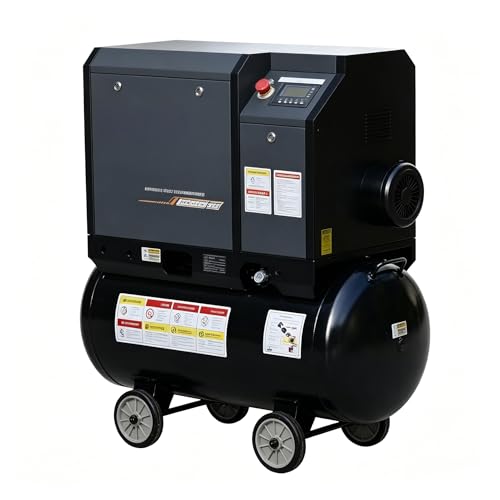
Generic’s oil-injected rotary screw design emphasizes continuous duty performance for garages, workshops, and auto service bays. With a 145 psi rating and a substantial 48-gallon tank, it can power impact wrenches, paint sprayers, and tires for extended periods. Best for: heavy-duty maintenance shops that need sustained airflow with a straightforward setup. Caution: frame mounting and electrical configuration should align with local codes; verify available power supply before installation.
DAVV Rotary Screw, 20HP
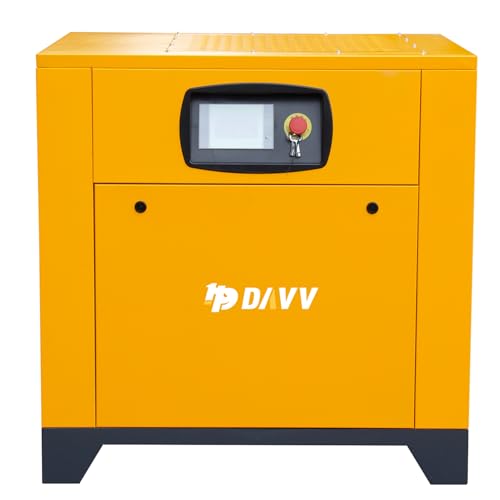
This 20 HP variable-speed unit supports 81 CFM at 115 psi and offers a built-in oil separator plus a PLC for scheduling. Its robust controller and automation features make it a fit for mid-to-large industrial setups where precise air delivery and process consistency matter. Best for: manufacturing lines with variable demand; better for: facilities needing programmable operation and long-term efficiency. Limitations: higher upfront cost and more complex installation compared to smaller units.
DCYL All-in-One Rotary Screw With Dryer, 80 Gallon Tank
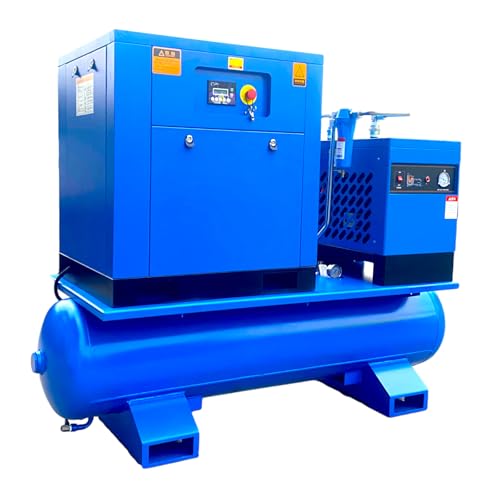
This DCYL model integrates a refrigerated air dryer and a large 80-gallon ASME tank, aligning with environments that require dry, clean air for sensitive downstream tools. The unit is fixed-phase, three-phase operation with 150 psi maximum pressure and a 39 CFM output. Best for: paint booths, tire plants, or automotive shops needing consistently dry air and a ready-to-use system. Limitation: all-in-one configurations can be larger and heavier, requiring solid foundational support.
Buying Guide
What to consider when buying a rotary screw air compressor
Key factors include air flow (CFM), maximum pressure (psi), voltage and phase, and whether the unit is fixed-speed or variable-speed. Variable-speed drives adapt to demand, saving energy but often at higher upfront cost. Tank size matters for storage and surge capacity, while integrated dryers improve air quality for sensitive tools.
Fixed vs. variable speed: which is right for you?
Choose fixed-speed for simple, predictable operation in steady-demand environments. Choose variable-speed when air needs swing, such as mixed tool usage or variable production cycles.
Single-phase vs. three-phase power
Single-phase units are easier to install in small shops but may limit peak output. Three-phase models typically deliver higher efficiency and smoother operation for larger workloads. If your facility lacks three-phase power, plan electrical upgrades or select a model rated for 1ph.
Dry air and filtration considerations
For painting, tire inflation, or precision tasks, dry air reduces moisture-related issues. A refrigerated dryer, as seen in some all-in-one units, minimizes post-process condensation and extends tool life.
Maintenance and installation
Look for units with accessible filters and oil change intervals. Easy installation reduces downtime, especially for professional shops that rely on continuous operation. Consider after-sales support and the availability of spare parts in your region.
Safety and compliance
Ensure the unit complies with local electrical codes and that mounting and ventilation meet safety standards. Heavier machines require sturdy framing and proper anchoring.
FAQ
- What is the advantage of a variable-speed rotary screw compressor? It adjusts motor speed to match demand, saving energy and reducing wear during partial loads.
- Is a dryer necessary with a rotary screw compressor? A dryer is beneficial when dry air is required for downstream equipment or coatings, reducing moisture-related issues.
- Can I run a three-phase unit on a single-phase supply? Some models support single-phase and three-phase operation, but others require a dedicated three-phase supply or a phase converter. Check the spec sheet.
- What size tank do I need? Larger tanks help handle brief surge demands and stabilize output at high flow, but require more space and weight considerations.
- How important is air quality for tools? Very important; clean, dry air prolongs tool life and improves finish quality in painting and spraying tasks.
- What maintenance is essential? Regular oil changes, filter replacements, and moisture drain checks are key to long-term performance.