When evaluating liquids for specific gravity, a precise pycnometer is essential. This article highlights five top-rated pycnometers and gravity cups widely used in density experiments, coatings, paints, and laboratory testing. Each entry includes key features to help you compare accuracy, capacity, and ease of cleaning. Use this guide to select a reliable pycnometer that matches your testing temperature, liquid types, and measurement standards.
| Product | Brand | Capacity | Key Benefit |
|---|---|---|---|
| EISCO Pycnometer, Calibrated, 10 mL | EISCO | 10 mL | Calibrated at 20°C for precise density measurements |
| 37 mL Specific Gravity Cup, Stainless Steel | Generic | 37 mL | Durable stainless steel with easy filling and cleaning |
| High Precision Stainless Steel Specific Gravity Cup, 100 mL | TOSYUWIR | 100 mL | Large capacity for bulk testing and rapid readings |
| YUCHENGTECH 100 mL Specific Gravity Cup | YUCHENGTECH | 100 mL | Accurate, low-noise measurement with corrosion-resistant steel |
| Kimble Serialized Specific Gravity Pycnometer Bottles, 10 mL | Kimble | 10 mL | Serialized design for traceability |
EISCO Pycnometer, Calibrated, 10 mL

The 10 mL pycnometer from EISCO is calibrated at 20°C, enabling precise density measurements for liquids with well-known densities, such as water. This borosilicate 3.3 glass bottle features a flat bottom and a perforated stopper, designed for accurate determination of specific gravity by weighing the contained volume accurately. It is suitable for density experiments and general laboratory use where compact capacity is advantageous.
37 mL Specific Gravity Cup, Stainless Steel

This 37 mL stainless steel gravity cup offers a practical option for testing liquids with moderate volumes. Features include a cylindrical container for easy filling and cleaning, plus a tight cover with an exhaust vent for controlled removal of excess liquid. Regular cleaning and dry conditions before testing are recommended to maintain measurement accuracy.
High Precision Stainless Steel Specific Gravity Cup, 100 mL
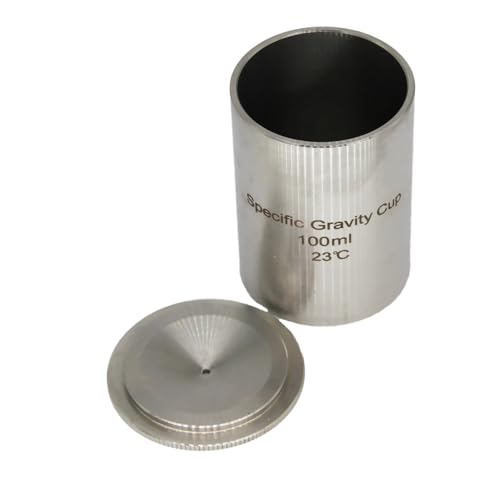
This 100 mL gravity cup from TOSYUWIR is designed for rapid and accurate density measurements of coatings, pastes, and similar liquids. The larger capacity reduces refill frequency and supports efficient testing workflows. It emphasizes a straightforward approach to determining weight per gallon and related density metrics, with measurements tied to defined temperatures for consistency.
YUCHENGTECH 100 mL Specific Gravity Cup

YUCHENGTECH’s 100 mL cup combines a cylindrical design for easy filling with a tightly sealed lid to minimize air bubbles and overflow. The 304 stainless steel construction offers corrosion resistance and a smooth inner surface for accurate measurements. It’s well-suited for paints, coatings, and other viscous liquids where precise gravity readings are essential.
Kimble Serialized Specific Gravity Pycnometer Bottles, 10 mL
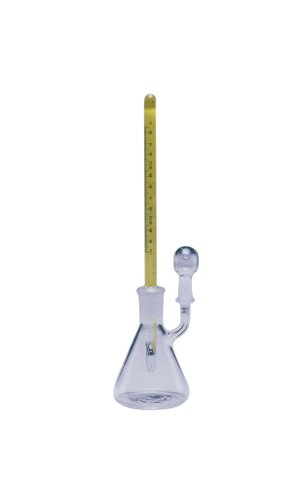
Kimble’s serialized 10 mL pycnometer bottles add traceability to density testing. The phosphate glass or compatible material, along with a non-mercury thermometer option, supports standard density workflows. Note that product dimensions are listed for packaging; ensure compatibility with your lab setup when integrating into test routines.
Buying Guide
Key purchase considerations help ensure you select a pycnometer that fits your testing needs and lab environment:
- Capacity: Smaller volumes (5–10 mL) are ideal for precise measurements with limited sample availability, while larger cups (50–100 mL) reduce refill frequency for high-throughput testing.
- Material: Borosilicate glass offers chemical resistance and clarity for visual checks, while 304/316 stainless steel provides durability and easier cleaning for harsh liquids.
- Calibration and temperature: Look for devices calibrated at specific temperatures (commonly 20°C) as density depends on temperature. Confirm the calibration reference in product documentation.
- Seal design: A tight lid or stopper minimizes air bubbles and leakage. Some cups include vented features to control excess liquid during filling.
- Traceability: Serialized pycnometers support auditing and quality control in regulated environments; consider this for lab records and compliance.
- Cleaning and maintenance: Cylindrical cups with wide openings facilitate cleaning; ensure compatible cleaning agents and procedures.
- Compatibility with liquids: Some cups are optimized for water-like liquids; others handle viscous paints and coatings. Match the device to your test liquids and densities.
- Ease of use: Clear graduations (if applicable), smooth interior surfaces, and stable bottoms minimize measurement errors and improve repeatability.
- Accessories: Some models include perforated stoppers or thermometers. Decide if you need these extras for your workflow.
In practice, choose a pycnometer that aligns with your typical test volumes, liquid properties, and required accuracy. For routine density checks on water-based liquids, a calibrated 10 or 100 mL cup can balance precision with efficiency. For coatings or pastes, a larger-capacity stainless steel design may reduce handling time while maintaining reliable readings. Serialized options are advantageous in regulated environments where traceability is essential.