Finding the right pet bottle filling and capping machine helps small businesses, home curators, and craft operators achieve consistent, efficient bottling. This guide highlights five suitable options, focusing on PET bottles, ease of use, and reliability. Each product is best for a distinct scenario—from micro-batching in a home kitchen to small-scale beverage production—so you can match capability to need without overpaying. Below, you’ll see a quick product snapshot and a detailed section for each winner, followed by practical buying considerations and a quick FAQ.
Summary table of selected products
| Product | Best For | Key Benefit | Note |
|---|---|---|---|
| HXYONGN Automatic Smart Tin Can Sealer (White) | Small food/beverage facilities; home kitchens | Adjustable sealing height; smart control | 55mm diameter capacity; may require bottle-sized fit checks |
| Fully Automatic Mineral Water Bottling Line (Generic) | Medium-sized water plants | 3-in-1 rinsing, filling, capping with PLC and touchscreen | Multiple models; customization available |
| HXYONGN Tin Can Sealer (Black) | Food/beverage small operations | Same features as white version; durable finish | 55mm diameter capacity; ensure fit for PET caps |
| [2026 New Version] Moonshan Weight Filling Machine | Cosmetic, essential oil, nail polish segments | Three modes: weight, time, price; high precision | 2–300g range; suited for small liquid fills |
| VEVOR Pneumatic Paste Liquid Filling Machine | Small liquid batches; multi-liquid versatility | Foot-pedal operation; stainless steel, 5–50 ml range |
HXYONGN Automatic Smart Tin Can Sealer (White)

This automatic sealer is designed for PET bottle capping in small-scale operations. It features a liftable shaft to adjust sealing height up to 20 cm, enabling different bottle heights. The slim stainless steel housing, robust base, and anti-skid feet support stable operation in compact spaces. A smart control panel allows one-click sealing, which can reduce setup time and improve consistency. Best for small food/beverage facilities, home batches, and snack bars seeking reliable, space-efficient sealing.
Best for: small kitchens or micro-factories needing adjustable height and simple operation. Better for: containers requiring a tidy, compact seamer with stable performance. Choose this if: your bottles vary in height and you want quick, consistent seals. Caution: verify bottle diameter compatibility with 55 mm/2.2 inch closures before ordering.
Fully Automatic Mineral Water Bottling Line (Generic)
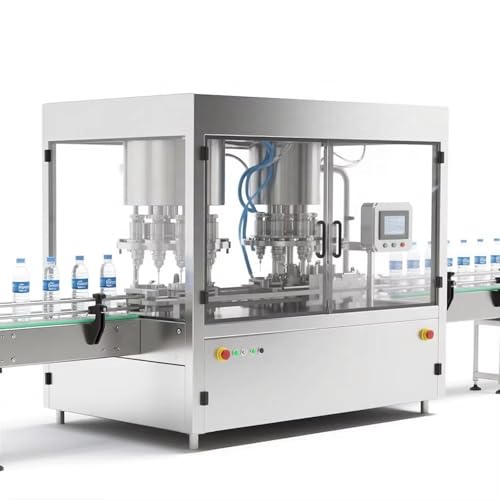
This 3-in-1 bottling line combines rinsing, filling, and capping for mineral water in PET bottles. It supports 200 ml to 1.5 L bottles and uses PLC central control with a touchscreen for digital parameter adjustments. The pressure-balanced filling helps maintain stable levels for consistent product quality in continuous production. Best for: small to medium-sized water plants seeking integrated controls and streamlined operation. Better for: higher-volume, consistent fills. Limitation: available models vary; confirm exact bottle dimensions and line configuration before purchase.
HXYONGN Tin Can Sealer (Black)

This black version mirrors the white model, offering adjustable sealing height, a slim stainless build, and a user-friendly control panel. It is best for small operations that demand aesthetic variation alongside performance. Best for: small beverage or food lines that want a consistent seaming process with simple controls. Better for: environments prioritizing a darker, more fingerprint-resistant finish. Caution: confirm that your bottle neck diameter matches the seamer’s 55 mm capacity.
[2026 New Version] Moonshan Weight Filling Machine

This 2–300 g digital, automatic filling machine uses a weighing-based approach with a tare feature and a fast, precise fill. The peristaltic pump minimizes contact with liquids, reducing contamination risk. It offers a three-mode operation (weight, time, price) for flexible batch control. Best for: cosmetic bottles, essential oils, or other small-volume liquids where precision matters. Better for: batches where speed and accuracy balance is critical. Caution: large volume discrepancies may occur with very low-viscosity liquids if the pump is not optimized for minimal drip.
Moonshan 4-Nozzle Automatic Liquid Filling Machine

Designed as a desktop, compact line, this 4-nozzle system combines an automatic filling unit with a belt conveyor and infrared sensing. It is well-suited for small enterprises that need integrated filling, transportation, and automation in a single compact package. Best for: small juice, wine, or detergent ventures that require independent pump control for different bottle sizes. Better for: quick transitions between different product fills. Limitation: bottle diameter must be within 20–90 mm and height 40–400 mm; confirm bottle shape compatibility before purchasing.
VEVOR Pneumatic Paste Liquid Filling Machine

This pneumatic filler is designed for small paste liquids with a 5–50 ml range and stainless steel construction. It operates with a pedal and external air source, enabling hands-free operation. Best for: small batches of viscous liquids like honey, shampoo, or lotion. Better for: operators who need pedal-assisted filling. Caution: ensure your target liquids suit a 5–50 ml fill range and verify air supply compatibility.
KAPS-ALL Bottle Capping Machine, P-700

This table-top hand capper offers up to 40 caps per minute and is designed for in-box cappings, short runs, and R&D tasks. The lightweight design (about 3.3 lbs) and compact footprint (12″ L x 3″ W) help streamline packaging workflows in tight spaces. Best for: small studios or labs needing a reliable manual capper. Better for: quick, low-volume capping. Caution: manual operation may not suit high-volume production or tightly spaced capping lines.
Buying Guide: Key Considerations For Pet Bottle Filling And Capping
- Bottle size and compatibility: Check bottle diameters, neck finishes, and height ranges. Some machines handle 20–90 mm diameters, others specify 55 mm closures. Align with your PET bottle specs.
- Filling method and liquid type: Choose weight-based, time-based, or volume-based filling depending on liquid viscosity, fill accuracy needs, and batch size. Peristaltic and diaphragm pumps offer different advantages for cleanliness and speed.
- Automation level and footprint: Decide between desktop units for small spaces and integrated lines for higher throughput. Consider whether you need 3-in-1 rinsing/filling/capping configurations or separate modules.
- Control and maintenance: PLC/touchscreen controls enable digital adjustment and repeatability. Look for hygienic designs with stainless steel parts and minimal crevices for easy cleaning.
- Capping compatibility: Ensure the machine supports your cap type and bottle finish. Some units emphasize screw caps, crimp-on, or snap-on closures; verify cap compatibility.
- Safety and reliability: Consider anti-skid bases, stable frames, and simple emergency stops. A modular design can help with maintenance and future upgrades.
Frequently Asked Questions
- What is the best PET bottle filling method for small batches?
Weight-based and time-based filling provide precise amounts for small runs, especially when liquid consistency varies between batches. - Do these machines require extensive setup?
Most are designed for quick start with one-click sealing or digital parameter settings, though some models require bottle size verification before operation. - Can I mix different bottle sizes on a single line?
Some lines support multiple bottle sizes with adjustable heights and independent pump speeds; others require reconfiguration or different modules for each size. - Is stainless steel essential for a filling machine?
Stainless steel offers durability and easier cleaning, reducing risk of contamination for food-grade and cosmetic liquids. - What maintenance is typical for these machines?
Regular cleaning, checking seals, and verifying pump tubing or diaphragms maintain accuracy and extend service life. - How do I choose between a manual capper and an automated line?
Manual capping suits very small volumes or R&D; automated lines are better for consistent throughput and reduced labor in growing operations.