When choosing perforated stainless steel mesh, look for durable 304 or similar stainless steel, consistent hole patterns, and easy cutting or shaping for your project. This guide highlights five top options suited for ventilation, decorative panels, protection screens, and DIY builds. Best for: quick DIY projects, home improvement enthusiasts, and professionals needing sturdy, corrosion-resistant sheets. Below is a quick summary of the selected products to help you compare at a glance.
| Product | Size / Pattern | Best For | Notes |
|---|---|---|---|
| Jucoan Perforated Sheet | 11.8″ x 11.8″, 0.12″ hole, 0.08″ thick | Indoor/Outdoor enclosures, partitions | 3mm holes, corrosion-resistant 304 stainless |
| Gennbaray 304 Perforated Sheet | 11.8″ x 11.8″, 0.32″ hole (8 mm) | Ventilation & protection screens | Rust-resistant, versatile patterns |
| AWIORETON 2-Pack Hardware Cloth | 11.8″ x 23.6″, 1/4″ mesh | Vent covers, vents & general protection | Heavy-duty welded, 304 stainless |
| PATIKIL Perforated Sheet | 11.8″ x 5.9″, 0.39″ hole | Decorative grills, grills & grills | 19GA; easy to cut & install |
| RZGZKLSH 304 Sheet | 9.8″ x 39.4″, 0.12″ holes | Long panels for barriers, decorative panels | Fully perforated, corrosion-resistant |
Jucoan Perforated Sheet, 11.8″ x 11.8″ Stainless Steel

Material and construction: 304 stainless steel provides corrosion resistance and rust-proof durability for long-term use. Size is 11.8 by 11.8 inches with a 0.08 inch thickness and 3 mm holes, offering a precise perforation pattern for airflow and light diffusion. The sheet is suitable for indoor or outdoor projects and can be welded or cut to fit custom shapes.
Best for: DIY enclosures, partitions, sign panels, guards, and decorative screens. The 304 stainless steel makes it a strong, versatile option for both indoor workshops and outdoor installations.
Caution: Edges can be sharp after cutting; handle with protective gloves and proper tools.
Gennbaray 304 Stainless Steel Perforated Metal Sheets
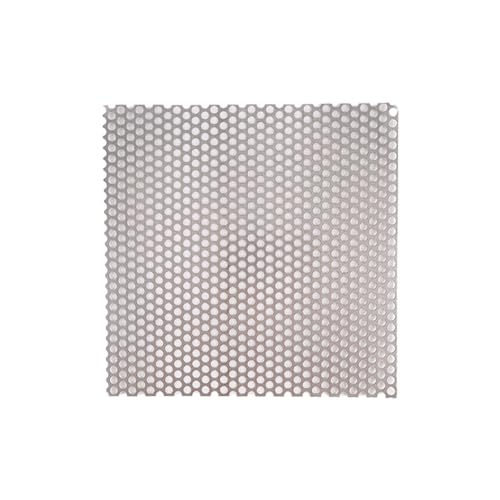
Material: 304 stainless steel, rust and corrosion resistant with good heat tolerance. Size: 11.8″ x 11.8″ with 8 mm (0.32″) holes. The sheet is robust and suitable for ventilation meshes, decorative panels, and equipment protection screens.
Best for: Ventilation grilles, decorative mesh panels, and lightweight protective screens in both residential and light industrial settings.
Caution: Edges may require smoothing after cutting; ensure accurate measurements before fabrication.
AWIORETON 2-Pack 1/4″ Hardware Cloth

Features: Heavy-duty welded construction at every intersection, 304 stainless steel for rust resistance, and a precise 1/4″ mesh with about 82% open area for airflow and drainage. The 11.8″ x 23.6″ sheets are ideal for vents, soffits, drain pipes, and DIY projects requiring a rigid mesh barrier.
Best for: Projects needing a strong, maintenance-friendly barrier with high airflow, such as vent covers, window screens, or garden protection.
Caution: Not suited for intricate curved shapes; best for flat or gently curved installations.
PATIKIL 11.8″ x 5.9″ Perforated Sheet

Material: 304 stainless steel with 0.39″ holes, 19 GA. Dimensions suit smaller panels or decorative inserts. The sheet offers good rust resistance and is easily cut or shaped for custom installations.
Best for: Decorative grills, ventilation panels, and grills for smoker or barbecue applications. It’s a good choice when precise hole size is needed for airflow and visibility.
Caution: Sharp edges on machine-cut parts; use protective gear when shaping.
RZGZKLSH 304 Perforated Metal Sheet

Size: 9.8″ x 39.4″ with 0.12″ holes, 0.02″ thickness. The sheet is designed for long panels or custom installations with uniform perforation. Made from premium 304 stainless steel for durability and corrosion resistance.
Best for: Long, slim panels for DIY ventilation covers, cabinet accents, or decorative barriers. The extended length supports single-piece installations.
Caution: Edges may be sharp; proper handling and edge finishing recommended.
Buying Guide: Key Considerations For Perforated Stainless Steel Mesh
What material matters most?
304 stainless steel is common for its corrosion resistance and durability. Consider 316 stainless for high-salt environments, or aluminum-backed options if weight is critical.
How do hole size and pattern affect performance?
Smaller holes provide more filtration and strength, but reduce open area. Larger holes improve airflow and light transmission but offer less filtration. Hole center spacing should match your airflow and strength needs.
What size should I choose?
Match sheet size to the project footprint. For large panels, longer sheets reduce seams; for small projects, 11.8″ x 5.9″ or 11.8″ x 11.8″ sheets are versatile.
How easy is fabrication?
Welded or solid sheets are easier to cut and shape than woven meshes. Look for laser-cut or machine-perforated sheets to ensure consistent perforation and clean edges.
Where should you install perforated sheets?
Ventilation, protective screens, decorative panels, and enclosure covers are common uses. Outdoor installations should favor corrosion-resistant grades and weatherproof finishes.
How to finish and maintain?
Handle sharp edges during cutting. Use rust-inhibiting coatings if staining or scratching is a concern. Regular cleaning prevents buildup that can affect airflow and aesthetics.
FAQ
- What is the typical material for perforated stainless sheets? Many are made from 304 stainless steel for corrosion resistance and durability; some options use other grades for specialized environments.
- Can these sheets be cut to fit my project? Yes. Most sheets can be cut with standard metal shears or tin snips; some edges may require deburring for safety.
- Are these suitable for outdoor use? Yes, especially the 304 stainless variants; ensure a weather-ready finish and consider coating where necessary.
- Do perforated sheets affect airflow significantly? Hole size, spacing, and pattern determine open area and airflow; larger holes generally allow more airflow but offer less filtration.
- What installation methods work best? Cutting to fit and attaching with screws, welding, or adhesive methods can work, depending on the project and material thickness.
- Is all perforated metal the same for DIY projects? No. Compare thickness, hole size, and edge finish to ensure the sheet meets your mechanical and aesthetic needs.