Answering the common search for reliable oil and water separators for air lines, this guide highlights five top options designed to keep pneumatic tools performing at peak efficiency. Each product targets different needs—from compact shop setups to heavier-duty workshop rigs. Best for hobbyists, professional mechanics, and spray-painting enthusiasts alike, these separators help remove water vapor, oil carryover, and particulates before they reach spray guns or compressors.
Summary table of selected products
| Product | Best For | Key Benefit |
|---|---|---|
| NEIKO 30252A Water and Oil Separator | Garage/DIY shops | Effective moisture and oil separation at 90 PSI |
| Ruitutedianzi Funnel Type Separator | Diesel/Gasoline filter lines | Four-filter element design for higher filtration accuracy |
| NEIKO 30253A Water and Oil Separator | Mechanics and craftsmen | High-psi performance and reliable oil separation |
| NANPU 3/8″ Combo Filter | 3/8″ NPT systems | Three-in-one filter regulator lubricator with 5-micron element |
| ENDOZER Oil Water Separator | Paint spraying and light industrial | Integrated gauge, regulator, and water/oil capture |
NEIKO 30252A Water and Oil Separator

Best for: Hobbyists and small shops needing reliable moisture and oil removal at basic airflow. This unit uses a 1/4″ NPT inlet and outlet and is rated for 90 PSI, balancing compact size with essential protection for air tools. The dual-separation design helps keep air tools clean and reduces oil carryover that can shorten tool life.
Why selected: It targets both water and oil within a compact footprint, making it a strong starter option for users who spray paints or operate pneumatic tools in a typical garage setup. Clear separation reduces maintenance surprises and improves spray consistency.
Limitations: The 90 PSI rating may be insufficient for some high-demand spray workflows; consider a higher-psi option if you operate heavy-duty equipment often.
Ruitutedianzi Funnel Type Separator

Best for: Diesel and gasoline fuel lines needing higher filtration accuracy. This model emphasizes rust-free construction and the ability to filter impurities above 12 microns, contributing to cleaner fuel delivery and longer fuel system life.
Why selected: Its multi-filter approach can benefit engines and fuel delivery setups where fuel cleanliness directly affects performance and longevity. The material quality aims to resist corrosion in challenging environments.
Limitations: The product description focuses on filter material and micron filtration but provides less detail on operating PSI, making it important to verify compatibility with your system’s pressures before use.
NEIKO 30253A Water and Oil Separator
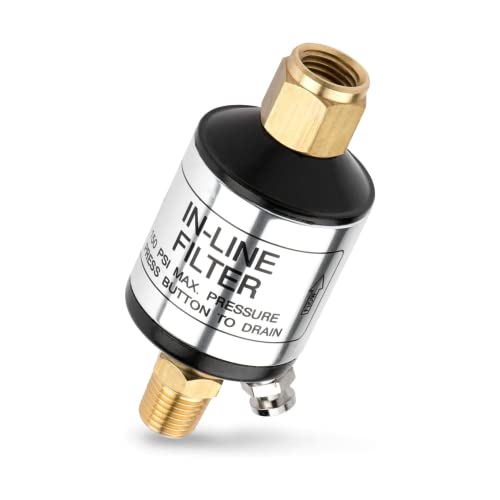
Best for: Mechanics and craftsmen who require higher PSI performance for cleaner air output. This unit emphasizes oil separation and moisture control to maximize tool reliability and lifespan.
Why selected: It expands on the 90 PSI model with 150 PSI capabilities, making it more suitable for tools that demand stronger airflow while maintaining cleaner output. The emphasis on minimizing oil carryover supports longer tool life.
Limitations: Higher PSI units may demand sturdier fittings and hoses; ensure all components in your setup match the 150 PSI rating to avoid failure.
NANPU 3/8″ NPT Combo Filter Regulator Lubricator

Best for: Systems using 3/8″ NPT hoses that want an all-in-one air treatment solution. Combines filtration, regulation, and lubrication to extend tool life and maintain consistent spray quality.
Why selected: The 3-in-1 design simplifies setup and helps maintain stable pressure while removing moisture and particulates, which is valuable for spray painting and general pneumatic work.
Limitations: The unit specifies a 0-125 PSI operating range; if higher pressure is required, check compatibility with your equipment and any additional regulators you plan to use.
ENDOZER Oil Water Separator

Best for: Paint spray environments and light industrial use where a gauge helps monitor performance. The unit bundles a water/oil separator with a pressure gauge and regulator for direct integration into spray guns and air tools.
Why selected: The integrated gauge helps operators track pressure and water/oil separation performance, contributing to consistent results and easier troubleshooting in dynamic workflows.
Limitations: The combination design may be bulkier than smaller inline separators; ensure sufficient space in your workstation or spray booth setup.
Buying Guide: Key Purchase Considerations
- Operating pressure: Match PSI ratings with your compressor and tools. Higher PSI units are more versatile but require compatible hoses and fittings.
- Filtration stage: Look for combinations of water and oil separation, plus dust/dirt filtration where applicable. Four-filter or multi-stage systems tend to offer cleaner output.
- Inlet/outlet compatibility: Most units use 1/4″ or 3/8″ NPT connections. Verify your hose size and fittings before purchasing.
- Material and durability: Aluminum housings and brass fittings resist corrosion and wear in workshop environments, especially around paints and solvents.
- Ease of maintenance: Consider visual indicators, ease of cleaning, and whether the unit supports backflush or bottom-drain features for quick maintenance.
- Size and integration: For tight spaces, compact inline separators are preferable. For spray booths, integrated gauges or regulators may simplify setup.
Frequently Asked Questions
- What is an oil and water separator for air tools?
It is a device placed in the air line to remove moisture, oil carryover, and particulates before air reaches spray guns or pneumatic tools, improving performance and tool lifespan.
- Do I need a separator if my compressor already dries air?
Yes, a separator adds a secondary level of filtration, catching residual moisture and oil that the primary dryer may miss, especially in varying ambient conditions.
- What PSI should I look for in a separator?
Choose a unit that matches or exceeds your maximum tool pressure. Common models operate at 90 or 150 PSI; select based on your tools and hoses.
- Can separators be used with fuel lines?
Some units are designed for air tools and general shop use. For fuel lines, ensure the model is rated for fuel-grade filtration and verify compatibility with the specific fuels involved.
- How often should I replace the filter elements?
Replacement intervals depend on usage and environment. Regular inspection and following manufacturer guidelines help maintain filtration efficiency.
- Are inline oil water separators suitable for spray painting?
Yes, they help remove moisture and oil that can cause orange peel or uneven coatings, improving spray consistency and finish quality.