For buyers seeking reliable, motorized ball valves, these options cover brass, stainless, and UPVC bodies across common sizes. They are suitable for home automation, irrigation, and simple fluid-control projects. This guide highlights five top picks with clear pros, best-use scenarios, and practical cautions to help you choose the right valve for your setup.
Summary table of selected products:
| Product | Size | Material | Voltage | Best For |
|---|---|---|---|---|
| U.S. Solid Motorized Ball Valve – 1/2″ Brass | 1/2″ | Brass | 9-24V AC/DC | Compact DIY projects, non-potable water applications |
| U.S. Solid Motorized Ball Valve – 3/4″ NSF 304SS | 3/4″ | 304 Stainless Steel | 9-24V AC/DC | Durable, higher-flow systems |
| U.S. Solid Motorized Ball Valve – 1/4″ NSF 304SS | 1/4″ | 304 Stainless Steel | 9-24V AC/DC | Small-diameter lines, precise control |
| U.S. Solid 1 inch UPVC Motorized Ball Valve | 1″ | UPVC | 9-36V AC/DC | Lead-free and affordable non-metal option |
| U.S. Solid 1/2 in UPVC Motorized Ball Valve | 1/2″ | UPVC | 9-36V AC/DC | Compact, lead-free water lines |
U.S. Solid Motorized Ball Valve – 1/2″ Brass Full Port

Best for compact, non-potable water tasks in smart home setups. This valve uses brass construction for durability and features a full-port bore, minimizing pressure loss in tight lines. It operates across a wide voltage range (9-24V AC/DC) and opens or closes quickly within 3–5 seconds. A 2-wire auto-return setup and limit switch help save energy by preventing unnecessary power draw after final position. The life expectancy is estimated at 80,000–100,000 cycles, making it a robust choice for frequent cycling. Caution: not suitable for potable water systems.
- Best for: small-diameter lines in home automation projects
- Better for: quick acting control with limited space
- Limit switch: reduces power after full open
U.S. Solid Motorized Ball Valve – 3/4″ NSF 304SS

This 3/4″ valve combines NSF-certified 304 stainless steel with a full-port bore for higher flow and reliability. It is designed to operate on 9-24V AC/DC and includes a two-wire automatic return setup, where the valve returns to the closed position if power is removed. The valve typically opens or closes in 6–8 seconds. It’s best for mid-range piping where stainless steel’s corrosion resistance matters. Caution: ensure compatibility with your water quality and check local codes for electrical hookups in wet environments.
- Best for: higher-flow residential or light commercial lines
- Better for: projects needing NSF-certified materials
- Limitation: requires correct electrical wiring and safe enclosure in moist areas
U.S. Solid Motorized Ball Valve – 1/4″ NSF 304SS

Ideal for small-diameter lines, this 1/4″ valve uses NSF-certified 304SS and a full-port bore to minimize pressure loss. It operates on 9-24V AC/DC with a 2-wire automatic return setup, and it opens/closes in roughly 3–5 seconds. The limit switch helps conserve energy once fully opened. Choose this if your project requires precise, compact control in tight spaces or within drinking-water lines where material standards matter. Caution: 1/4″ size limits flow throughput compared to larger valves.
- Best for: tight spaces and precise small-line control
- Better for: projects requiring NSF-certified materials
- Limitation: lower maximum flow than larger valves
U.S. Solid 1 Inch UPVC Motorized Ball Valve

This UPVC-bodied valve is designed for lead-free operation and longer lifespan in non-metal applications. It offers a full-port flow and a 2-wire auto-return setup, with 9–36V AC/DC operation. The UPVC material provides a cost-effective alternative to brass in residential water lines, reducing potential lead exposure and simplifying installation in new builds. Caution: UPVC can be less robust under high-pressure scenarios compared to metal alternatives.
- Best for: lead-free, budget-conscious water lines
- Better for: installations in homes with brass-free requirements
- Limitation: not as durable as metal valves in high-pressure systems
U.S. Solid 1/2 in UPVC Motorized Ball Valve
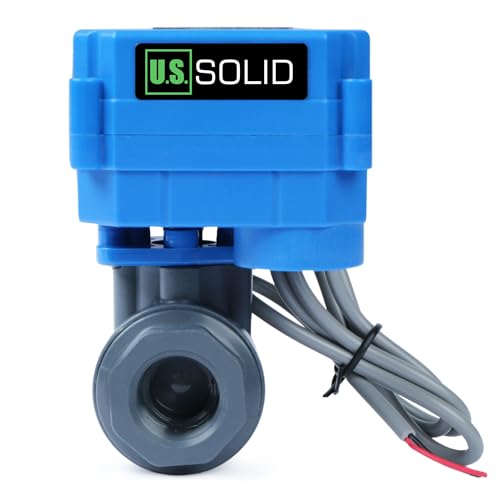
This 1/2″ UPVC valve offers a compact, lead-free option for small-diameter lines. It features a full-port bore and a 2-wire auto-return setup with 9–36V operation. Like other UPVC models, it emphasizes ease of installation and water safety. Best for: small, lead-free residential lines where cost and ease of installation are priorities. Limitation: slightly reduced mechanical strength compared to stainless or brass valves in aggressive environments.
- Best for: compact, lead-free domestic installations
- Better for: projects prioritizing ease of handling and installation
- Limitation: not ideal for high-stress or high-pressure applications
Buying Guide
Key considerations help align valve choice with your system requirements.
Material and Water Type
Brass valves resist corrosion in many non-potable water systems but may not be ideal for drinking water unless NSF-certified. Stainless steel valves provide greater durability and corrosion resistance. UPVC offers a lead-free, budget-friendly option for residential use, though not as robust in high-pressure scenarios.
Size And Flow
Choose a valve size that matches your piping. Full-port designs reduce pressure drop and improve flow, but the bore size should align with the system’s demand. For small-diameter lines, 1/4″ and 1/2″ valves are often sufficient, while 3/4″ to 1″ valves handle higher flow.
Voltage And Power Management
Most motorized ball valves operate on 9–24V or 9–36V DC/AC. A two-wire auto-return setup is common, providing automatic shutoff when power is removed. Consider your power supply availability and whether an external controller is required.
Return Logic And Control
Auto-return helps prevent valve staying partially open. This is useful for safety and energy savings in remote installations. Ensure your controller or automation hub can support the valve’s input requirements and timing.
Installation And Maintenance
Look for valves with straightforward installation and standard threading (NPT). Check whether the valve is rated for potable water if you plan to use it in drinking-water lines. Regular maintenance includes checking seals, electrical connections, and ensuring the limit switch functions correctly.
FAQ
- What size motorized ball valve should I choose? Size should match your piping; common choices are 1/2″, 3/4″, and 1″ for typical home systems. Full-port valves offer lower flow resistance.
- Is UPVC safe for drinking water? Yes, UPVC valves are lead-free and suitable for many residential drinking-water applications, but verify local codes and system compatibility.
- Do these valves require a specific power supply? Most operate on 9–24V or 9–36V, with a two-wire return. Ensure your controller provides compatible voltage and safe enclosure for wet environments.
- What is the benefit of a limit switch? A limit switch reduces power after full open or closed positions, saving energy and preventing wear from unnecessary actuation.
- Can I use a brass valve for potable water? Some brass valves are suitable, but verify NSF certification and local plumbing codes to ensure safety and compliance.
- Which valve is best for small spaces? The 1/4″ and 1/2″ UPVC or brass models with compact assemblies are typically best for tight installations.