Choosing the right milling media can dramatically affect grinding efficiency, particle size distribution, and overall project outcomes. This guide highlights five relevant Amazon options, ranging from lead shot and ceramic grinding balls to precision brass balls and specialty jars. Each product offers unique benefits for adding weight, achieving durable grinding media, or supporting specialized milling setups. Use the buying guide below to compare materials, durability, and suitability for your specific milling needs.
Product Snapshot
| Product | Brand | What It’s Good For |
|---|---|---|
| METAL MAGERY Lead Shot Balls #7.5 | METAL MAGERY | Adding weight to projects and small, oddly shaped spaces; suitable for cleaning and general weight applications |
| White Ceramic Grinding Balls 20mm | Inoxia | Hard-wearing ceramic milling media for ball milling with high abrasion resistance |
| 40 PCS Precision Brass Bearing Balls 1/2 Inch | OMISTAR | Durable brass media for mechanical and artistic applications; low friction, corrosion-resistant |
| 1/2 oz Lead Drop Shot Weights | S & J’s TACKLE BOX | Small lead weights for targeted weight adjustments in hobby projects |
| F-PA500 Nylon Lab Ball Mill Jar (500ml) | Huanyu | Custom lab milling jars for planetary ball mills; jar includes lid but media not included |
Note: Prices and availability can change. Always ensure compatibility with your specific ball mill model and safety guidelines when handling grinding media.
METAL MAGERY Lead Shot Balls #7.5 for Weight and Cleanup
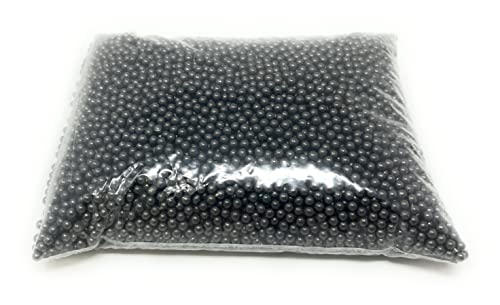
The METAL MAGERY Lead Shot Balls (#7.5, 2 lb bag) are designed to add precise weight to a variety of hobby projects. Their small scale allows filling tight or irregular spaces, such as model trains, pinewood derby cars, or other devices requiring extra mass. The shot includes 3-5% antimony, which helps retain spherical shape for consistent volume and fit. Additionally, these lead balls can aid cleaning tasks by dropping into containers to loosen rust or dirt during agitation. As with all lead products, proper handling and storage away from children and pets are advised, along with compliant recycling practices.
White Ceramic Grinding Balls 20mm for Ball Milling

These Alumina (Al2O3) ceramic balls are exceptionally hard-wearing and ideal for ball milling media. The 20mm size is a common choice for larger milling jars and high-energy milling sessions. Ceramic media offers excellent abrasion resistance, reduced contamination compared to some metallic media, and consistent performance in grinding and mixing operations. A 1 kg quantity can fill roughly half a litre, depending on the jar size and loading pattern. Ceramic balls are particularly suited for milling non-metallic materials or ceramics itself, where metallic contamination must be minimized.
40 PCS Precision Brass Bearing Balls 1/2 Inch

These 1/2-inch brass bearing balls combine durability with low friction properties, making them well-suited for both industrial and creative milling or machining tasks. Brass is corrosion-resistant and robust enough for long-term use in dynamic applications. The polished surface helps minimize wear on contact components and can enhance efficiency in mechanical assemblies or art projects that utilize ball bearings. A transparent storage box is included for organization and portability. When selecting brass balls, consider your milling jar size and the potential for metal contamination in sensitive materials.
1/2 oz Lead Drop Shot Weights, Hand Poured

These 1/2 oz ball-style lead drop shot weights are hand-poured and designed for precision weight tuning in a variety of projects, from fishing gear to hobby milling setups where small, uniform mass increments are beneficial. While they offer convenient sizing for targeted adjustments, users should handle lead responsibly and follow safety guidelines to manage exposure risk and environmental impact. They can be useful in calibrating weight distribution in prototypes or test rigs associated with ball milling experiments.
F-PA500 Nylon Lab Ball Mill Jar 500ml

This 500ml nylon lab ball mill jar is designed for planetary milling systems. It comes with a lid and sealing ring, though the grinding media are not included. Made from PA6/nylon/polyimide materials, this jar offers good durability, chemical resistance, and lower density than metal jars, which can be advantageous for certain milling applications where weight reduction is desired. When selecting a jar, consider compatible jar dimensions, lid integrity, and sealing performance to ensure a tight, safe milling environment.
Buying Guide: Key Considerations For Milling Media
- Material compatibility: Metals like lead and brass provide high density and mass, which accelerates milling but can contaminate non-metallic samples. Ceramic media reduces metal contamination but may wear differently and have varying density.
- Particle size and shape: Spherical media promote uniform grinding and reduce wear on milling jars. Smaller balls are better for fine milling and precision tasks; larger balls suit coarse milling and breakage-resistant materials.
- Density and contamination: Lead offers high density for efficient grinding but requires careful handling due to toxicity. Ceramic media reduces contamination risk for metallurgical or analytical samples.
- Durability and reusability: Brass and ceramic options provide durability and long service life in demanding tasks, but cost and potential reactivity must be considered.
- Jar compatibility: Ensure the milling jar size and shape match your mill’s specifications. Nylon jars reduce weight but may have lower durability for high-energy milling.
- Safety and handling: Lead-containing media require proper ventilation, PPE, and waste handling. Follow all local regulations for storage, usage, and disposal.
- Application context: For cleaning or weight-addition tasks, lead shot can be suitable; for clean grinding with minimal contamination, ceramic or brass media may be preferable.
- Maintenance: Regular inspection for cracks, chips, or deformation helps prevent contamination and equipment failure. Replace damaged media promptly.
When selecting milling media, align material properties with your specific milling goals, sample compatibility, and safety requirements. Each option offers distinct advantages, and in some setups a combination of media types may deliver the best balance of efficiency, precision, and contamination control.