Find the right industrial walking foot sewing machine for heavy fabrics and upholstery projects. This guide highlights five strong options, clarifying who each machine is best for and why it stands out. Ideal buyers include upholsterers, leather crafters, auto and marine upholstery professionals, and workshop shops needing durable stitching at higher speeds. Below you’ll see concise product comparisons, practical questions, and a buying guide to help you choose confidently. A quick summary table is provided to compare core strengths at a glance.
| Product | Best For | Key Benefit |
|---|---|---|
| Consew CP206RL Portable Walking Foot | On-the-go shops, small studios | Portable power with built-in motor |
| Consew 206RB-5 Walking Foot | Professional upholstery and auto interiors | Triple feed for even stitching |
| Consew Upholstery Walking Foot with Table | Large furniture and leather work | Table and suited for heavy materials |
| KQZZIV Walking Foot Industrial Machine | Heavy-duty canvas and thick textiles | High speed and thick fabric handling |
| Juki DNU-1541S Walking Foot | General industrial sewing with safety features | Unison-feed with lockstitch and table setup |
Consew CP206RL Portable Walking Foot Machine

Features include a longer arm and horizontal oscillating hook, with a built-in 110V motor. It offers reverse stitching and a link-type thread take-up lever. This model is ideal for shops that need a portable, reliable walking foot option that you can move between job sites. Best for small studios or repair tasks where portability matters. Caution: Power-reliant use may require a stable electrical setup when on location.
Consew 206RB-5 Walking Foot Industrial Sewing Machine

This is a staple in professional upholstery work. It features walking foot compound feed (triple feed), a large bobbin, high foot lift, and adjustable height of the walking motion. It’s a strong choice for auto interiors, leather, and heavy fabrics. Best for pro upholsterers who need consistent cloth feeding and precise control. Limitation: Table and motor are not included in the head unit, so additional components are required.
Consew Upholstery Walking Foot Industrial Sewing Machine
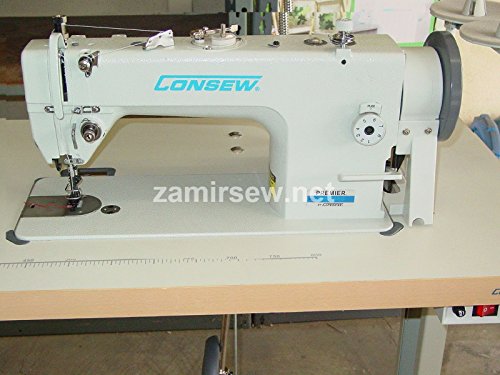
Designed for furniture upholstery, leather, auto and marine projects, this machine handles light to heavy-weight materials such as leather, vinyl, and canvas. It’s suited for a wide range of coated and laminated fabrics, delivering reliable stitching on upholstery jobs. Best for shop setups focusing on large-scale furniture or automotive interiors. Caution: Depending on your material stack, you may need to adjust feed settings for optimal results.
Walking Foot Industrial Sewing Machine With Heavy Duty Table

This model offers high-speed operation up to 5000 RPM and is designed for heavy canvas and upholstery work. It features a wide table frame for managing large projects like curtains or sails. Best for high-output environments where efficiency meets heavy material handling. Limitation: It emphasizes speed and density of material; ensure your workspace can accommodate the setup and power requirements.
Consew 206RB-5 Single Needle Compound Feed

Triple compound feed with top presser foot, bottom feed dogs, and needle movement that advances material uniformly. It’s ideal for leather, vinyl, and heavy upholstery, providing even stitches without slipping. Best for users who need precise control and backstitching. Limitation: The head is sold separately from table, stand, and motor, requiring additional components for full setup.
Juki DNU-1541S Industrial Sewing Machine

Juki’s DNU-1541S features a safety mechanism and servo motor setup. It’s a walking foot, needle-feed design with a unison feed and lockstitch, suitable for a variety of fabrics from light to heavy. The machine is assembled and includes a sewing table, offering a ready-to-use package. Best for shops seeking a reliable, space-efficient system with built-in safety considerations. Caution: Assembly notes indicate ongoing setup may be needed; verify installation steps match your workspace.
Buying Guide: Key Purchase Considerations
- Material thickness and feed accuracy: Look for triple or compound feed systems for heavy fabrics to prevent slipping and puckering.
- Table and motor: Some models require separate tables or servo motors. If you need a complete setup, choose packages that include these components or plan for an easy add-on.
- Power requirements: Industrial sewing machines often run on 110V or higher. Ensure your workshop has compatible outlets and electrical provisions.
- Portability vs. bench use: Portable units are ideal for small shops or on-site work; table-integrated machines suit fixed shop setups with higher throughput.
- Feed dog adjustment and stitch control: A wide stitch length range and adjustable reverse stitch offer greater versatility for leather, canvas, and upholstery.
- Safety and maintenance: Safety features such as servo motors, and ease of maintenance are important for long-term reliability in professional environments.
FAQ
- What is a walking foot machine?
It uses a walking foot mechanism to move fabric materials evenly through the needle area, reducing shifting on thick or layered fabrics. - Who should buy a walking foot industrial machine?
Upholsterers, leatherworkers, auto/marine interior specialists, and shops handling heavy materials benefit most. - Do I need a table and motor with the head unit?
Many models require separate tables or motors; some bundles include them. Plan based on space and setup needs. - Is triple feed better than single feed?
Triple feed (walking foot plus top and bottom feed) generally offers better control for dense materials and composite fabrics. - Can these machines sew leather?
Yes, several models are designed for leather and heavy upholstery; verify the maximum material thickness and needle options for your leather projects. - How do I choose between portability and a fixed unit?
Portables suit mobile work and small shops; fixed units provide higher throughput and stability for large-volume projects.