Industrial-grade UV water treatment can be an effective step for delivering clean, germ-free water at the point of use. This article highlights five reliable options suited for home-scale whole-house purification, highlighting who benefits most, how they perform, and key considerations to guide a purchase. These systems are ideal for homes needing strong disinfection without chemical additives, or for small facilities seeking hassle-free water treatment.
Buyer’s quick reference: the table below lists the selected products, their approximate flow capability, and standout features. Use this as a starting point to compare installation needs and long-term maintenance considerations.
| Product | Best For | Key Benefit | Approx. Flow |
|---|---|---|---|
| iSpring UVF20 | Smaller homes or focused whole-house purification | Long-life LED with automatic flow sensor | Up to 12 GPM |
| iSpring UVF50 | Homes needing higher flow and robust LED design | Smart flow sensor, long LED life | Up to 13.2 GPM |
| US Water Filters 4C151 | Reliable, durable stainless steel chamber systems | High flow with 1″ fittings and sturdy ballast | Up to 15 GPM |
| HQUA-TWS-12 | Mid-range capacity with extra components | Two lamps and spare sleeve option | Up to 12 GPM |
| Geekpure 12 GPM | Full-home purification without secondary pollution | Extra filters and sleeves included | 12 GPM |
iSpring UVF20 Whole House LED UV Water Filter System
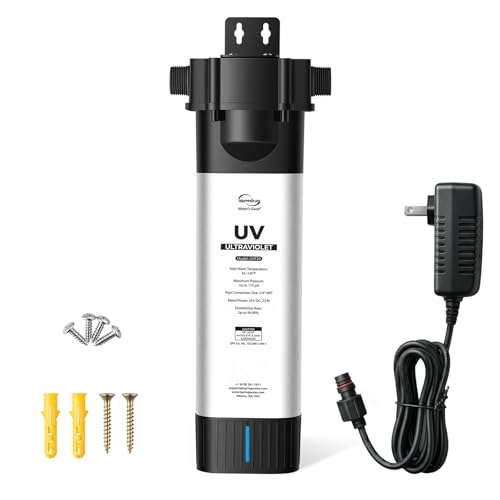
The iSpring UVF20 uses a long-life LED UV module designed for whole-house treatment with no bulb replacements. It activates only when water flows, saving energy and extending system life. It supports up to 12 GPM with a 3/4″ MNPT inlet/outlet. This model is best for smaller homes or households seeking low-maintenance, on-demand UV disinfection. A limitation is that its LED module is rated for a long life but must align with the home’s typical daily water use to maximize efficiency.
iSpring UVF50 LED UV Water Filter System
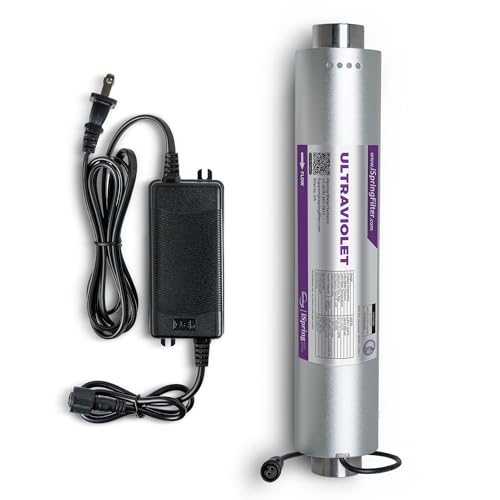
The UVF50 offers a higher flow capacity and a robust LED UV design with built-in smart flow sensor. It operates with no mercury and minimal heat, contributing to a more sustainable household setup. It is best for larger residences or households requiring up to 13.2 GPM while maintaining energy efficiency. A potential limitation is the higher initial installation complexity due to its size and 1-inch connections.
US Water Filters 4C151 Ultraviolet Light Water System

This stainless-steel, high-flow UV system delivers up to 15 GPM with 1″ MNPT fittings and a robust ballast with a digital LED display and lamp-out indicators. It’s well-suited for households seeking a proven, industry-standard UV treatment with simple monitoring. A caution is that more sophisticated electronics may require periodic checks to ensure lamp integrity and sleeve cleanliness.
HQUA-TWS-12 Ultraviolet Water Purifier

The HQUA-TWS-12 provides 12 GPM within a compact 21-inch-long, 3.5-inch-diameter stainless steel chamber and a 3/4″ MNPT inlet/outlet. It emphasizes easier integration into existing pipe systems and claims no secondary pollution. Choose this if you need a straightforward installation with extra space and a straightforward maintenance schedule. A limitation is its specified 12 GPM may vary with water quality and pressure.
Geekpure 12 GPM Whole House UV Water Filter Kit
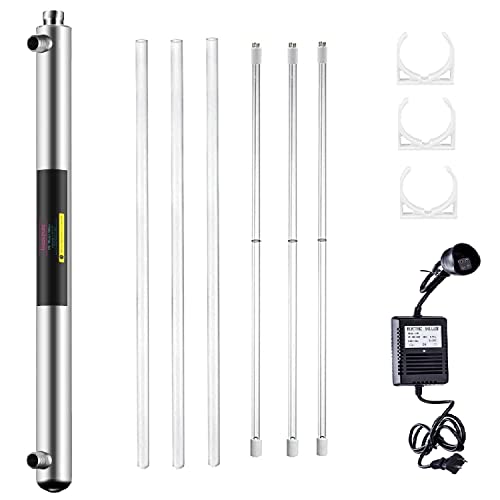
Geekpure offers a complete 12 GPM kit with three UV filters and sleeves, designed for whole-house purification without introducing secondary pollutants. It’s best for users needing a bundled solution that includes multiple sleeves and filters for maintenance and performance. A potential limitation is the complexity of parts for replacement and the need for careful sleeve maintenance to sustain max efficiency.
Buying Guide
What matters most when choosing an industrial-grade UV water treatment system for home use?
- Flow rate versus household demand: Match the system’s GPM rating to your home’s peak water usage to avoid pressure loss or inadequate disinfection.
- Lamp life and maintenance: LED-based UV units offer long life with less maintenance, but require periodic sleeve cleaning and flow sensing checks.
- Monitoring features: Built-in flow sensors and lamp-out indicators help ensure reliable disinfection and simplify maintenance scheduling.
- Inlet/outlet connections: Confirm MNPT or FNPT sizes and the availability of 1″ versus 3/4″ connections to fit your plumbing.
- Material and durability: Stainless steel chambers resist corrosion and provide robust performance in varying water conditions.
- Environmental and energy considerations: LED-based UV systems typically use less energy and avoid mercury, contributing to sustainability.
Practical installation considerations
- Plan for mainline placement near the home’s water entry to treat all taps and appliances.
- Ensure proper clearance for maintenance and sleeve cleaning.
- Assess the need for pre-filtration to prevent sediment buildup on the UV sleeve.
- Schedule regular lamp and sleeve inspections to prevent unexpected downtime.
Choosing by scenario
- Small homes with moderate water use: UVF20 or UVF50 provide reliable disinfection with manageable installation.
- Homes with higher water usage or larger families: 4C151 or Geekpure combinations offer higher flow and bundled maintenance options.
- Simple, compact installations with extra sleeves: HQUA-TWS-12 fits a streamlined setup with upgrade options.
Maintenance at a glance
- Inspect sleeves for clarity and cleanliness every 6–12 months.
- Replace lamps or LEDs according to recommended service life and usage patterns.
- Test water quality periodically to confirm ongoing disinfection effectiveness.
Frequently asked questions
- What does UV water treatment remove?
Typically, UV systems disinfect by inactivating bacteria and viruses, reducing microbial risk without adding chemicals. - Do LED UV systems require bulbs?
LED UV systems use LED modules that last longer than traditional lamps and require fewer replacements under normal use. - Will UV treatment affect taste or odor?
UV disinfection does not alter taste, odor, pH, or general water chemistry. - Can I install a UV system myself?
DIY installation is possible with standard plumbing connections, but consult a professional if you are unsure about electrical or pressure requirements. - How often should I replace UV components?
LED modules can last thousands of hours, while sleeves and lenses should be inspected regularly and replaced as needed to maintain effectiveness.
Industrial-grade UV water treatment systems offer reliable, chemical-free disinfection for homes and small facilities. The products listed above provide a range of flow rates, maintenance needs, and installation considerations to match different usage patterns and household sizes.