Industrial sieves and screens are essential for precise particle separation in labs, manufacturing, and DIY projects. This guide helps buyers choose the right mesh size, material, and design for reliable performance. The top picks below are selected for durability, versatility, and user-friendly features. Best for: laboratories needing precise sieve options, small workshops, and food or powder processing environments.
| Product | Mesh | Diameter | Material |
|---|---|---|---|
| LABLPSAI 250 Mesh Lab Sieve | 250 Mesh | 8″ (20 cm) | 304 Stainless Steel |
| Sidasu Vibrating Sifter Mesh Screen | 60 Mesh | Dia 19.6″ automatic machine | 304 Stainless Steel |
| LABLPSAI 20 Mesh Lab Sieve | 20 Mesh | 4″ (10 cm) | 304 Stainless Steel |
| LABLPSAI 60 Mesh Lab Sieve | 60 Mesh | 4″ (10 cm) | 304 Stainless Steel |
| TAMSOI 325 Mesh Lab Sieve | 325 Mesh | 2″ (5 cm) | 304 Stainless Steel |
LABLPSAI 250 Mesh Lab Sieve — 8 Inch

Best for precise particle separation in research or quality-control settings. The 250 mesh openings provide fine granularity suitable for powder screening, flour, or chemical analyses. The 304 stainless steel construction offers corrosion resistance and easy cleaning, making it a durable option for both lab benches and industrial fume hoods. Suitable for environments that demand high temperature and broad chemical compatibility.
- Best for: Fine powder and minute particle analysis in labs or quality labs.
- Why selected: High mesh count provides finer separation; stainless steel ensures longevity and cleaning ease.
- Caution: Very fine mesh can be susceptible to clogging with fibrous materials; clean promptly after use.
Sidasu Vibrating Sifter Mesh Screen — 60 Mesh
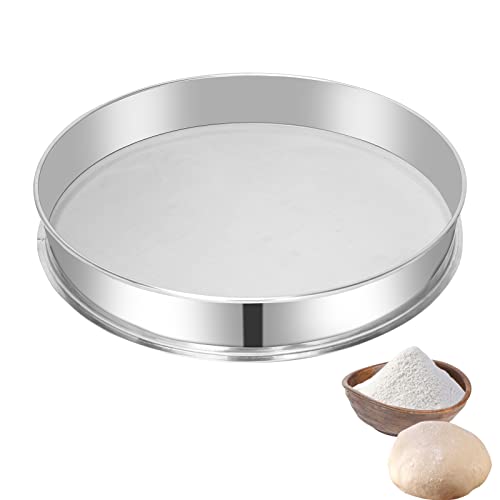
Best for bulk powder processing with automatic screening capabilities. The vibrating action helps prevent clogging and improves throughput for flour, spices, and grains. Built from 304 stainless steel, it resists corrosion and supports easy cleaning under running water. This model is ideal for larger batches where a stationary sieve would slow production.
- Best for: Industrial or commercial screening of bulk powders.
- Why selected: High hardness and corrosion resistance; efficient vibration reduces downtime.
- Caution: Larger dia equipment requires stable mounting and power supply.
LABLPSAI 20 Mesh Lab Sieve — 4 Inch

Best for everyday lab tasks requiring coarse-to-medium particle separation. The 4″ diameter provides a manageable surface area for small batches or bench-top experiments. Made from 304 stainless steel, this sieve offers dependable corrosion resistance and straightforward cleaning, making it suitable for repeated use in teaching labs and R&D settings.
- Best for: Educational labs and routine screening with straightforward results.
- Why selected: Reliable stainless steel construction; easy to handle and clean.
- Caution: Not ideal for very fine powders where higher mesh counts are necessary.
LABLPSAI 60 Mesh Lab Sieve — 4 Inch

Best for general-purpose screening where moderate particle sizes are involved. The 60 mesh openings strike a balance between throughput and precision. Stainless steel construction ensures durability in frequent use environments, including food testing, micro-batch production, and laboratory screening tasks.
- Best for: Daily screening in labs and culinary settings.
- Why selected: Solid all-around performance with straightforward maintenance.
- Caution: Larger particles may require coarser meshes to prevent overloading.
TAMSOI 325 Mesh Lab Sieve — 2 Inch

Best for ultra-fine screening tasks where precise apertures are essential. The 0.045 mm aperture size provides tight control over particle size distribution, suitable for chemical analyses, pharmaceutical preparation, and high-precision research. The 304 stainless steel frame and mesh support durable performance and chemical compatibility.
- Best for: Very fine separations and analytical work.
- Why selected: Ultra-fine mesh enables precise particle size control; robust construction.
- Caution: Handling and cleaning require care to avoid damaging delicate openings.
Buying Guide
What mesh size should you choose?
Mesh size depends on the target particle range. Use higher mesh counts for finer separations (e.g., 250 or 325) and lower counts for coarser screening (e.g., 20–60). Consider your material’s abrasiveness and whether fibers or clogging are likely, which may favor smoother interior corners and easy-clean designs.
What diameter and depth matter?
Diameter affects throughput and surface area. Larger diameters are better for bulk processing, while smaller diameters suit bench-top experiments. Depth and height influence how much material you can process per pass and how easily material may accumulate near edges.
Material and construction considerations
304 stainless steel is the standard for corrosion resistance and ease of cleaning, suitable for food, pharma, and lab work. Ensure a solid frame with full enclosure between mesh and frame to minimize leakage and material loss. Look for models with a polished interior to reduce residue buildup.
Design for maintenance
Choose sieves with smooth internal corners and accessible edges for cleaning. Interchangeable or multiple-mesh configurations can increase versatility, especially when screening different materials in the same facility.
Operational setup tips
- Stability: Mount sieves on a stable stand or container to prevent tipping.
- Cleaning: Rinse with running water after use; dry thoroughly to prevent water spots on stainless steel.
- Storage: Keep in a dry area to minimize moisture exposure and corrosion risk.
FAQ
- Q: What is the difference between 20 mesh and 325 mesh screens? A: 20 mesh has larger openings for coarser material; 325 mesh has very fine openings for tiny particles.
- Q: Can these sieves be used with liquids? A: Some are designed mainly for powders; check the product description for suitability with liquids and ensure proper containment.
- Q: Are these sieves dishwasher safe? A: Most lab sieves can be cleaned under running water; always verify manufacturer cleaning guidelines before dishwashing.
- Q: Which mesh is best for flour screening? A: Typically mid-to-fine meshes (e.g., 60–120) work well for flour, depending on desired fineness.
- Q: Do these sieves fit standard lab equipment? A: Sizes vary; confirm diameter and depth to match your existing racks, stands, or buckets.
- Q: How do you prevent clogging in fine meshes? A: Gentle agitation, proper feed size, and regular cleaning help maintain consistent performance.