Answering the common buyer question, these machines are designed to handle large hard-surface areas efficiently. This guide highlights five top options, each best for environments like warehouses, factories, parks, and commercial facilities. Whether you need ride-on power, a robust walk-behind model, or a quiet electric sweeper, there is a pick here to fit your workflow and budget. The following table compares key points to help you decide quickly.
| Product | Type | Sweeping Width | Capacity | |
|---|---|---|---|---|
| SANITMAX 49″ Ride-On | Ride-On | 49″ | 26-Gallon Hopper | Large warehouses and parking facilities |
| VEVOR Walk-Behind | Walk-Behind | 25.6″ | 5-Gallon | SMB spaces, narrow aisles |
| Kärcher S 4 Twin | Walk-Behind | 26.8″ | 5.25 Gal | Small workshops to garages |
| LUSHIJIE 41″ | Walk-Behind | 41″ | 55L | Large indoor/outdoor areas |
| SANITMAX SM1050A | Electric | 41″ | 9.25-Gal | Warehouses and schools with reduced fumes |
SANITMAX 49″ Ride-On Industrial Floor Sweeper

The SANITMAX ride-on sweeper is built for large industrial sweeping jobs. It covers up to 69,000 square feet per hour and features a 26-gallon debris hopper for extended sweeps without frequent stops. A 12.68-gallon water tank and a high-pressure spray system help reduce dust during dry-condition sweeping. This unit is best for large warehouses, factories, and parking facilities that require high throughput with minimal downtime.
- Best for: Large industrial spaces where rider comfort and continuous sweeping are priorities.
- Why chosen: Combines high coverage, substantial hopper capacity, and integrated dust suppression, reducing interruptions.
- Limitation: Larger footprint may require more storage space and maneuvering room in tight layouts.
VEVOR Walk-Behind Hand Push Floor Sweeper

This manual, walk-behind sweeper relies on human power, offering a 25.6-inch sweeping width and a 5-gallon waste container. Its design emphasizes portability and low energy use, making it well-suited for walkways, yards, and smaller facilities where electrical or fuel-powered options are less desirable. It’s a strong choice for budget-conscious buyers who still need effective, hands-on cleaning.
- Best for: Small to mid-size spaces where easy storage and no-power operation are advantageous.
- Why chosen: Large coverage per pass without cords or fuel, plus adjustable handle for comfort.
- Limitation: Lower capacity means more frequent emptying in busy areas.
Kärcher S 4 Twin Walk-Behind Push Sweeper

The S 4 Twin offers a human-powered option with a sweeping width of 26.8 inches and a 5.25-gallon capacity. Its quiet, motorless operation reduces noise during use, making it suitable for indoor workplaces like workshops, garages, and warehouses. Choose this if you want a reliable manual sweeper that minimizes disruption and energy use.
- Best for: Quiet, manual cleaning in indoor or semi-enclosed spaces.
- Why chosen: High efficiency compared to traditional brooms while remaining low-maintenance.
- Limitation: Requires manual push effort and may be slower on very large spaces.
LUSHIJIE 41″ Industrial Walk-Behind Sweepers

The LUSHIJIE 41-inch model combines a broad 41-inch cleaning path with a 55L bin and a durable, rust-resistant build. It is designed for fast, broad coverage in large indoor and outdoor areas, including parking lots, factories, and warehouses. Its adjustable brush height helps adapt to uneven surfaces and varied debris.
- Best for: Large, open spaces where speed and capacity are important.
- Why chosen: Wide sweeping path reduces passes needed, improving productivity.
- Limitation: Heavier manual effort may be required for very rough surfaces.
SANITMAX SM1050A Electric Floor Sweeper
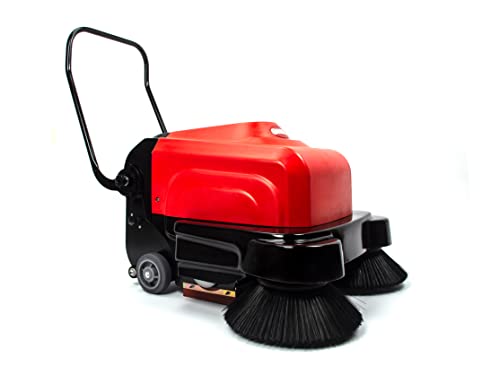
The SM1050A features a 41-inch cleaning path and a 9.25-gallon hopper with a three-brush system (two side brushes plus one main). Powered by a 12V battery drive, it offers quiet, electric performance suitable for both indoor and outdoor use. This model is best for warehouses and multi-room facilities seeking enhanced material pickup with reduced fumes.
- Best for: Larger indoor-floor areas that benefit from electric propulsion and higher hopper capacity.
- Why chosen: Three-brush system increases debris capture and edge cleaning.
- Limitation: Battery dependence may require charging time between shifts.
Buying Guide: Key Considerations for Industrial Floor Sweepers
- Space and layout: Choose ride-on for large, open warehouses; walk-behind for narrow aisles and versatile spaces.
- Capacity and throughput: Higher hopper capacity or debris bin reduces downtime; consider dust control features if you work in dry environments.
- Power source: Electric models offer quiet operation and fumes-free use; manual models rely on human effort; consider fuel-powered options for very large outdoor areas.
- Maintenance: Look for accessible brushes and easy hopper cleaning; rust-resistant materials extend life in tough environments.
- Ergonomics and storage: Foldable handles and compact designs matter for facilities with limited storage.
- Noise level: Quieter options are preferable for noise-sensitive settings like schools or offices within mapped facilities.
- Debris type: Debris variety from dust to heavy debris affects brush choice and hopper size.
Frequently Asked Questions
- What is the main difference between ride-on and walk-behind sweepers? Answer: Ride-on units maximize throughput for large areas and require less operator fatigue, while walk-behind models are more maneuverable in tight spaces and typically lower in cost.
- When should I choose an electric sweeper over a manual one? Answer: Electric sweepers provide consistent performance with reduced physical effort, ideal for indoor use; manual sweepers are best when power access is limited or for smaller sites.
- How important is hopper capacity? Answer: Higher hopper capacity reduces frequent emptying and increases continuous cleaning time, especially in busy areas.
- Can these machines handle outdoor debris like leaves and gravel? Answer: Many models are designed for both indoor and outdoor use, but leaf-sized debris and gravel may require wider cleaning paths or heavier-duty brushes.
- Do these sweepers require special maintenance? Answer: Regular brush inspection, hopper cleaning, and battery maintenance (for electric models) are typical maintenance tasks.
- Is dust suppression important for dry environments? Answer: Yes, dust control features help keep air quality down and improve sweeping efficiency in dry conditions.