How to choose the right industrial dust collector machine for your shop. This guide highlights five solid options that balance power, filtration, and ease of use for serious woodworkers and shop setups. Each product section explains who it’s best for, why it was selected, and any practical limitation to consider. A concise buying guide and a short FAQ follow to help you compare features quickly.
Product Comparison at a Glance
| Product | Best For | Filtration / Airflow | Portability | Notes |
|---|---|---|---|---|
| WEN DC3474 | Small to mid-size shops needing wall-mount option | 4-inch port, 600 CFM | Mobile base, wall-mount option | Solid budget-friendly choice |
| Shop Fox W1666 | Shop workers needing reliable 2 HP unit | Standard 2 HP setup | Floor unit, portable | Simple, dependable |
| JET JCDC-1.5 | Heavy debris and higher CFM needs | Two-stage cyclone, possibly higher CFM | Floor unit | High efficiency cyclone design |
| DEWALT DXVCS003 | Dust separation and air quality control | Integrated cyclone and high-efficiency filtration | Mobile base | Excellent debris separation |
| Central Machinery 2 HP | Budget-conscious shops needing strong airflow | 2 HP, high CFM | Standalone | Great value for money |
Notes: The table highlights general capabilities. Always verify compatibility with your existing tools, ducting, and electrical setup before purchase.
WEN Woodworking Dust Collector (DC3474)

Brand: WEN
Features include a powerful 7.4-amp induction motor paired with a 9-inch impeller moving up to 600 CFM, a 4-inch dust port for common woodworking tools, and the option to wall-mount for accessible dust collection. This model is best for small to mid-size shops seeking a compact, versatile unit with mobility and wall-mount flexibility. A potential limitation is its motor size relative to very large shop setups, where higher CFM units might be preferred.
Shop Fox W1666-2 HP Dust Collector
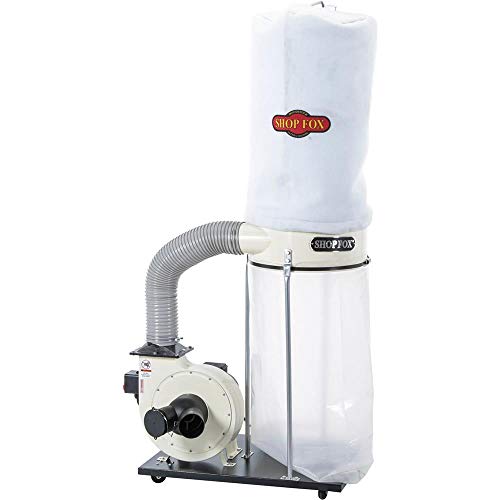
Brand: Shop Fox
- 2 HP dust collector designed for reliable, continuous use
Best for: Shops needing a sturdy, straightforward 2 HP unit with predictable performance. Selected for its balance of power and simplicity, making it a good upgrade from lighter-duty portable vacuums. Limitation: It’s a floor-standing unit, so footprint and ducting requirements matter for smaller spaces.
JET Cyclone Dust Collector (JCDC-1.5)

Brand: Jet
Features include a cyclone-based two-stage separation that moves more air for the horsepower, pulling heavy debris into a 20-gallon steel drum before it reaches the filter. Direct-mounted filter reduces inefficiencies from bends in hoses. Best for: Workshops needing high debris handling and cleaner air with reduced filter clogs. Limitation: cyclone units can be bulkier and require more duct planning than bare-bones single-stage models.
DEWALT Dust Separator with 10 Gallon Tank

Brand: DEWALT
Features include a high-efficiency stainless dust separator capturing chips and debris before reaching vacuums, 10-gallon stainless tank, and compatibility with 1-7/8″ or 2-1/2″ ports. Best for: Users looking to protect vacuums and extend filter life while maintaining flexibility across different vacuums and tools. Limitation: Effectiveness depends on proper sizing of connections and the downstream vacuum; may require additional ducting adjustments.
Central Machinery 2 HP Industrial Dust Collector

Brand: Central Machinery
Features: 2 HP, 120V, 60 Hz, 20A peak, single-phase motor with 1550 CFM air suction capacity. Best for: Budget-conscious shops that still need strong airflow to support multiple tools. Limitation: Might require upgrade paths for filtration efficiency or ducting in very large workshops.
CNC Dust Collector With Air Filtration (Coolook TWOTREE M1)

Brand: Coolook
Notes: This product is included for CNC-specific dust control, featuring a brushless motor and adjustable suction, with a built-in filtration system and negative ion generator. Best for: Small desktop CNC setups requiring compact dust control and air purification. Limitation: May not scale to larger woodworking operations; designed for CNC work rather than full shop dust collection.
Buying Guide
What to consider when choosing an industrial dust collector machine
- Shop size and layout: Larger shops may require higher CFM and cyclone separation; smaller spaces benefit from wall-mount or compact floor models.
- Filtration strategy: Two-stage filtration and cyclone options reduce filter maintenance and improve air quality. Consider the types of dust and debris you generate.
- Port sizing and ducting: Ensure dust ports match your tools (usually 4″ or 2.5″), and plan for straight runs with minimal bends to maximize airflow.
- Mobility vs. fixed installation: Wall-mounts save floor space; mobile bases offer flexibility if you move tools around.
- Electrical requirements: Verify motor horsepower and voltage to match your shop circuits and avoid overloading.
- Maintenance needs: Look for easy access to filters, clear bins, and simple bag changes to minimize downtime.
- Budget and scalability: Start with a unit that handles current needs with room to grow as your workshop expands.
Frequently Asked Questions
- What is a practical CFM requirement for a typical woodworking shop?
A: For a small to mid-size shop with several tools in use, aim for 600–1200 CFM total system capacity, with good cyclone or two-stage filtration to keep air clean. - Is cyclone filtration better than single-stage filtration?
A: Yes, cyclone designs generally separate heavier dust before it reaches the filter, reducing maintenance and improving suction over time. - Should I choose a wall-mounted dust collector?
A: Wall-mounts save floor space and keep airflow visible and accessible; ensure adequate mounting support and proper clearances around the unit. - Do I need a dedicated dust collection system for each tool?
A: Not necessarily. A central system with properly sized ducting can service multiple tools, but ensure the system maintains sufficient CFM when several machines run simultaneously. - What maintenance tasks are most important?
A: Regular emptying of collection bins, cleaning or replacing filters as needed, and inspecting ducting for leaks or disconnections.