When selecting hydraulic in-line filters, choose models that match your system’s pressure, flow rate, and fluid type. This guide highlights five reliable options across common sizes and configurations, helping you pick the right filter for agriculture, construction, and industrial hydraulics. Best for hobbyists who maintain small but high-pressure circuits, mid-range jobs, and heavy-duty machinery alike, these filters balance filtration efficiency and durability. The quick comparison table below summarizes core specs to aid quick decisions.
| Product | Port Size | Micron | Max PSI | Best For |
|---|---|---|---|---|
| PneumaticPlus PP-9053V | 3/8″ NPT | 10 | 3,000 | Compact, high-pressure lines |
| DICMIC 10 Micron Assembly | 3/4″ NPTF | 10 | 200 | Return-line filtration, agricultural machinery |
| Materro In-Line Filter | 3/4″ NPT | 25 | 3,000 | High-pressure small systems |
| ZXTQWX Spin-On 10 Micron | 3/4″ NPTF | 10 | 250 | Petroleum-based circuits |
| wzyufon In-Line Filter | 2 x Supplies | Multiple | 3,000 | OEM compatibility in Bobcat/heavy equipment |
PneumaticPlus PP-9053V Hydraulic In-Line Filter
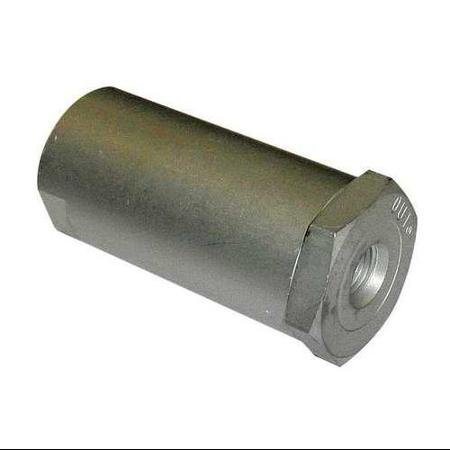
The PneumaticPlus PP-9053V filter handles up to 3,000 PSI with a 10-micron sintered bronze element and Viton seal. It is designed for compact high-pressure hydraulic lines. Best for small to mid-size machinery that requires fast installation and reliable filtration in tight spaces. The 10-micron rating provides a balance between contaminant capture and flow, making it suitable for general hydraulic circuits in farming equipment and light industrial setups.
Why this is chosen: It combines high operating pressure with a compact footprint, which helps in tight routing where space is at a premium. The Viton seal offers chemical resistance for common hydraulic fluids. Caution: Limited data on bypass behavior; verify bypass pressure aligns with your system to avoid unintended bypassing in failure modes.
DICMIC 10-Micron Hydraulic Oil Filter Assembly
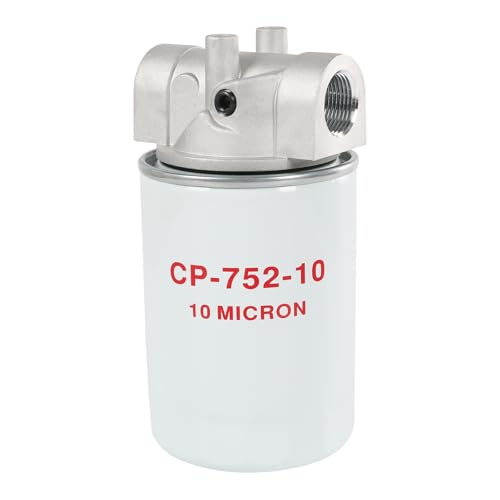
The DICMIC 10-micron spin-on oil filter is designed for return-line filtration with a 15 PSI bypass, suitable for petroleum-based fluids, water glycols, and emulsions. With a robust aluminum die-cast body and Buna-N seals, it tolerates high temperatures and harsh conditions, making it a strong choice for tractors, log splitters, and agricultural machinery. Best for return-line filtration where a simple, replaceable filter element is desired.
Why this is chosen: It offers fine filtration at 10 microns while supporting diverse hydraulic fluids. Caution: The 200 PSI rating limits operation in very high-pressure circuits; confirm your system’s actual operating pressure. Consider wiring in the indicator port if real-time condition checks are needed.
Materro Hydraulic In-Line Filter

Materro’s 3/4″ in-line filter features an anodized aluminum housing with a 25-micron filter media in a 3/4″ NPT configuration, suitable for small, high-pressure hydraulic systems. The unit is designed for durability in demanding environments and is easy to install in standard hydraulic lines. Best for users who need a compact, rugged filter with a moderate micron rating for general protection against debris in critical circuits.
Why this is chosen: Its lightweight aluminum housing reduces weight without compromising strength. Caution: A 25-micron rating may not catch the finest contaminants in very clean systems; pairing with pre-filtration can help in precision applications.
ZXTQWX Spin-On 10-Micron Hydraulic Filter
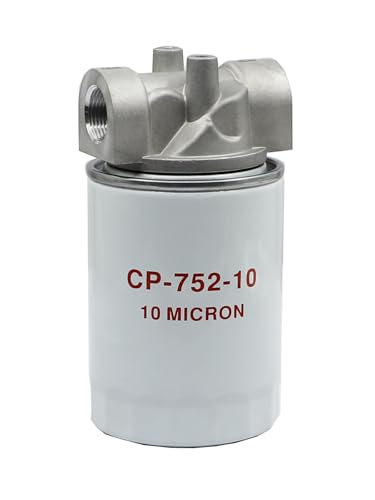
The ZXTQWX spin-on assembly provides a 10-micron filtration with a 3/4″ NPTF inlet/outlet and a 15 PSI bypass. It’s designed for petroleum-based fluids and a range of mechanical circuits. The installation steps are clearly visible on the filter element, which can simplify maintenance. Best for systems that require routine filter changes without complex plumbing.
Why this is chosen: The 10-micron level suits clean hydraulic loops; the visible installation steps offer ease of service. Caution: Not ideal for very high-flow demands; ensure your loop’s GPM aligns with this unit’s flow capacity.
In-Line Hydraulic Filter 6661022 (Bobcat Compatibility)

This in-line filter matches Bobcat models like 853, 863, 864, 873, and 963 among others. It is designed to remove impurities in hydraulic systems and prevent damage from contaminants. Best for Bobcat-equivalent work or other heavy equipment where a direct-fit filter is essential. The kit includes a replacement element compatible with several part numbers.
Why this is chosen: Direct compatibility with popular Bobcat models reduces install risk. Caution: Large compatibility lists can vary by year and model; verify exact fit for your machine before purchase.
GRAINGER APPROVED Hydraulic In-Line Filter, 1/4 in
This 1/4″ in-line filter by GRAINGER APPROVED handles up to 3,000 PSI with a 25-micron filtration rating and a sintered bronze media. It uses an anodized aluminum housing and is intended for small, high-pressure hydraulic systems. Best for compact circuits where reliable filtration is required without sacrificing space.
Why this is chosen: The small form factor suits tight installations. Caution: A 25-micron rating may not suit applications needing ultra-fine filtration; pair with additional stages if necessary.
RARAYC Spin-On Hydraulic Oil Filter Assembly

The RARAYC 10-micron filter is designed for petroleum-based fluids with 20 GPM flow and 200 PSI, offering a return-line filtration solution with 3/4″ NPTF ports and integrated indicator ports for status checks. Best for industrial and agricultural systems needing real-time monitoring of filter condition to prevent downtime. The spin-on design simplifies service and replacement.
Why this is chosen: Real-time indicator ports enhance maintenance planning. Caution: Ensure your flow rate remains within 20 GPM to avoid flow restriction in high-demand circuits.
Industrial Air Filter MF-10 Suction/Hydraulic Element

The MF-10 suction/hydraulic filter element is designed for ring blowers and centralized lubrication systems, offering a stainless steel mesh and metal housing. It is cleanable for long service life and protects hydraulic pumps by preventing solid debris from entering the system. Best for inline protection in air-assisted or lubrication circuits where debris control is critical.
Why this is chosen: Reusable design lowers maintenance cost over time. Caution: Not a direct hydraulic inline-only unit; verify compatibility with your system’s suction or lubrication arrangement.
Buying Guide: Key Considerations For Hydraulic In-Line Filters
- Flow and pressure compatibility: Match the filter’s maximum PSI and the system’s GPM to avoid restriction or bypass.
- Micron rating: Lower microns capture finer contaminants but may reduce flow. Choose based on system cleanliness needs and fluid age.
- Housing and material: Aluminum housings are light and durable; bronze and stainless variants offer corrosion resistance in harsh environments.
- Port size and thread type: Confirm NPT vs NPTF and inlet/outlet orientation to fit your plumbing layout.
- Bypass features: Some filters include bypass valves; understand bypass pressure to prevent unfiltered fluid from circulating in high-demand scenarios.
- Maintenance and serviceability: Spin-on vs replaceable elements affect downtime and labor costs. Indicator ports help monitor filter life.
- Fluid compatibility: Ensure seals and materials are compatible with your hydraulic fluid type to avoid leaks or seal damage.
Frequently Asked Questions
- What micron rating should I choose?
– For general protection, 10–25 microns balances flow and filtration. For extremely clean systems, consider 5 microns if compatible with flow. - How do I know if a filter is compatible with 3/4″ NPTF or 1/4″ NPT?
– Check the port size and thread type on the filter body and compare with your hose or port fittings. The product listings specify NPT or NPTF sizing. - Can I use more than one filter in a hydraulic circuit?
– Yes, staging filters can improve cleanliness, but ensure the total pressure drop remains within system limits and that flow is not restricted. - What maintenance data should I track?
– Track filter type, microns, flow, operating pressure, and maintenance dates. Indicator ports or gauges help determine when to replace the element. - Are spin-on filters easier to service than inline cartridge types?
– Generally yes; spin-on designs simplify replacement, but inline cartridges may offer lower cost per change and easier field service in some configurations.