When you need to move large amounts of water quickly, a high power water pump is essential. This guide highlights five strong options, suitable for basements, ponds, irrigation, and emergency water removal. Each pick is analyzed for who benefits most and why it stands out, with practical cautions to consider before you buy.
| Product | Best For | Key Benefit |
|---|---|---|
| Aquastrong Sump Pump 1 HP | Basements, hot tubs, and heavy-duty draining | High flow up to 4500 GPH with flexible discharge adapters |
| ECO-WORTHY 33-Series Industrial Pump | Home irrigation and RV water supply | Smart pressure switch, automatic on/off at 50 PSI |
| NorthStar High-Pressure Water Pump | Agricultural and emergency water transfer | Up to 94 PSI with a Honda GX160 engine |
| VIVOSUN 800 GPH Submersible Pump | Ponds, fountains, and small water features | Quiet operation and adjustable flow |
| ECO-WORTHY 110V AC Fresh Transfer Diaphragm Pump | Garden irrigation and home transfer | 5.5 GPM with 70 PSI pressure and auto-shutoff |
Aquastrong Sump Pump 1 HP 4500 GPH

The Aquastrong sump pump offers a robust 1 HP motor capable of draining up to 4500 GPH at a 5-foot lift, with the ability to push water up to 30 feet vertically. It features a bottom suction design to pull water with debris as small as 1/5 inch, making it suitable for flooded basements or window wells and hot tub drainage. The discharge is compatible with 1-1/4″ NPT plumbing and includes adapters for 1-1/2″ elbow and various 3/4″-1-1/4″ snap fittings. The 10-foot UL power cord adds convenience and safety. Best for heavy-duty draining tasks where high flow is essential, such as utility rooms or flood-prone areas. Caution: ensure solids are kept to 1/5″ or smaller to avoid clogging the impeller.
ECO-WORTHY 33-Series Industrial Water Pressure Pump
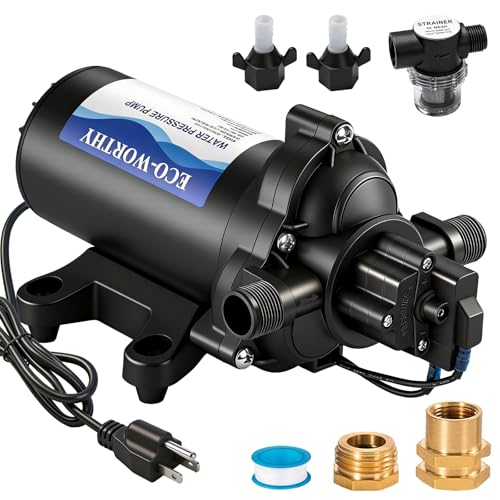
This 110V diaphragm pump uses a smart pressure switch to maintain water delivery at around 50 PSI, turning on automatically with demand and shutting off when fixtures close. It supports up to 4.0 GPM flow and can lift water up to 131 feet. It is designed for reliable performance with thermal overload protection and adjustable pressure in the 45-70 PSI range. Best for home irrigation or RV fresh water needs where consistent pressure is valued. Limitation: not a self-priming pump, so priming before use is required, and it may require manual setup for initial startup.
NorthStar High-Pressure Water Pump

NorthStar’s pump focuses on high-pressure performance with a 94 PSI maximum delivery. It’s driven by a Honda GX160 engine, offering reliable power and throttle control for precise water pressure and flow. Equipped with rugged silicon carbide seals, it’s designed for demanding agricultural and emergency tasks where long-distance or high-height water transfer is needed. Best for users who require strong, controllable pressure and a proven gas engine, though it may be heavier and noisier than electric options. Caution: gasoline-powered units require proper ventilation and fuel handling precautions.
VIVOSUN 800GPH Submersible Pump

With an 800 GPH maximum flow and a lift height up to 10 feet, this compact submersible pump is ideal for ponds, fountains, and small water features. It includes multiple nozzles for adjustable water pressure and flow, is designed to be quiet and easy to clean, and comes with a 6.5-foot power cord for flexibility. Best for decorative ponds or indoor hydroponics where a low-noise, easy-to-maintain pump is preferred. Limitation: not designed for heavy debris; use in clear water applications and monitor for clogging.
ECO-WORTHY 110V Fresh Transfer Diaphragm Pump

This diaphragm pump is designed for on-demand fresh water transfer with a rated 5.5 GPM flow and 70 PSI pressure. It features a self-priming capability up to 9.8 vertical feet and a lift of up to 131 feet. The unit includes a thermal overload protection and a safety-focused design for quieter operation. Best for irrigation and household water transfer tasks where consistent pressure is needed without a heavy engine. Caution: not a submersible model; do not immerse the motor.
Buying Guide
What to consider before buying a high power water pump
- Flow rate vs. head height: Determine the required GPH and the vertical lift to select a model that meets both flow and distance needs.
- Power source: Electric pumps tend to be quieter and easier to maintain; gas-powered pumps deliver more raw pressure but require fuel and louder operation.
- Self-priming and priming requirements: Some pumps need manual priming; others auto-prime or are self-priming to start with minimal setup.
- Debris handling: If you expect solids or debris, choose a pump with a debris intake specification or bottom-suction design.
- Durability and materials: Stainless steel or corrosion-resistant housings extend life for outdoor and irrigation use.
- Port connections and adapters: Check compatible discharge sizes and included adapters to fit your plumbing.
- Automatic controls: Smart switches or pressure sensors can reduce manual operation and improve efficiency.
How to choose by application
- Basement or flood drainage: Look for high GPH and a robust motor; consider bottom suction and a long power cord for reach.
- Irrigation and garden transfer: A pump with auto-on features at a stable PSI helps maintain consistent watering.
- Water features and ponds: Quiet operation, adjustable flow, and corrosion-resistant materials are advantageous.
- Emergency transfer: High pressure and reliable engines ensure water can be moved long distances or to higher elevations.
Maintenance tips
- Regularly clear debris from intakes to prevent clogs and maintain flow.
- Inspect seals and electrical connections for signs of wear or corrosion.
- Follow manufacturer guidelines for priming and starting procedures to avoid dry-running.
FAQ
- What is the practical difference between GPH and PSI?
– GPH describes how much water the pump moves per hour; PSI measures the pressure at which water is delivered. Both influence suitable tasks and hose length. - Are submersible pumps safer for basements?
– Submersible models reduce electrical exposure and are common for flooding scenarios, but ensure appropriate cord length and outlet protection. - Do I need a diaphragm pump for irrigation?
– Diaphragm pumps offer consistent pressure and automatic on/off with demand; ideal when precise water delivery is needed. - Can I use a gas-powered pump for indoor tasks?
– Gas engines emit exhaust and are generally not suitable for enclosed spaces without proper ventilation. - How important are adapters included with a pump?
– Adapters reduce plumbing work and ensure a secure fit with existing hoses and fittings, preventing leaks. - What maintenance keeps a high-power pump reliable longer?
– Clean intake screens, replace worn seals, check electrical connections, and store in a dry area when not in use.