Choosing a robust ground mount system is essential for maximizing solar energy production, especially in open spaces, backyards, and sheds. The following selections focus on stability, adjustability, and compatibility with mid- to large-format panels. Each option is designed to resist wind and snow loads while offering angles that optimize sun exposure. Read on to compare five leading ground-mount kits and what makes them suitable for different installation scenarios.
| Product | Main Advantage |
|---|---|
| Enhanced stability; adjustable tilt | Homes, farms, cabins, off-grid sites |
| High load-bearing; multi-triangular design | Large installations; farms; sheds |
| Up to 25% efficiency gain with tilt | RVs, boats, sheds, off-grid |
| High stability; tool-free tilt 0-90° | Balconies, small to mid-size systems |
| Wind resistance; easy single-handed tilt | RVs, roofs, ground mounts |
ECO-WORTHY Upgraded Solar Ground Mount

The ECO-WORTHY upgraded ground-mount kit features a long front-to-back footprint with taller front and rear pillars to better support sizable solar panels. Front column height is 13.78 inches and rear is 28.53 inches, with a 59-inch spacing between parallel vertical columns. It is designed to bear up to 160 lbs and includes an upgraded middle support rod to minimize sag. Tilt angles range from 30 to 60 degrees, enabling efficient sun capture and improved energy yield. This system is suitable for homes, farms, cabins, and off-grid sites where large panel arrays are installed.
ECO-WORTHY Solar Ground Mount (Large Scale)
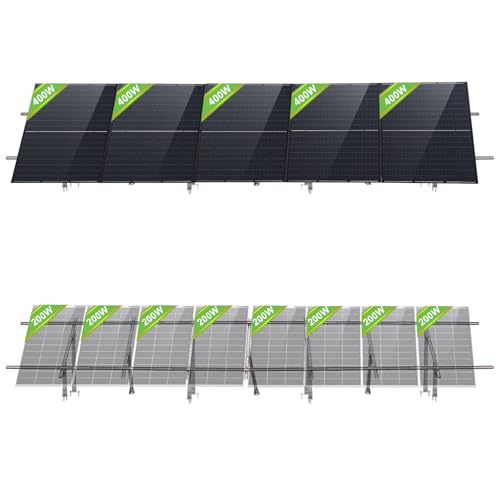
This ECO-WORTHY system is designed for significant installations, supporting up to five 400W panels and offering a multi-triangular frame for increased stability. The recommended vertical spacing is 59 inches, with three central support rods and cement-block foundations recommended for ground-level secure mounting. The bracket set can be adjusted to seven preset tilt angles between 30° and 60°. The result is a resilient structure capable of handling 330 lbs and minimizing panel sag over time, ideal for farms, larger sheds, and off-grid sites.
ECO-WORTHY 4 Sets 45inch Tilt Mount Brackets

This tilt mount kit increases solar panel efficiency by up to 25% by angling panels toward the sun. It is designed for 100W–400W panels, and each bracket can support a single solar panel, with flexibility for a wide range of configurations. The system is suitable for roof, RV, boat, shed, and off-grid installations where tilting panels toward the sun yields more energy. The adjustable hole positions and scales help installers fine-tune angles for maximum performance.
PFCTART Solar Panel Mount Brackets (2 Sets)

These 45-inch rails provide reliable, multi-functional support for 100–500 watt panels. The kit is torsion- and corrosion-resistant, with an adjustable tilt range of 0–90° without tools. Panels can be mounted horizontally or vertically, making this option versatile for balcony, mini PV systems, and off-grid setups. The robust aluminum rails and included fasteners ensure secure installation and stable performance in varying conditions.
Dgavxa 2 Sets (4 Pack) 45inch Tilt Mount

The Davgxa set offers 45-inch tilt mounts in a four-pack, designed for 2–4 panels ranging from 180 to 500 watts. The system emphasizes wind resistance and easy single-handed tilt adjustment (0°–90°), with aerospace-grade aluminum rails and triangular bracing to withstand substantial wind loads (up to 2400 Pa). These features make it suitable for RV, roof, and ground installations where rugged performance and flexibility are required.
Buying Guide
Key considerations when selecting a ground mount system include structural stability, wind and snow load ratings, and the ability to tilt or rotate for sun exposure. Assess the following:
- Panel compatibility: Ensure the system supports your panel wattage and dimensions. Some kits are optimized for 100–200W panels, others handle 400W+ modules.
- Tilt and tracking options: Tilt helps optimize energy yield; multi-angle presets simplify adjustments over time. For higher gains, consider adjustable tilt ranges up to 60° or even dual-axis tracking if budget permits.
- Material and corrosion resistance: Aluminum frames and stainless fasteners resist corrosion and extend lifespan in varied climates.
- Wind and load ratings: Look for systems rated to withstand local wind speeds and snow loads. Ground mounts should have secure foundations (concrete blocks or anchors) for stability.
- Foundation requirements: Some kits require cement blocks or concrete footings. Plan the installation site to accommodate base anchors and soil conditions.
- Ease of installation: Tool-free tilt mechanisms and straightforward assembly reduce labor time and error potential.
- Expansion potential: If you plan to add more panels later, choose a system that can scale with additional rails and brackets without replacing the entire setup.
- Weight limits and transportability: For portable or temporary setups (like RVs or sheds), lighter, modular options can be advantageous.
Practical considerations
- Off-grid readiness: In remote locations, a sturdy ground mount with secure foundations helps ensure long-term reliability and reduces maintenance needs.
- Environmental impact: Opt for kits with durable materials and long service life to minimize replacement cycles and waste.
- Maintenance access: Choose layouts that allow easy access to panels for cleaning and inspection without disassembly.
These five ground-mount options provide a range of configurations—from budget-friendly tilt kits to heavy-duty, large-scale systems. The best choice depends on your panel count, local climate, available space, and future expansion plans. Always verify installation requirements with the manufacturer’s guidance before purchasing.