Choosing the right gas regulator is essential for safe and efficient natural gas delivery in grills, fireplaces, stoves, and outdoor fire features. The following selections are designed to balance ease of installation, correct inlet/outlet pressures, and compatibility with common NG applications. This article reviews five top options, highlighting what you’ll want to consider when selecting a regulator for natural gas.
| Product | Brand | Key Use | Inlet/Outlet |
|---|---|---|---|
| TEENGSE 102-B | TEENGSE | Natural Gas or LPG valve regulation | 1/2″ FPT inlet/outlet |
| Maxitrol RV48L (3/4″ FPT) | MAXITROL | Natural gas, residential/industrial lines | 1/2″ PSIG In; 3/4″ FPT |
| Maxitrol RV48L (1/2″ FPT) | MAXITROL | Natural gas, compact setups | 1/2″ FPT |
| GASPRO 710-003 | GASPRO | Grills, fire pits, stoves | 1/2″ Male Flare x 3/8″ Female Flare adapter included |
| Aupoko 1/2″ Gas Regulator | Aupoko | NG/LPG applications with adapters | 1/2″ NPT / 2 brass adapters |
The following sections break down each option, including compatibility notes, typical use cases, and what makes each regulator a strong choice for natural gas installations. Each product section stays within a concise, buyer-focused overview to help you compare features quickly.
TEENGSE 102-B Natural Gas Regulator

The TEENGSE 102-B regulator is designed to handle both natural gas and liquefied gas valves, with 1/2″ FPT inlet and outlet connections. It includes brass 1/2″ NPT adapters to simplify the transition between piping standards, plus joint thread tape for installation. In LPG mode, inlet pressure is 11″ water column (2.74 kPa) and outlet around 10″ w.c. with a flow rate of up to 30 L/min. In natural gas mode, the regulator uses an inlet of around 7″ w.c. and outputs 4″ w.c. with a higher flow (up to 50 L/min). The device is user-adjustable, enabling switching between LPG and NG for versatile setups. This flexibility makes it a practical choice for mixed-fuel environments or retrofit projects where valve compatibility matters.
Maxitrol RV48L Natural Gas Regulator (3/4″ FPT)

The Maxitrol RV48L is a regulated natural gas device featuring a 3/4″ FPT outlet with 3″-6″ WC output range and a 1/2 PSI inlet. It requires careful sizing to ensure the 3/4″ opening matches the piping in your system, and the instruction set notes that some installations demand a close fit to a 1-1/16″ opening for 3/4″ pipes. This regulator is well-suited for mid-sized residential or commercial gas lines where stable, moderate pressure is needed to feed grills, fires, or boilers. Its robust construction and clear pressure range help maintain consistent flame output while reducing pressure fluctuations.
Maxitrol RV48L Natural Gas Regulator (1/2″ FPT)
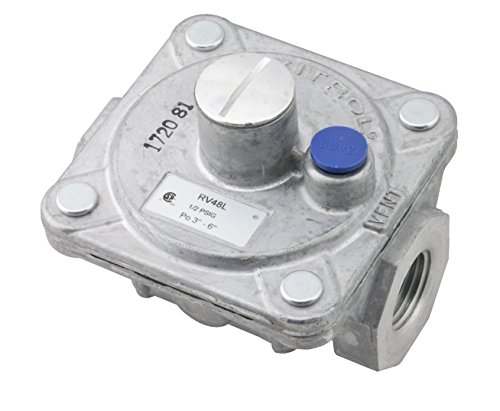
This variant of the RV48L uses a 1/2″ FPT inlet/outlet configuration with a similar pressure range of 3″-6″ WC. It’s designed for NG systems where smaller piping is used or space constraints limit larger regulators. The documentation emphasizes correct measurement of regulator openings in relation to pipe size, with careful attention to interior vs. exterior diameters. This option is a solid pick for compact installations or retrofit jobs on existing 1/2″ piping networks, delivering reliable pressure control without bulky components.
GASPRO 710-003 Natural Gas Regulator

The GASPRO 710-003 regulator is designed to deliver effective pressure regulation for natural gas. It features a 1/2″ regulator body with a 1/2″ male flare on the inlet and a 3/8″ female flare on the outlet. An included adapter aids compatibility with a 1/2″ NG pipe, making it a flexible choice for grills, fire pits, stoves, and similar appliances. The regulator is intended to maintain stable outputs to support consistent flame performance and to prevent pressure surges that can cause whistle or flame instability in outdoor or indoor NG applications.
Aupoko 1/2″ Gas Pressure Regulator

The Aupoko regulator is designed for NG/LPG applications and arrives with two brass 1/2″ NPT adapters, expanding compatibility with various piping and flare configurations. It offers two regulation modes: LPG mode (inlet 11″ w.c., outlet 10″ w.c., flow ~30 L/min) and natural gas mode (inlet 7″ w.c., outlet 4″ w.c., flow ~50 L/min). The dual-mode capability simplifies mixed-fuel installations or future upgrades and supports safe operation across both LPG and NG systems. Its standard 1/2″ female NPT fittings and included adapters help streamline installation in a variety of setups.
Buying Guide: Key Purchase Considerations And Comparisons
When selecting a gas regulator for natural gas, consider a range of factors to ensure safety, compatibility, and efficient operation. This guide highlights critical criteria and how different models measure up.
- Regulation range and target pressure: Natural gas appliances typically require a regulated outlet in the range of 3″ to 6″ water column (approx. 0.11 to 0.22 psi). Some regulators offer adjustable ranges; choose one that matches your appliance requirements and local codes.
- Inlet/outlet connection size: Match the regulator’s inlet and outlet threads to your piping. Common NG configurations include 1/2″ and 3/4″ NPT can be compatible with various adapters. Verify the interior vs. exterior diameters to ensure a proper seal and fit.
- Mode compatibility: If you operate both NG and LPG, a regulator with dual-mode functionality can simplify installation and support future fuel-switch needs. Pay attention to the regulator’s stated LPG and NG pressures and flow rates.
- Adapters and accessories: Some regulators ship with conversion adapters to facilitate linkage to different piping standards. Ensure adapters are included if your setup requires them, and check compatibility with your specific piping and fittings.
- Safety and certification: Look for regulators designed for natural gas with corrosion-resistant materials and clear wiring/assembly instructions. Follow all local codes and install only per manufacturer guidelines or by a qualified professional.
- Installation considerations: Space, accessibility for adjustment, and ease of maintenance matter. Regulators should be mounted with clear access, away from heat sources, and with appropriate shut-off valves nearby for safe servicing.
- Performance consistency: A regulator that maintains stable outlet pressure across varying inlet conditions minimizes flame fluctuations and reduces the risk of whistle or popping sounds in fire pits and grills.
Across the products reviewed, several common strengths emerge: adjustable outputs for precise flame control, compatibility with standard 1/2″ and 3/4″ NG piping, and inclusion of adapters or installation aids to simplify retrofits. For smaller installations or limited spaces, the 1/2″ FPT variants offer a compact solution, whereas 3/4″ FPT outlets provide capacity for higher-demand appliances. In environments where dual-fuel use is anticipated, look for dual-mode regulators that explicitly support LPG and NG configurations.