Protecting fabrics, garments, and surrounding materials from flames is a safety priority in homes, theaters, and workspaces. The products below are among the most used fire retardants that bond with fabrics, wood, and textiles to slow flame spread and reduce toxic smoke. This guide highlights five reliable options, summarizing how they work, typical applications, and what to consider when choosing a fire retardant spray or pad for fabrics and related materials.
Summary of chosen products:
| Product | Brand | Best Use | Key Benefit |
|---|---|---|---|
| DRI-ONE Fire Retardant Spray for Fabric | DRI-ONE | Fabric, Wood, Upholstery | Class A, quick-drying, no mixing |
| ForceField FireGuard Flame Retardant | ForceField | Clothing, Fabrics, Draperies, Carpets | Nonhazardous, environmentally friendly |
| Flamecheck M-111 Fire Retardant Spray | Flamecheck Simply Safer | Fabric, Wood, Draperies | Non-toxic, class A on ASTM E-84 |
| Fire Retardant Spray (Class A for Fabric, Wood, Theater Curtains) | DRI-ONE | Fabric, Wood, Theater Curtains | Established protection, American-made |
| Matace 2 Pack Fireproof Welding Blanket & Pad | Matace | Welding, Soldering, High-temp work | Up to 3000°F, durable carbon felt |
DRI-ONE Fire Retardant Spray for Fabric

DRI-ONE’s spray for fabric, wood, and more is a Class A fire retardant with NFPA 701 and ASTM E84 compliance. The formula bonds with materials, forming a protective shield before painting or staining. It dries clear, requires no mixing, and is designed to limit flame spread while reducing toxic smoke. The product emphasizes American manufacturing and a focus on non-toxic, PBDE-free formulas, making it suitable for a range of fabrics and upholstery.
ForceField FireGuard Flame Retardant

ForceField FireGuard is designed to protect fabrics, clothing, draperies, and textiles. The formula is advertised as nonhazardous and environmentally friendly, offering a safer option for households and facilities with fabric surfaces. While it emphasizes safety, users should follow application instructions to achieve effective flame resistance and to ensure compatibility with various fabric weights and finishes.
Flamecheck M-111 Fire Retardant Spray
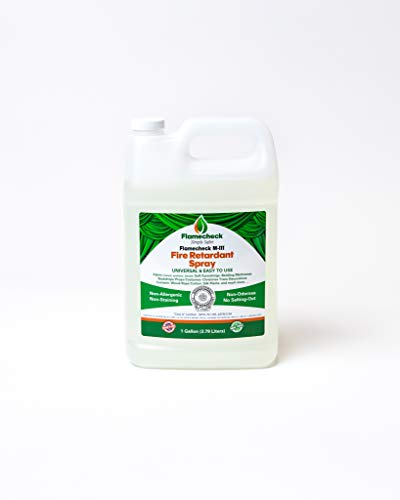
Flamecheck M-111 is presented as a non-toxic, non-corrosive, and non-odorous spray that meets NFPA 701 on fabric and achieves Class A ratings on ASTM E-84 for wood when used on absorbent wood. It is marketed for a broad range of fabrics, draperies, banners, costumes, and stage props. The product highlights its safe use on delicate materials like silk and its movie-industry familiarity for fire safety on absorbing fabrics and props.
DRI-ONE Class A Fire Retardant 5 Gallon

This large-volume option from DRI-ONE offers Class A fire retardant coverage with the same behavioral traits as smaller bottles: no mixing, quick-drying, and clear finish. It emphasizes safety for fabrics, draperies, theater materials, and other absorbent surfaces. The product profile reiterates American manufacturing and a commitment to reducing flame spread and toxic smoke, suitable for larger venues or facilities with extensive fabric use.
DRI-ONE Fire Retardant Spray (1 Gallon)

DRI-ONE’s 1-gallon spray is presented as a versatile Class A fire retardant for fabric, wood, and theater applications. It shares the brand’s hallmark features: no dilution, clean-drying, and a focus on reducing flame spread and smoke production. This option is suitable for larger projects where a single container must cover a broad area of fabrics and absorbent surfaces.
DRI-ONE Class A Fire Retardant (Additional)

Another DRI-ONE Class A option, this spray emphasizes robust fire resistance for fabric, wood, theater curtains, and other absorbent materials. It continues the brand’s emphasis on easy application, quick readiness, and safe post-treatment outcomes, suitable for venues with heavy fabric usage or frequent flame-risk exposure.
Buying Guide
- Flame rating and certifications: Look for products labeled Class A and NFPA 701/ASTM E84 compliance. These indicate performance against standard flame-spread tests on fabrics, wood, and textiles.
- Material compatibility: Confirm whether the product is designed for fabrics, upholstery, draperies, or wood. Some options are specifically for high-heat surfaces like welding blankets, while others target textiles and clothing.
- Application method: Consider whether the product is a spray, wipe-on, or dip-on solution. Sprays are convenient for large areas; dips suit small parts; wipes are good for delicate finishes.
- Drying time and odor: Quick-drying, non-odorous formulas minimize disruption to operations and reduce residue that might affect finishes like paint or stain.
- Safety and environmental impact: Favor PBDE-free formulas and non-toxic, non-corrosive compositions when working with living spaces or sensitive fabrics.
- Application volume and coverage: For larger projects (theaters, venues, or workshops), higher-volume options (gallons) may offer better value and coverage, while consumer-sized bottles suit households.
- Post-treatment durability: Some products bond with materials to maintain flame resistance after painting or staining; others may require reapplication after cleaning or over time.
When selecting a fire retardant for fabrics and textiles, align the product’s certifications with your specific use case, consider the fabric type and weight, and follow the manufacturer’s instructions for best results. For venues with extensive fabric use or high fire-risk exposure, combining products with appropriate coverage and reapplication schedules can provide sustained safety and compliance.