When storing waste oil, choosing a double-wall design adds an essential layer of protection against leaks, spills, and environmental contamination. This guide highlights top-performing options and similar storage solutions ideal for auto shops, fleets, and industrial sites. Each listing focuses on robust construction, containment features, and practical benefits for specific buyers—such as small shops needing compact units or facilities requiring larger, lockable tanks.
| Product | Capacity | Double-Wall | Best For |
|---|---|---|---|
| Midwest Industrial Tanks Waste Oil Tank – 500-Gallon | 500 gal | Yes (double-walled construction on outer/inner tanks) | Medium-to-large operations needing secure, spill-resistant storage |
| Midwest Industrial Tanks Waste Oil Tank – 250 Gallon | 250 gal | Yes (double-walled protection) | Smaller shops or mobile service fleets |
| Hazardous Material Safety Cabinet, 45 Gal Flammable Storage | 45 gal | Double-wall welded construction | Compact, wall-mounted or floor space-constrained areas |
| Hazardous Storage Cabinet, Double Wall | 60 gal capacity (per internal layout) | Double-wall welded structure | Industrial chemical and flammable liquid organization |
| 45 Gal Flammable Safety Cabinet | 45 gal | Double-wall steel with venting | Vapor control and safe storage in workshops |
Midwest Industrial Tanks Waste Oil Tank — 500 Gallon
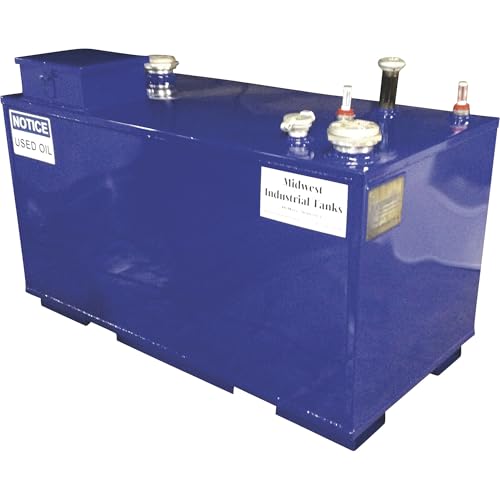
The 500-gallon waste oil tank by Midwest Industrial Tanks features a lockable design and integrated filtration, aiming to minimize unauthorized access and leaks. It includes emergency vents, level and leak gauges, and a 2-inch suction tube with cam lock fittings when transferring fluids. Ports on both inner and outer tanks enable easy servicing and monitoring. This model is best for larger auto shops or fleets that require secure, contained storage and straightforward maintenance access. A limitation is that the unit’s size may require dedicated floor space and compatible lifting equipment for installation or relocation.
Midwest Industrial Tanks Waste Oil Tank — 250 Gallon

This 250-gallon model provides double-walled protection without requiring a separate secondary containment tank, making it a practical choice for smaller shops or mobile service operations. Its rugged carbon steel construction supports stable long-term use, and ports on both inner and outer tanks facilitate access for draining and monitoring. Choose this tank if you need a compact, secure solution that minimizes additional containment requirements while maintaining safety standards. A potential limitation is moderate capacity for high-volume waste oil storage.
Hazardous Material Safety Cabinet, 45 Gal Flammable Storage

This yellow steel cabinet emphasizes full welded construction and a lockable, durable frame designed to store flammable materials safely in smaller spaces. Features include a leak containment tray and access ports to minimize vapor buildup. Best for environments needing a compact, compliant storage option for flammable substances or hazardous oils. A caution is that the unit’s capacity is limited to smaller quantities, which may not suit high-volume storage needs.
Hazardous Storage Cabinet, Double Wall

This double-wall welded storage cabinet emphasizes reinforced durability and a dedicated space for safe hazardous chemical storage. Its reflective design accommodates upright organization with adjustable shelves and built-in protection features to contain spills. Best for industrial settings requiring robust containment and organized classification of flammable or reactive liquids. A limitation is that assembly may be more complex due to welded construction compared to riveted units.
45 Gal Flammable Safety Cabinet

This cabinet features double-wall steel with built-in leak containment and venting to control flammable vapors. It is designed to meet safety requirements for workshop environments that store small to medium quantities of flammable liquids. Best for workplaces needing quick access to stored liquids with reliable vapor management. A caveat is that, for larger storage needs, higher-capacity units may be more cost-effective in the long run.
Buying Guide
- Storage capacity: Match tank or cabinet capacity to your weekly waste oil generation. Larger facilities benefit from 250–500 gallon tanks, while smaller shops may fit 45–60 gallon cabinets.
- Containment design: Double-wall construction reduces spill risk. Confirm whether the design includes an inner and outer tank, a leak containment tray, or both.
- Accessibility: Features like ports on both inner and outer tanks, lockable access, and filter drains support safe operation and compliant handling.
- Fire and vapor protection: Look for spill sump, ventilation provisions, and heat-insulating walls to minimize fire hazards and vapor buildup.
- Material and durability: Steel, welded construction, and corrosion-resistant finishes extend the life of storage units in workshop environments.
- Installation considerations: Determine space requirements, lifting and positioning needs, and whether the unit requires a dedicated foundation or simple floor placement.
- Compliance and safety: Ensure the unit aligns with local codes for hazardous materials storage and general shop safety standards.
FAQ
- What is double-wall storage?
Double-wall storage features an inner tank surrounded by an outer wall, providing secondary containment to reduce leak risk and protect the environment. - Who should buy a waste oil tank with double-wall protection?
Auto shops, fleet services, and industrial facilities handling regular waste oil storage benefit from added containment and security. - Are cabinets a good alternative to tanks?
Yes for smaller quantities or space-limited areas; cabinets offer organized, compliant storage for flammable or hazardous liquids. - What maintenance is required?
Regular inspections for leaks, drain conditions, and vent/port cleanliness help maintain safety and compliance. - Can these be installed indoors?
Many models are designed for indoor use in garages or warehouses, but verify ventilation and local codes before placement. - Do these units meet regulatory standards?
Most are designed to comply with common safety guidelines; always confirm applicable local or industry-specific regulations.