When choosing vibration monitoring gear for construction sites, look for devices that deliver accurate measurements, durable construction, and easy data handling. This guide highlights five top options that suit different needs—from hand-held meters for on-site checks to WiFi-enabled analyzers for ongoing machine health. Ideal buyers include maintenance technicians, fleet managers, project supervisors, and shop engineers seeking proactive asset maintenance and downtime reduction.
| Product | Brand | Type | Best For |
|---|---|---|---|
| PM633C Digital Vibration Meter | Primyteion | Vibration meter with multi-parameter readouts | On-site diagnostics for motors, HVAC, engines, pumps |
| Cloimei AS63D Vibration Meter | Cloimei | Portable vibration gauge with dual probes | Industrial diagnostics in varied spaces |
| Grayvolt Vibration Analyzer | Grayvolt | WiFi 6-axis vibration sensor with real-time FFT | Machine health monitoring via mobile/PC browser |
| Yooreal HM016 Vibration Hour Meter | YOOREAL | Vibration-based maintenance hour meter | Engine and generator maintenance reminders |
| Fesjoy Quartz Mechanical Hour Meter | Fesjoy | Mechanical hour meter with quartz accuracy | Engine hours tracking for construction equipment |
PM633C Digital Vibration Meter — Precision On-Site Vibration Analysis
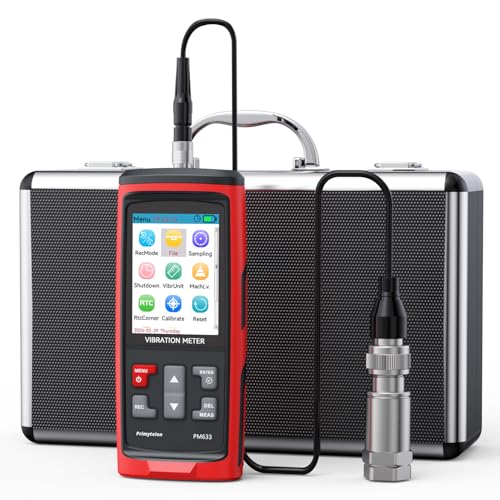
The PM633C from Primyteion is a multi-parameter vibrometer designed for motors, HVAC systems, engines, generators, and pumps. It uses a piezoceramic accelerometer and offers acceleration, velocity, displacement, and temperature readings across a wide frequency span. Best for on-site technicians who need quick, reliable data without a PC connection. The device also supports data storage and can connect to PC software for extended analysis, which improves trend tracking and maintenance planning.
Key reasons to choose this model: wide range and high-frequency capability (30 Hz to 14 kHz) ensure it can capture both low- and high-speed machine vibrations. The TFT display, ISO severity rating, and adjustable sampling enhance readability in field conditions. A caution: while it stores data, very large datasets may require exporting to PC for deep analysis, which could add workflow steps on busy sites.
Best for: maintenance professionals who need a compact, all-in-one meter with robust data logging and straightforward interpretation for routine equipment checks.
Yooreal HM016 Vibration Hour Meter — Maintenance Reminders

The Yooreal HM016 is a vibration-driven hour meter designed to track total operating time without wiring. It is ideal for engines, generators, lawn equipment, and other motorized assets. It records cumulative hours up to 99,999 hours, aiding preventive maintenance and service scheduling. Its waterproof design (IP68) supports use in damp environments or temporary outdoor sites, reducing exposure concerns during field work.
Best for: field crews and fleet managers who need a simple, wire-free way to monitor engine usage and schedule servicing. Limitation: this device does not provide live vibration spectra or live condition diagnostics; it focuses on elapsed-time tracking for maintenance planning.
Grayvolt Vibration Analyzer — Real-Time 6-Axis Monitoring
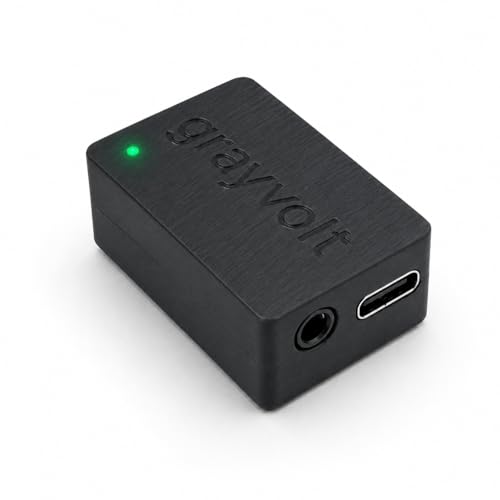
The Grayvolt Vibration Analyzer provides precision vibration monitoring across six axes with real-time FFT analysis. It helps diagnose imbalance, misalignment, bearing wear, and resonance in CNC spindles, motors, pumps, and other rotating machinery. The standout feature is no-app, no-laptop connectivity; users can access measurements via WiFi from any web browser, making it quick to deploy on the shop floor or at a job site.
Best for: teams needing rapid diagnostics with minimal setup, especially where on-site specialists must share readings with a wider team through a browser. Caution: while the built-in WiFi interface simplifies access, the quality of measurements depends on proper mounting and alignment of the sensor to the target equipment.
Cloimei AS63D Vibration Meter — High-Precision With Dual Probes

The Cloimei AS63D vibration meter uses a high-sensitivity piezoelectric transducer to measure acceleration, velocity, and displacement, with a wide range and ±10% accuracy under testing conditions. Its dual-probe system provides flexibility for different measurement scenarios, making it suitable for power plants, petrochemical facilities, manufacturing sites, and vehicle maintenance. The device stands out for users who need precise data across multiple measurement modes in varying environments.
Best for: engineers who require dual-probe versatility and reliable diagnostic data for predictive maintenance. Limitation: the device emphasizes measurement accuracy and portability; advanced data logging or cloud-based analytics would require additional equipment or software integration.
MERACH Vibration Plate — Notable For Fitness, Not For Machinery Monitoring

Note: The MERACH device listed is a 4D vibration plate intended for fitness and weight management rather than vibration monitoring of construction equipment. It showcases how vibration technology is used in different markets, but it is not designed for diagnosing machinery health. For construction sites, rely on purpose-built vibration meters and analyzers described above for accurate diagnostics and maintenance planning.
Buying Guide: Key Considerations For Construction Vibration Monitoring
What measurement features matter most? On construction sites, you need devices that can read acceleration, velocity, and displacement across relevant frequency ranges. Frequency coverage should include both low- and high-frequency bands to detect loose components, misalignment, or bearing wear. Data logging, ease of export, and the ability to share results quickly with teams are also critical for efficient maintenance workflows.
- Measurement range and accuracy: Ensure the device covers your typical vibration levels and speeds with clear accuracy specifications.
- Probes and mounting: Dual-probe options or easy mounting on machines help capture accurate readings in tight spaces.
- Data handling: Look for built-in storage, batch exports, or PC/browser compatibility for trend analysis over time.
- Connectivity: WiFi or USB connectivity can simplify sharing results with supervisors or maintenance databases.
- Durability and environmental resistance: On-site equipment should withstand dust, moisture, and rough handling.
- Maintenance scope: Some meters provide only basic readings, while others offer FFT analysis and ISO severity ratings for deeper diagnostics.
Choosing By Use Case
- On-site quick checks: PM633C provides a compact, multi-parameter readout with data storage suitable for daily inspections.
- Heavy equipment maintenance: Cloimei AS63D and Grayvolt A1-type devices deliver precise measurements and easy sharing of results for ongoing maintenance programs.
- Engine and generator maintenance reminders: Yooreal HM016 helps track operating hours and supports preventive maintenance scheduling.
- Maintenance planning and long-term records: Fesjoy hour meters offer durable, quartz-based tracking of service intervals for construction fleets.
FAQ
- What is the main purpose of a vibration meter on construction sites?
– To measure machine vibrations in acceleration, velocity, and displacement to identify early signs of wear, imbalance, or misalignment. - Do I need WiFi connectivity for vibration monitoring?
– Not always, but WiFi-enabled devices simplify sharing data and accessing FFT analyses from mobile devices or browsers. - Can vibration meters log data over time?
– Many models include internal storage and export options to help track trends and schedule maintenance. - Is dual-probe capability important?
– It improves flexibility for measuring different machine spaces and measurement points, especially on large equipment. - What should I consider if I mainly need maintenance reminders?
– A vibration hour meter or mechanical hour tracker provides straightforward tracking of engine hours and service intervals without live vibration data. - Are there devices best suited for CNC or pump monitoring?
– Yes; six-axis or multi-axis meters with real-time FFT are particularly useful for diagnosing imbalance, misalignment, bearing wear, or resonance in rotating machinery.