Whether you’re a contractor, painter, or concrete pump operator, choosing the right washout box or bag system is essential for compliant, mess-free waste management on the job site. This guide highlights five practical concrete washout solutions, detailing who benefits most, their strengths, and any notable limitations. Each option is selected for versatility, durability, and ease of use in typical construction environments.
| Product | Best For | Key Benefit |
|---|---|---|
| Con Forms 4′ Concrete Placing System Seamless Washout Container | Small to mid-size jobs | Leakproof, all-weather design |
| Outpak Washout – 4’x4’x14″ | Industrial or large projects | Flat-folding storage for easy shipping |
| Corrugated Concrete Washout, 6’ x 6’x 11” | Rugged outdoor sites | Heavy-duty corrugated body with leak-proof liner |
| Outpak Corrugated Concrete Washout Box, 4x4x14 | General construction crews | Leaktight liner and durable build |
| Mutual Industries Concrete Washout Bags | Portable waste management | Compact and transport-friendly bags |
Con Forms 4′ Concrete Placing System Seamless Washout Container

Best for: small to mid-sized projects where space is limited but leakproof containment is essential. The 4′ single-piece design minimizes assembly and reduces potential leakage during washout operations.
- Features: 48″ x 48″ x 14″ footprint, leakproof design, lightweight and compact, durable construction-grade liner (0.35 mil).
- Why chosen: The seamless one-piece design helps prevent slurry leakage, making cleanup straightforward on tight sites.
- Limitations: May have limited capacity compared to larger box systems for very high volumes of washout.
Outpak Washout – 4’x4’x14″ 350# Kraft w/6mil Bag Liner

Best for: projects needing a compact, foldable washout solution that ships and stores flat. Ideal for crews that require easy transport and deployment across multiple sites.
- Features: Patented origami folding design, ships and stores flat, 4′ washout capacity around 0.68 cubic yards.
- Why chosen: The folding design simplifies logistics and reduces storage footprint on crowded job sites.
- Limitations: Folding units may require careful setup to ensure full stability during use.
Corrugated Concrete Washout, 6’ x 6’x 11” high

Best for: rugged outdoor sites that require a larger containment area with reliable leak protection. A single-wall design accepts heavy, continuous washout streams.
- Features: 55C Michelman-coated wet-strength washout, includes 6-mm polyethylene liner, folds flat for transport.
- Why chosen: Size and durability suit longer jobs with higher washout volumes while keeping contents contained.
- Limitations: Slightly heavier and bulkier than smaller units; needs more storage space.
Outpak Corrugated Concrete Washout Box, 4x4x14 Inch

Best for: general construction teams that want robust, leak-proof containment with a portable 140-gallon capacity. Suited for a wide range of washout materials beyond concrete, including paint and stucco.
- Features: Heavy-duty wet-strength corrugated body, 140-gallon capacity, 6 mil leak-proof liner included, suitable for various job sites.
- Why chosen: Combines strong containment with manageable size for crews that move between locations.
- Limitations: Corrugated construction may be less rigid than solid-wall boxes in high-wall washout scenarios.
Mutual Industries Concrete Washout Bags

Best for: portable, lightweight cleanup at sites with limited space or when quick bag disposal is needed. Useful for smaller washout volumes or as a supplementary containment option.
- Features: Construction-grade washout bags designed for industrial waste management and disposal; compact packaging.
- Why chosen: Easy to transport and store when full containment is not required, ideal for crews prioritizing flexibility.
- Limitations: Bags may have lower bulk capacity per bag compared to rigid containers.
DURASACK 130 Gallon Concrete Washout Bag
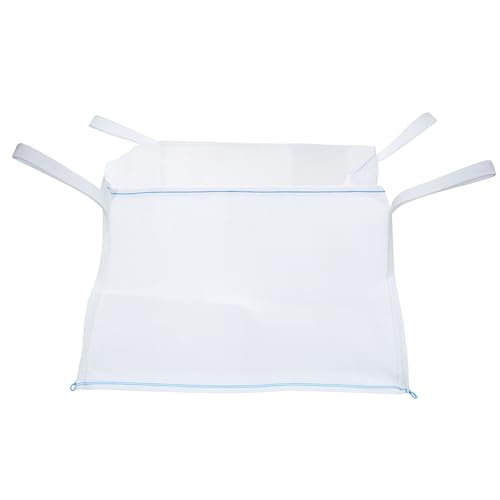
Best for: large-volume washout needs where a flexible, self-standing bag is advantageous. Suitable for teams handling substantial washout materials in single or multiple workflow steps.
- Features: 130-gallon capacity, 18 cubic feet volume, internal waterproof liner, 4 corner lifting loops, self-standing.
- Why chosen: The bag design supports solo operation and reduces the need for extra frames or stands on site.
- Limitations: Bulkier bag requires adequate space for placement and disposal area preparation.
Buying Guide: Concrete Washout Solutions
How to choose the right washout system depends on volume, site conditions, and transport needs. Consider capacity, liner quality, and portability. For small crews and tight spaces, compact units with leakproof liners work best. For larger projects, larger, rigid or sturdier corrugated boxes reduce handling time. When storage space is limited, folding or bag-based options offer flexibility.
Key purchase considerations
- Load capacity: Match the average washout volume to avoid overfilling and spillage.
- Leak containment: Ensure a reliable liner or inner barrier to prevent soil or water contamination.
- Durability: Choose materials that withstand outdoor conditions and rough handling.
- Portability: Look for handles, lifting loops, or foldable designs to ease transport between sites.
- Storage footprint: Flat-folding or collapsible options save space when not in use.
- Compatibility: Consider whether the unit handles concrete slurry, paint, drywall mud, and stucco as needed.
How to deploy on site
- Position washout containers away from drainage paths and water sources.
- Line the container if a liner is not integrated to prevent leaks and seepage.
- Secure the box or bag to prevent tipping during pumping or loading.
Comparative quick picks
- Best for leakproof performance: Con Forms 4′ Seamless Washout Container.
- Best for flat-pack shipping: Outpak Washout 4’x4’x14″ with folding design.
- Best for rugged outdoor sites: Corrugated Concrete Washout, 6’ x 6’x 11”.
- Best for general crews needing a balance of size and portability: Outpak Corrugated 4x4x14.
- Best for portable, compact disposal: Mutual Industries Washout Bags.
FAQ
- What is a washout box used for on construction sites?
– It contains concrete slurry, paint washout, drywall mud, stucco, and mortar to prevent soil and water contamination. - Which washout option is best for small jobs?
– A compact, leakproof container like the Con Forms 4′ Seamless Washout Container or the folded Outpak option. - Are bags a viable alternative to boxes?
– Yes, for portable, low-volume needs, but they may require more frequent disposal and handling. - Do these products meet safety and environmental requirements?
– They’re designed to contain washout materials and reduce environmental impact on regulated sites; always follow local regulations. - Can washout boxes handle multiple materials?
– Many options accommodate concrete washout and other site waste, but check liner compatibility and capacity for each material. - How should washout boxes be stored when not in use?
– Store flat-folding designs collapsed, or keep bags in a dry, protected area to extend liner life.