If you’re seeking an automatic system to fill sandbags, beans, grains, tea, or powder with minimal effort, these machines offer reliable weight control, speed, and sanitation. This guide highlights five top models, explains who they’re best for, and notes practical considerations. Ideal buyers include small farms and shops needing steady mass filling, hobbyists expanding into packaging, and small manufacturers aiming to reduce labor costs.
| Product | Filling Range | Best For | Notes |
|---|---|---|---|
| XKOPCAL Particle Filling Machine | 10-999 g | Small farms, market vendors | Dual vibration; stainless steel; digital control |
| VEVOR Powder Filling Machine | 1-200 g | Tea leaves, grains, spices | Dual-stage vibration; intelligent control |
| HASANEN Particle Filling Machine | 0.02-2.2 lbs | Multi-material packaging | Two filling outlets; stainless steel |
| Fanlocn Powder Filling Machine (500 g) | 10-500 g | Powdered products | Automatic counting; sensor/foot pedal |
| Hanchen Powder Filling Machine (1-50 g) | 1-50 g | Tea granules, seeds | Intelligent filling; visual window |
Proceeding below, the five selections are organized to help you compare capabilities, suitability, and potential limitations at a glance.
XKOPCAL Particle Filling Machine — 10-999 g
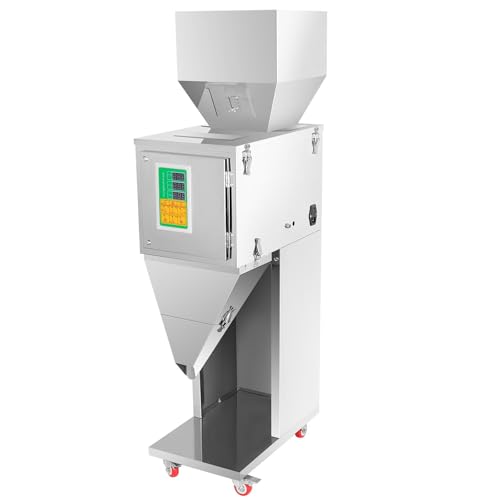
Best for versatile packaging with precise weight control. This model uses a dual vibration system combining magnetic feeding and motor vibration filling to reach up to 13-20 bags per minute with ±0.1 g accuracy. The pure copper core supports stable operation under heavy use, helping maintain smooth feeding and reduce material residue. An intelligent digital control panel allows precise weight adjustment and eight speed levels to adapt to different materials. It’s built with food-grade stainless steel for durability and hygiene.
Who it’s best for: small businesses needing fast, accurate packages of varied materials. Limitations: higher initial setup may require calibration for very granular powders or slow-moving materials.
VEVOR Powder Filling Machine — 1-200 g

Best for precise, small-portion filling across powders and granules. It uses a built-in dual-stage vibration system to improve material discharge, achieving ±2 g accuracy from 1 g up to 200 g. An intelligent control panel lets you adjust weights and speeds to suit different powders or granular items. It supports a broad range of particles and allows easy adaptation for tea, seeds, grains, and glitter.
Who it’s best for: users prioritizing consistent fill weight across a variety of dry contents. Caution: very fine powders may require careful hopper adjustment to prevent clumping or dust.
HASANEN Particle Filling Machine — 6-15 bags/min

Best for mid-volume packaging with multiple outlet options. This dual-vibration device combines strong magnetic feeding and motor vibration to achieve higher packing accuracy and fewer residuals. The entire body uses stainless steel for durability and corrosion resistance. An intelligent control panel provides weight adjustment and speed control, with two filling outlets to accommodate different materials and container sizes.
Who it’s best for: operations needing flexibility with different container shapes or materials. Caution: the dual outlets may require additional setup when switching between very small and very large bags.
Fanlocn Powder Filling Machine — 10-500 g
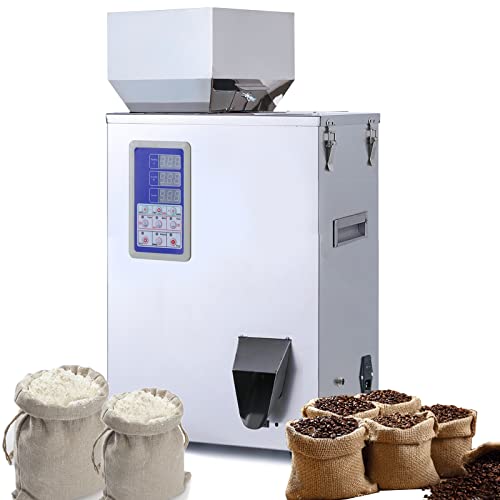
Best for dry powder and granular products including beans, flour, and glitter. This model covers a wide filling range of 10-500 g with a single hopper setup and automatic counting. It supports sensor induction, foot pedal operation, and automatic weighing and filling to minimize manual handling. Its closed design helps with hygiene and contamination control.
Who it’s best for: small bakeries or home-based startups packing dry goods. Caution: not ideal for very fine powders that may clog the hopper without proper sieve screens.
Hanchen Powder Filling Machine — 1-50 g

Best for precision small-weight fills such as tea granules or seeds. This model employs intelligent filling with a micro-weighing system and infrared discharge control. It features a double vibration design to reduce material residues and improve accuracy for powder or granule materials. A transparent visual window lets users monitor discharge without opening the hopper.
Who it’s best for: users requiring precise, small-batch fills with clear operational visibility. Caution: slower throughput at the smallest weight settings may be noted.
Buying Guide
Key purchase considerations help you choose the right automatic filling machine for your needs:
- Filling range and accuracy: Match your typical bag weight and required precision. Smaller weights demand higher accuracy and sensitive controls.
- Material compatibility: Confirm the machine handles your material’s texture (powder, granules, glitter) and moisture level.
- Throughput: Determine desired bags per minute. Higher speeds increase labor savings but may require more frequent calibration.
- Hopper design and outlets: A larger hopper reduces refills; multiple outlets improve flexibility for different container sizes.
- Control interface: An intuitive panel with multiple speed settings minimizes operator error and training time.
- Sanitation and durability: Stainless steel construction supports hygiene and longevity in busy environments.
- Foot pedal vs. automatic operation: Foot pedals provide manual control; auto modes suit steady production lines but reduce tactile control.
Frequently Asked Questions
- What materials can these machines fill? They primarily handle dry powders, granules, seeds, grains, glitter, and similar particulates. Check the specific model for size and moisture limitations.
- Do these machines require professional installation? Most are designed for straightforward setup, but some models may need basic electrical connections and calibration by the operator.
- Is the weight accuracy consistent across bag sizes? Accuracy is typically configured per material and bag weight; most units provide adjustable weight control and multiple speed levels for consistency.
- Can I switch between different products quickly? Devices with multiple outlets or adjustable hoppers accommodate different materials, but frequent switching may need re-calibration.
- How important is hygiene in these machines? Stainless steel construction and easy cleaning procedures reduce contamination risk, especially for food-grade or cosmetic materials.
- What maintenance is required? Regular cleaning of hoppers, verification of weight settings, and inspection of vibration components help sustain performance.