Looking for an automated adhesive dispensing system that delivers consistent droplets, reduces waste, and fits your workflow? This guide highlights top options ideal for electronics, automotive, and industrial assembly. Each product is evaluated for best-use cases, supported by its key features and a concise caveat. The list helps buyers choose between fully automatic, semi-automatic, and peristaltic dispensing solutions.
| Product | Best For | Why It Stands Out |
|---|---|---|
| RUIWING 982A Auto Glue Dispenser | High-volume coating and precise drop control | Digital display, adjustable suction, long service life |
| RUIWING 983A Auto Glue Dispenser | Fine 0.01 ml dispensing, versatile materials | Digital timer, dual operation modes |
| CNBTR Dispenser for 50ml Cartridges | Two-component epoxy and standard manual tasks | Easy cartridge loading, automatic mixing option |
| fnotlfue Peristaltic Glue Dispenser | Precise bonding with flexible modes | 0–160 RPM control, 0.05 ml precision |
| 982 Semi-automatic Glue Dispenser (Gdrasuya10) | Desktop, manual/semi-automatic operation | Manual control with automatic option, back suction |
RUIWING 982A Auto Glue Dispenser

The 982A is designed for automatic or semi-automatic operation with a digital display for precise control. It uses a 0.18CV solenoid valve and adjustable suction to ensure reliable dispensing over long-term use. This model is best for high-volume coating tasks and delicate lines where repeatable drop size matters.
- Best for: High-volume coating, electronics assembly, and delicate drop tasks.
- Why selected: Reliable digital control and flexible operation modes support varied workflows.
- Caution: Complex settings may require time to dial in optimum drop size for new adhesives.
RUIWING 983A Auto Glue Dispenser

The 983A emphasizes precision timing with a digital timer and a 0.01 ml dispensing capability, making it suitable for uniform dot patterns and controlled lines. It supports automatic and semi-automatic modes, widening its application across electronics, PCB, and small-assembly tasks.
- Best for: Uniform dot patterns and tight tolerance applications.
- Why selected: Ultra-fine dispensing accuracy enhances repeatable results.
- Caution: May require adhesive viscosity checks for optimal timing in unusual formulations.
CNBTR Dispenser for 50ml Cartridges
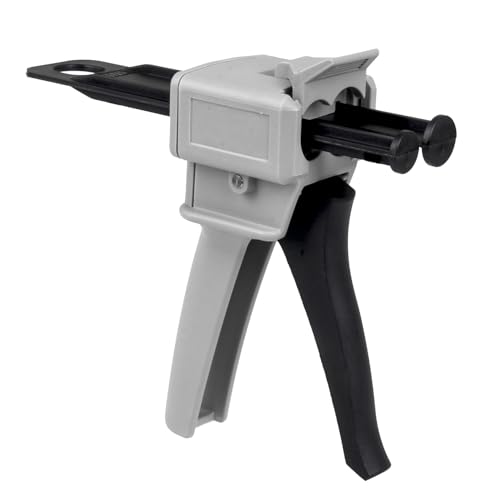
This cartridge dispenser handles two-component adhesives and standard mixing tasks with ease. It provides simple manual operation while supporting automatic mixing and delivery of impression materials. It’s a practical choice for hobbyist to light-industrial epoxy work.
- Best for: Two-component adhesives and standard manual operations.
- Why selected: Easy loading and lever-held dispensing ensure steady control.
- Caution: May require disposable mixing nozzles for clean mixing in some workflows.
Electric Dispenser Glue Gun (Generic)

This generic electric dispenser offers six adjustable dispensing settings for precise glue or solder paste output. Dual manual modes and a card-mount adapter support a range of cartridge sizes and adhesives, including UV adhesives and sealants.
- Best for: Handheld, versatile adhesive dispensing in varied settings.
- Why selected: Flexible control and compatibility with common adhesive formats.
- Caution: Broad compatibility can lead to a learning curve for ideal flow settings.
Gold Metal Threaded Dispensing Valve Adapter

This threaded valve adapter ensures leak-free connections between dispensing valves and application tools. Made from robust metal alloy with a gold finish, it’s suited for heavy-duty use in labs and workshops needing reliable connections for adhesives and fluids.
- Best for: Industrial connections requiring durability and reliability.
- Why selected: Superior material strength reduces risk of leaks in demanding environments.
- Caution: May require matching valve thread specifications for compatibility.
fnotlfue Peristaltic Glue Dispenser

This semi-automatic peristaltic dispenser supports multiple deposition styles, including dots, lines, and arcs, with a foot switch option for hands-free operation. It handles adhesives up to 5000 CPS and provides 0.05 ml precision for detailed bonding and fixing tasks.
- Best for: Complex bonding patterns and high-viscosity adhesives.
- Why selected: Versatile deposition modes and a foot-switch option enhance production flow.
- Caution: Peristaltic tubing wear may require periodic replacement for consistent output.
982 Semi-automatic Glue Dispenser (Gdrasuya10)
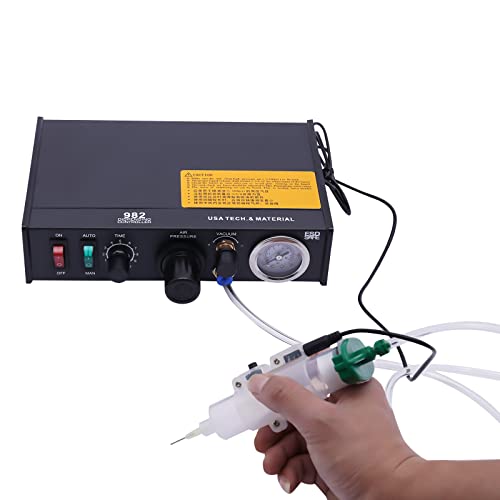
This desktop dispenser provides manual and semi-automatic modes with a minimum drip of 0.01 ml and a repeat accuracy around 0.5%. A vacuum back suction device helps prevent drips, supporting cleaner operation in precise bonding tasks.
- Best for: Desktop use with hands-on control and drip prevention.
- Why selected: Clear separation of modes and anti-drip suction improve accuracy.
- Caution: Manual operation may be slower for very high-volume processes.
Buying Guide: How to Choose an Automated Adhesive Dispenser
Key questions to guide your purchase:
- What viscosity range do I work with? Consider a system that supports your adhesives’ viscosity and cure times, from light sealants to high-viscosity epoxies.
- Do I need automatic, semi-automatic, or manual control? Automatic systems excel in high-volume lines; semi-automatic fits mixed workflows; manual modes offer hands-on control for delicate tasks.
- What drop precision is required? For micro-dots or tight spacing, prioritize systems with 0.01 ml or finer control.
- Is cartridge compatibility important? If you use standard 50 ml or 10–50 ml cartridges, ensure the dispenser accommodates your cartridge sizes and nozzle types.
- How important is back-suction or anti-drip design? Vacuum back suction reduces dripping during pauses and improves cleanliness in precision work.
Material and Compatibility Considerations
Look for dispensers that specify compatibility with silicone sealants, epoxy resin, UV adhesives, and other common industrial adhesives. For two-component systems, consider automatic mixing features or straightforward manual mixing compatibility.
Maintenance and Longevity
Consider solenoid valve reliability, adjustable suction, and lubricant-free components for long service life. A digital display helps tune dispensing cycles and monitor performance over time.
Typical Use Scenarios
- Electronics assembly requiring precise dot spacing and consistency.
- Automotive and appliance manufacturing needing repeatable bead lines.
- PCB and optical bonding applications where clean lines are essential.
FAQ
- What is the advantage of automatic vs semi-automatic dispensers? Automatic models optimize throughput and consistency, while semi-automatic models offer flexibility for mixed tasks and delicate bonding.
- Can these dispensers handle high-viscosity adhesives? Some models support up to 5000 CPS; verify viscosity specs for your adhesive.
- Is back suction important? Yes, back suction helps prevent drips during pauses and keeps the workspace clean.
- Do I need a digital timer or precision droplet control? For uniform results and repeatability, a digital timer and small droplet control (0.01 ml or better) are beneficial.
- Are there adapters for different thread sizes? Some models include or require threaded adapters for compatibility with various valves and nozzles.
- What maintenance is required? Regular checks on nozzles, tubing, and valves reduce clogging and maintain accuracy.