Finding the right air compressor for sandblasting depends on blast pressure, media type, and a setup that suits your workspace. The following selections are among the most compatible with common sandblasting guns, kits, and cabinets. Each option balances airflow, noise, and durability to tackle rust, paint removal, and surface finishing across DIY projects and small workshops.
| Product | Brand | Primary Use |
|---|---|---|
| Inokraft Sand Blaster Kit | InoKraft | Small projects, precise media control |
| LE LEMATEC AS118 Gravity Feed | LE LEMATEC | Light-duty DIY spot cleaning and finishing |
| VEVOR 13-Gallon Air Compressor | VEVOR | General use with longer runs and higher capacity |
| TCP Global Gravity Feed Sand Blaster Kit | TCP Global | Portable blasting with multiple media options |
| Parts-Diyer Bench Top Sand Blaster Cabinet | Parts-Diyer | Cabinet blasting for small parts and detailed work |
Each product supports sandblasting with standard 60-125 PSI air supply ranges, accommodating a variety of media such as sand, 60-100 grit abrasives, or soda. The selections include portable guns, gravity-feed designs, and compact cabinets to fit different workshop sizes and blasting needs.
Inokraft Leak-Proof Portable Sand Blaster Gun Kit
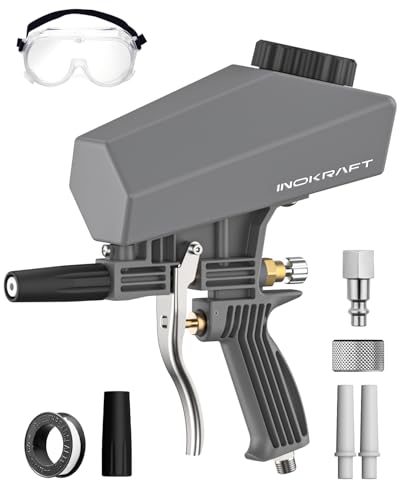
The Inokraft sand blaster is designed for compact spaces and small projects. It provides up to 287 m/s airflow with a precision ceramic nozzle to remove rust, paint, and corrosion from metal tools, auto parts, and other small components. A key feature is the 2-in-1 trigger that prevents media waste by enabling abrasive flow only when the trigger is pulled, contributing to cleaner operation and less cleanup. It is compatible with air compressors in the 60-120 PSI range, making it suitable for standard garage setups without bulky gear. The kit supports aluminum oxide, sand, and soda media choices for versatile blasting on tight areas.
Key considerations:
– Optimal for small parts and detail work.
– Requires careful media choice to avoid material damage.
– Works best with a compressor that consistently delivers within 60-120 PSI range.
LE LEMATEC Gravity Feed Sandblaster Gun Kit, AS118

The AS118 gravity-fed sandblaster is positioned for light-duty DIY projects, spot cleaning, rust removal on small areas, and fine surface finishing on metal and wood. It requires a compressor capable of delivering at least 7 SCFM at 90 PSI and is best paired with a 20-gallon tank to avoid performance dips. The gravity-feed design means consistent results depend on media selection and setup. This tool is not intended for heavy industrial use but excels at careful restoration and detail work where control matters.
Key considerations:
– Best for lighter projects and finish work.
– Requires compatible airflow and media for optimal results.
– Expect multiple passes for tougher coatings or thick rust.
VEVOR 13-Gallon Air Compressor

This 13-gallon system blends a 2HP motor with a robust tank to deliver rapid air buildup, enabling steady blasting sessions. The reinforced leak-proof valve system helps maintain stable output under sustained use, which is valuable for medium-weight sandblasting tasks. The unit operates quietly at about 66 dB thanks to oil-free design and noise-reducing components, lowering workplace disruption. It includes mobility features like wheels, making it a versatile choice for both indoor and outdoor blasting jobs. Recommended for longer sessions where consistent airflow matters.
Key considerations:
– Suitable for extended blasting work with a larger storage reserve.
– Moderate noise reduction improves workshop comfort.
– Ensure the nozzle and media are matched to expected PSI and FCA requirements.
LE LEMATEC Air Compressor Dryer (Desiccant Filter)

The LE LEMATEC desiccant filter dryer traps oil, water, dirt, and moisture to deliver clean, dry compressed air. It supports up to 150 PSI and 22 CFM flow, helping to reduce moisture-related media clumping or rust formation on delicate workpieces. The unit offers smart indicators that signal when the desiccant needs replacement, simplifying maintenance. This accessory is valuable for longer or more sensitive blasting sessions where moisture could impair media performance.
Key considerations:
– Essential for blasting tasks requiring dry air to prevent media clumping.
– Helpful when using moisture-prone environments or long runs.
– Not a stand-alone compressor; requires a compatible air source.
10 Gallon Ultra Quiet Air Compressor (Nessxa)

This Nessxa model packs a compact 10-gallon tank with a 2HP oil-free motor and dual cylinders for efficient air delivery. It delivers 8.76 CFM at 115 PSI and runs at a quiet 70 dB, making it suitable for small shops and home garages where noise matters. A practical choice for mixed-use blasting workflows and tire inflation, spray painting, and light auto repairs. The unit’s portability, with a handle and wheels, supports flexible blasting across work areas.
Key considerations:
– Good balance of capacity and portability for small studios.
– Oil-free design lowers maintenance needs.
– Verify that your sandblasting nozzle and media settings align with the compressor’s output.
Buying Guide: Key Purchase Considerations And Comparisons
- Air Volume And PSI: Sandblasting efficiency depends on steady airflow (SCFM or CFM) at the required PSI (often 60-125 PSI). Choose a compressor that delivers consistent flow at or above your blasting gun’s recommended pressure.
- Media Type And Tool Compatibility: Different media (sand, glass beads, aluminum oxide, soda) require specific nozzle sizes and media flow. Gravity-feed guns and cabinets are sensitive to media weight and feed rate; ensure your system supports your chosen kit.
- Portability And Workspace: For small shops, cabinet blasters offer efficiency but take space. Portable guns paired with portable compressors suit DIY tasks. Consider wheels, handles, and cabinet access when planning workflow.
- Noise And Maintenance: Oil-free compressors tend to run quieter and require less maintenance, though certain models maintain performance at higher noise levels. Desiccant dryers help keep air clean and dry, reducing media clogging and equipment wear.
- Durability And Build Quality: For rust or heavy coatings, a larger tank (e.g., 13-gallon) reduces cycling and improves blasting consistency. Cabinets and steel bodies offer longer service life in workshop conditions.
- Safety And Ventilation: Ensure proper ventilation in enclosed spaces. Cabinets should seal to limit dust leakage, and operators should wear eye and respiratory protection during blasting.
- Cost Of Ownership: Consider purchase price, maintenance, replacement parts, and media consumption. A higher-capacity setup often reduces downtime due to pressure drops during blasting sessions.
- Upgrade Path: If you anticipate larger projects, a modular approach—starting with a solid base compressor plus a desiccant dryer and a quality sandblaster kit—offers flexibility to scale up later.
In choosing among these options, consider your typical project size, the media you plan to use, and whether you need portable gear or a fixed workstation. For meticulous detail work on small parts, a gravity-feed or portable gun pair is often sufficient. For occasional larger pieces or longer sessions, a larger tank combined with a reliable desiccant dryer helps maintain performance and media consistency. Cabinet blasters excel for batch processing of multiple parts in a controlled environment, though they require more space and planning.