If you need reliable containment for a 500-gallon fuel tank, choose systems designed for spill prevention, secure access, and durable materials. This guide highlights five containment options that balance safety, space efficiency, and easy maintenance. Best for construction sites, farms, or marine work, these selections help prevent leaks and simplify storage and pumping operations.
| Product | Best For | |
|---|---|---|
| Midwest Industrial Tanks Waste Oil Tank – 500-Gallon | Single-wall containment with lockable box | Small to mid-size sites needing secure access |
| Midwest Industrial Tanks Double-Wall Storage Fuel Tank – 500-Gallon | Double-wall design with ports | Higher spill protection and easier venting/pumping |
| Enpac Poly Tank Containment Sump, 550-Gallon | Polyethylene sump for 550-gallon skid tanks | Space-saving containment for skid tanks |
| Enpac Poly Tank Containment Sump, 275-Gallon | Polyethylene sump for 275-gallon obround tanks | Smaller footprint, versatile use |
| Western Global FCP500 FuelCube Diesel Storage Tank | Double-walled, lockable cabinet | Security-focused fueling and storage |
Midwest Waste Oil Tank – 500-Gallon
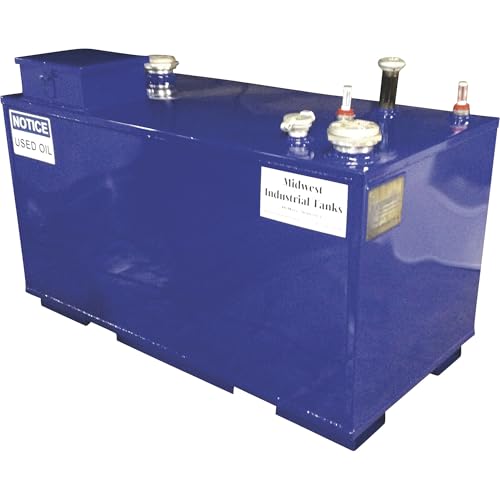
Brand: Midwest Industrial Tanks. Features include a trouble-free lockable design, emergency vents, level and leak gauges, a 2-inch suction tube with cam lock, locking fill box with integrated filter drain, and access ports on both inner and outer tanks. This setup prioritizes secure access and straightforward maintenance in environments where spills must be prevented and monitoring is essential.
Best for: Small to mid-size sites needing secure containment with easy access for pumping and monitoring. Caution: Ensure proper venting and clearance for dual-tank configurations to avoid overpressure situations.
Midwest Double-Wall 500-Gallon Tank

Brand: Midwest Industrial Tanks. Features include ports on both inner and outer tanks for easy access, heavy-duty forged steel port flanges compatible with vents, fill ports, and pumping equipment, and a protective powder-coat finish for durability and corrosion resistance.
Best for: Sites needing higher containment security and robust piping support. Caution: Heavier construction may require more space and lifting capacity during installation.
Enpac 550-Gallon Sump Containment

Brand: Enpac. Features include a containment sump designed for 550-gallon skid tanks, protecting groundwater from discharge, large interior space for hoses and equipment, and versatile use across construction sites, marine settings, and farms.
Best for: Environments prioritizing space efficiency and robust spill containment with room for ancillary equipment. Caution: Poly tank compatibility should be verified with any system accessories or hoses used nearby.
Enpac 275-Gallon Sump Containment

Brand: Enpac. This sump is designed for a 275-gallon obround tank, offering a space-saving solution and durability since it’s made of polyethylene, which resists rust and corrosion. It provides easy access to the tank and pump while keeping the setup compact.
Best for: Smaller footprints or retrofits where a 275-gallon tank is used instead of larger containment. Caution: May not fit larger 500-gallon configurations without adapter considerations.
Western Global FCP500 FuelCube Diesel Tank

Brand: Western Global. Features include a securable lockable equipment cabinet, integrated fuel level gauge, stackable design (two high when empty), double-walled 110% containment, and UL142 approval. This model focuses on secure storage and spill containment while arranging equipment in a compact form factor.
Best for: environments prioritizing maximum security and containment with the ability to store pumping equipment inside a lockable cabinet. Caution: The cabinet adds height, which may affect clearance in tight spaces.
Buying Guide
- Containment vs. capacity: Confirm whether you need single- or double-wall containment. Double-wall designs offer extra protection against leaks and are ideal for higher-risk sites.
- Access and pumping: Look for tanks with ports and accessible pumping equipment. Port flanges and integrated gauges simplify maintenance and monitoring.
- Material and durability: Polyethylene tanks resist corrosion and rust, while steel components provide rugged durability—choose based on environment and chemical exposure.
- Security features: Lockable cabinets and fill boxes reduce theft risk and spill accidents. Ensure hinges, latches, and seals are weather-resistant.
- Space and installation: Consider the footprint and whether a stackable option or compact sump fits your site layout. Plan for clearance around access points and hoses.
- Compliance and safety: Check regional regulations on containment, spill prevention, and venting. Ensure products meet applicable standards for fuel storage and handling.
FAQs
- What is the difference between single-wall and double-wall containment? Double-wall systems add an outer shell to catch leaks, reducing spill risk and simplifying containment monitoring.
- Is polyethylene construction as durable as steel? Polyethylene resists rust and chemical corrosion, making it suitable for many fuel applications, though heavy-duty steel may be preferred in highly rugged environments.
- Do containment sumps fit all tank shapes? Sumps are designed for specific tank types (e.g., skid tanks, obround tanks). Verify compatibility with your tank’s dimensions.
- Why is a lockable cabinet important? A lockable cabinet protects equipment and keeps ports secure, reducing tampering and accidental spills.
- What maintenance is required for containment systems? Regularly inspect seals, gauges, vents, and drain lines; clean debris from sumps and ensure venting remains unobstructed.
- Can I mix containment brands? Mixing is generally not recommended due to compatibility concerns and potential warranty issues; sticking to a coherent system is prudent.