Answering the search for reliable 2-stroke water pumps, this guide highlights five high-performing models ideal for irrigation, drainage, and emergency water transfer. Best for contractors and homeowners needing portable power, these pumps balance power, lift, and flow. We compare fuel efficiency, self-priming ability, and common limitations to help you choose confidently. The selections are tailored for tasks such as garden irrigation, pool drainage, flood control, and pond maintenance.
Summary table of selected products:
| Product | Engine | Flow / Lift | Inlet / Outlet | Best For |
|---|---|---|---|---|
| IOENC 2 Stroke Gas Water Pump | 43cc, 1.7HP | 35 GPM, 98 ft lift | 1 inch | Large-volume irrigation and flood drainage |
| VEVIVOOVY 52cc 2-Stroke Pump | 52cc, 1.25KW | 317 ft³/h (~8.95 m³/h), 59 ft lift | 1 inch | Rugged irrigation and pool draining |
| Bamiyune 43CC 2-Stroke Pump | 43cc, 1.7HP | 35 GPM, fast self-priming | 1 inch | Garden and farm transfer tasks |
| GDAE10 43CC 2-Stroke Pump | 43cc, 1.7HP | 2113 GPH (~ 35.2 GPM), 98 ft lift | 1 inch | Pond and pool maintenance |
| sjcdicnj 43cc 2-Stroke Pump | 43cc, 1.25HP | 282.5 ft³/h (~7.98 m³/h), 98 ft lift | 1 inch | Efficient irrigation and drainage |
IOENC 2 Stroke Gas Water Pump

The IOENC 2 Stroke Gas Water Pump combines a robust 43cc engine with a compact, corrosion-resistant build. With a 1.25KW output and 98 ft lift, it is designed for high-lift water transfer, flood drainage, and large-volume irrigation. Best for contractors needing dependable, portable power on job sites.
Key advantages include fast self-priming (≤8 seconds at 9.84 ft) and a 25:1 fuel-oil ratio for expected fuel efficiency. The 1-inch inlet/outlet supports standard piping. A potential limitation is fuel consumption under heavy continuous use; plan for fuel access on remote sites.
VEVIVOOVY 1.6HP 2 Stroke Gas Pump

This model uses a 52cc engine delivering up to 1.25KW of power with an impressive flow rate of 317 ft³/h and a lift of about 29.5 ft suction and 59.06 ft lifting. It suits irrigation and drainage tasks where longer reach and higher head pressure are helpful. Best for medium-to-large land plots and frequent transfer work.
Best for: high-flow needs with reliable self-priming. Limitation: higher RPMs can increase fuel use; ensure adequate ventilation and oil mixing per instructions.
Bamiyune Gas Powered Water Pump
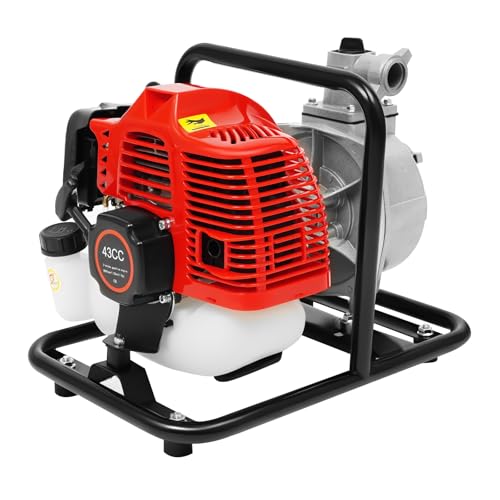
The Bamiyune pump packs a 43CC 2-stroke engine with 1.7HP output and a 35 GPM flow rate. Its self-priming capability and compact form support garden irrigation, pool drainage, and small-to-medium scale transfer tasks. Best for homeowners needing portability and straightforward operation.
Caution: ensure the pump is primed properly before operation and avoid pumping heavily sludge-filled water to prevent clogging.
GDAE10 43CC 2-Stroke Water Pump
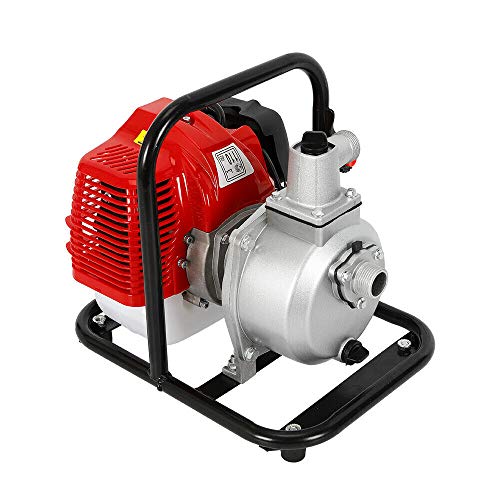
The GDAE10 model features a 43CC, 1.7HP engine with marine-grade aluminum construction and a robust impeller. It offers a 1-inch BSP inlet/outlet and a high-flow capability around 2113 GPH, equating to about 35 GPM, with a lift near 98 ft. Best for pond maintenance, pool cleaning, and rapid water transfer in outdoor settings.
Limitation: aluminum construction reduces long-term corrosion resistance in extremely harsh environments; regular maintenance helps extend life.
sjcdicnj 43cc 2-Stroke Pump

The sjcdicnj 2HP-class pump uses a 43cc engine delivering about 1.25HP with a high flow rate of roughly 282.5 ft³/h and a 98 ft lift. It is designed for reliable irrigation and drainage, with a focus on durability through aluminium and iron components. Best for users needing a balance of power and efficiency in varied terrains.
Caution: ensure fuel/oil mix is prepared correctly to prevent engine damage and follow priming instructions for best performance.
Buying Guide
What should I look for in a 2-stroke water pump?
Key factors include engine displacement, horsepower, flow rate (GPM), and maximum lift. A larger displacement often yields higher flow and better pumping against gravity, but may consume more fuel. Look for self-priming capability for quick setup and use, especially where water sources are distant.
Which pump is best for irrigation vs. drainage?
For irrigation, prioritize steady flow and reliability in longer runs. For drainage, a higher lift and stronger suction help remove water quickly. If you work in variable terrain, a pump with higher lift and robust construction is advantageous.
Materials and build quality matter
Expect corrosion-resistant materials such as aluminum alloys for pumps exposed to outdoor elements. A stable base reduces wobble during operation, and a compact design improves portability for job sites.
Fuel and maintenance considerations
2-stroke engines require oil mixing with gasoline. Confirm the correct fuel-oil ratio and keep a spare supply on hand. Regularly check fuel tanks, carburetor settings, and air filters to maintain peak performance.
Usage tips for best results
- Prime the pump according to manufacturer instructions before starting.
- Use appropriate hoses matching the inlet/outlet size to minimize loss.
- Avoid pumping sludge-heavy water to prevent clogs; clean filters after use.
FAQ
- What is a 2-stroke water pump best used for? – Short, high-flow water transfers such as irrigation and drainage, especially where portability is important.
- Do I need oil with 2-stroke gas pumps? – Yes. Mix gasoline with the correct amount of two-stroke oil as specified by the manufacturer.
- How long can I run a 2-stroke pump continuously? – Follow the product manual; most designs are portable for short to moderate sessions and require cooldowns after extended use.
- Can these pumps handle sludge or debris? – Some models tolerate moderate debris; excessive sludge can clog impellers. Use clean water where possible.
- Is self-priming important? – Yes, it reduces setup time and improves reliability when water source depth varies.