Looking for a reliable 2″ sight glass to monitor liquids in pipelines, tanks, or compressors? This guide compares five dependable options that suit industrial and DIY setups. Each product is evaluated for material quality, pressure and temperature tolerance, and suitability for different users, from black-box maintenance technicians to hobbyist tinkerers. The overview below helps you choose by application: sanitary process lines, compressor systems, or general liquid level viewing.
| Product | Best For | Key Benefit | Limitations |
|---|---|---|---|
| DERNORD In-Line Sight Glass | Sanitary process lines | SUS316, tri-clamp compatible | Higher-temperature range noted in specs |
| JMCOLMT In-Line Sight Glass | Industrial piping with tri clamp | Stainless steel tri clamp type | Information on max pressure not explicit |
| Boltigen Oil Sight Glass (2″) | Compressor gearboxes and tanks | Wide pressure and temperature range | Glass multi-layered with tempered glass |
| Beduan In-Line Sight Glass | Sanitary lines | Stainless steel 304 body | Basic spec set; limited data on view window |
| Gloxco Camlock Sight Glass | Cam-and-groove assemblies | Polycarbonate sight tube included | Includes common cam-and-groove fittings only |
DERNORD In-Line Sight Glass with Clamp End

Best for sanitary process lines that require durable stainless steel and clamp-end compatibility. The DERNORD unit uses SUS316 body material and fits a 2″ tri-clamp connection, with an in-line sight window suitable for a flow pipe OD of 51mm. It tolerates up to 120 PSI and 300 Fahrenheit, making it a solid choice for clean-in-place environments. This model is ideal for facilities or shops that demand high-purity materials and corrosion resistance. A potential limitation is the need for precise tri-clamp alignment to ensure a leak-free seal.
JMCOLMT In-Line Sight Glass 2″ Tri Clamp

Best for standard industrial tri-clamp systems that need a straightforward, stainless-steel 2″ sight glass. The JMCOLMT option specifies a 2″ tri-clamp flow sanitary straight sight glass with a 50.5mm pipe OD, which makes it compatible with common sanitary piping. It’s a practical choice for standard processing lines requiring a clear sight view. A caveat is that the listed features do not clearly state maximum pressure, so verify system requirements before installation.
Boltigen Compressor Oil Sight Glass

Best for compressor and gearbox applications needing robust containment and wide operating ranges. The Boltigen model is a 2″ NPT stainless steel sight glass designed for high pressure (up to 1300 PSI) and broad temperature ranges (-22 to 428 Fahrenheit). It uses tempered glass for clear viewing and relies on a stainless-steel body to resist corrosion. The inner red float ball helps visibility of liquid levels. A limitation is the data’s lack of explicit compatibility details with certain fluids, so confirm fluid compatibility for your use case.
Beduan In-Line Sight Glass
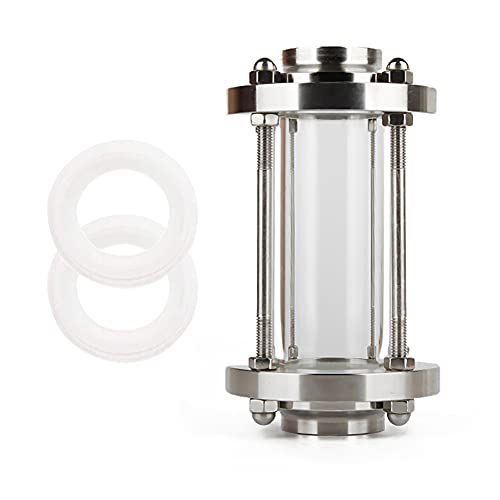
Best for sanitary-grade viewing with a 2″ tri clamp connection. Beduan uses a 304 stainless steel body with an in-line sight glass flow pipe OD of 51mm and a ferrule OD of 64mm. It is rated up to 120 PSI and 300°F, making it a solid sanitary option for process lines that require reliable corrosion resistance and a straightforward installation. The main caveat is that the specification details are minimal beyond the basic dimensions and limits, so verify compatibility with your system’s clamps and gaskets.
Gloxco 2″ In-Line Camlock Sight Glass Assembly

Best for cam and groove systems that need a complete assembly with a polycarbonate sight tube. The Gloxco 2″ in-line sights glass assembly includes an 8″ x 2″ polycarbonate sight tube and a 2″ aluminum Type A cam and groove fitting. This makes it an appealing option for applications that require quick disconnect capability and visible liquid levels. A limitation is that the assembly relies on cam-and-groove fittings, which may require careful matching with existing hardware to prevent leaks or misalignment.
Buying Guide: Key Considerations For 2″ Sight Glasses
- Material compatibility: Choose SUS316 or 304 stainless steel for corrosion resistance in food, pharma, or harsh industrial environments. Consider polycarbonate sight tubes only if the medium is compatible and pressure requirements are moderate.
- Connection type: Tri-clamp (2″) is common for sanitary systems, while NPT fittings suit harsher or non-sanitary setups. Ensure the ferrule and pipe OD match your pipeline.
- Pressure and temperature ratings: Match max PSI and operating temperature to your system. Exceeding limits can cause leaks, glass breakage, or sensor inaccuracies.
- Glass type and viewing clarity: Tempered glass provides durability; ensure the glass thickness supports your pressure and chemical exposure. Some models use polycarbonate tubes for visibility and impact resistance.
- Maintenance and accessibility: Consider ease of cleaning, gasket compatibility, and whether the sight glass can withstand CIP/SIP processes if applicable.
Frequently Asked Questions
- What is the typical purpose of a 2″ sight glass?
– It provides a clear view of liquid level and flow inside a pipe, tank, or chamber, enabling quick level checks and leak detection. - Which material is best for sanitary applications?
– SUS316 stainless steel bodies are preferred for hygiene-sensitive lines due to corrosion resistance and cleanability. - Are camlock fittings compatible with all 2″ sight glasses?
– Not universally; verify the fittings match the sight glass assembly and ensure a proper seal. - Can a sight glass withstand high temperatures?
– Many models support temperatures up to 300°F or higher; always check the specific product rating for your application. - What maintenance should be done to extend sight glass life?
– Regular inspection of seals, gaskets, and glass integrity; avoid impact or thermal shock that could crack the glass.