Across industrial shops, automotive workshops, and field service teams, a reliable 1/4 inch hydraulic hose is essential. This guide highlights five top 1/4 hydraulic hose options, chosen for durability, high working pressures, and ease of installation. Best for heavy-duty work, mobile setups, and confined spaces, these hoses offer robust steel wire braids, temperature tolerance, and reliable resistance to oil and weather. Use the quick reference table below to compare key specs at a glance.
| Product | |||
|---|---|---|---|
| VEVOR 1/4 x 100 ft Coiled Hose | 100 ft | 5800 PSI | Two high-tensile steel wire braids |
| Frienda 1/4 x 50 ft Hose | 50 ft | 4000 PSI | Comprehensive fittings, durable outer layer |
| Racewill 33 ft 1/4″ Hose | 33 ft | 10150 PSI | 2-wire braid, flexible installation |
| KOUTIANWU 100 ft 1/4″ Hose | 100 ft | 5800 PSI | Explosion-proof, reinforced with two steel braids |
| CAMUUN 100 ft 1/4″ Hose | 100 ft | 8700 PSI | High-strength fittings, dual steel braids |
VEVOR Hydraulic Hose 1/4″ x 100 ft

The VEVOR coil uses synthetic rubber for the inner tube and a fabric-covered outer layer, with two high-tensile steel wire braid reinforcements. It measures 1/4 inch ID and 0.59 inch OD, with a working pressure of 5800 PSI. This hose is designed for oil and chemical resistance and weather exposure, making it suitable for outdoor use and challenging environments. Best for large, long operations where uninterrupted runs are needed. Limitations include potential stiffness in extreme cold and the need for proper spool storage to avoid kinking.
Frienda Hydraulic Hose 1/4″ x 50 ft

The Frienda hose features a dual steel wire braid with a synthetic rubber core and a sturdy protective fabric outer layer. It offers a 4000 PSI working pressure and a length of 50 feet, making it well-suited for mid-length hydraulic tasks in construction or agricultural settings. It handles oil, weather, ozone, and wear well. Choose this if you need a balance of durability and manageability in tighter spaces; caution if you require the higher pressures of industrial lines.
Racewill 33FT 1/4″ Hydraulic Hose

The Racewill hose is a 33-foot, 1/4″ line built with dual high-strength steel wire braids. Its high-pressure rating reaches up to 10150 PSI, with operational temperatures from -22 °F to 250 °F. It’s particularly suitable for tight installations where longer hoses would be cumbersome. Best for portable setups or short-run projects. The main caveat is that shorter lengths can require more hose runs when extending systems.
CAMUUN 100 Ft 1/4 Hydraulic Hose
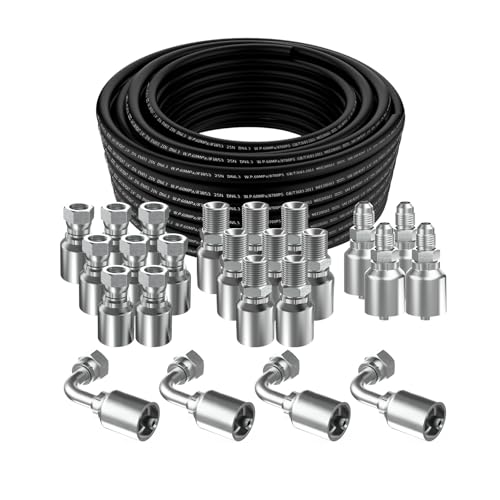
The CAMUUN hose uses synthetic rubber with two steel wire braids and a fabric outer layer. It delivers up to 8700 PSI and comes in a 100-foot length with a 1/4 inch ID and 0.59 inch OD. It’s designed for robust industrial hydraulics, offering strong resistance to oil and weathering. Best for long runs and high-pressure tasks; caution that longer hoses may be heavier and less maneuverable in tight spaces.
Buying Guide: Key Considerations For 1/4 Hydraulic Hoses
- Pressure rating: Match the hose to your system’s working pressure. Higher PSI ratings provide more headroom for surge and peak demands.
- Length and routing: Longer hoses reduce the need for extra fittings but add weight and potential for kinks. Consider reels or guides for organization.
- Reinforcement: Two-wire braid hoses offer greater abrasion resistance and durability under high pressures than single-braid designs.
- Temperature range: Ensure the hose can operate in your environment, including extreme cold or heat.
- Material compatibility: Synthetic rubber cores resist hydraulic fluids and oils; verify compatibility with your specific hydraulic oil mix.
- Fittings and compatibility: Check the fitting types (JIC, NPTF, etc.) and ensure they match your hydraulic components to avoid leaks.
- Explosion-proof / safety features: Some hoses specify explosion-proof or high-visibility design; consider if your application requires it.
Frequently Asked Questions
- What does 1/4″ hydraulic hose mean?
- Which hose is best for long outdoor runs?
- Can I use these hoses with any hydraulic fluid?
- What should I consider when choosing length?
- Are shorter hoses easier to manage?
- What maintenance helps prolong hose life?
It refers to the inner diameter of the hose, which impacts flow and compatibility with fittings and adapters in hydraulic systems.
Options with durable outer fabric and two steel braids and higher pressure ratings are better suited for exposed environments and longer runs.
Most are designed for common hydraulic oils, but always verify chemical compatibility with the hose core material.
Consider the distance between devices, the need for movement, and whether a coiled or fixed-length hose better suits your workflow.
Yes, shorter hoses are typically easier to route in compact spaces, but may require more fittings if multiple connections are needed.
Regularly inspect for signs of wear, replace worn fittings promptly, and store hoses properly to prevent kinks and UV damage.