Looking for a reliable biomass wood pellet machine to convert waste wood, straw, or agricultural residues into fuel pellets? These machines are suited for small farms, workshops, and hobbyist users who want a steady pellet output without large industrial equipment. The top picks below explain who each model is best for, plus practical pros and limits to help you compare quickly.
Overview of five selected products:
| Product | Best For | Output | Notes |
|---|---|---|---|
| THUXEON 220V Wood Pellet Machine | Small-to-midsize operations needing 6mm pellets | Up to 60 kg/h | Large feed hopper and discharge port; 7500W |
| Bonxrdun Wood Chip Pellet Press | Heavy-duty, higher-volume needs | Up to 300 kg/h | 4 mm die; three-phase 220V |
| Yokoma Wood Pellet Machine 6MM | Energy-efficient compact setups | Up to 60 kg/h | Enlarged ports for easy handling |
| JARYANNIX 6mm Wood Pellet Maker | Small farms and agriculture waste | 130 lbs/h (≈59 kg/h) | Two-head rollers; 6mm pellets |
| Yokoma Wood Pellet Machine 8MM | Mix of feedstocks with larger pellets | Up to 60 kg/h | Eight-millimeter die option; similar power profile |
THUXEON 220V Wood Pellet Machine 6MM

Best for compact workshops and hobby farms needing 6mm pellets. This model runs on 220V three-phase power with a high 7500W motor and an estimated production of 60 kg/h. The large feed hopper (inside diameter 11 inches) supports convenient loading, while an enlarged discharge port helps reduce splashing during collection. The machine is designed with safety-minded features like an air switch for safer operation. Consider this model if you want reliable, steady output in a smaller footprint and you have access to a robust 220V supply.
- Best for: small-to-midsize pellet projects, farms with limited space.
- Why selected: strong power for consistent 6mm pellets; practical feeding and collection design.
Caution: Ensure compatible electrical setup and safety clearances for the three-phase 220V supply. Pellet quality can vary with feedstock moisture.
Bonxrdun Wood Chip Pellet Press
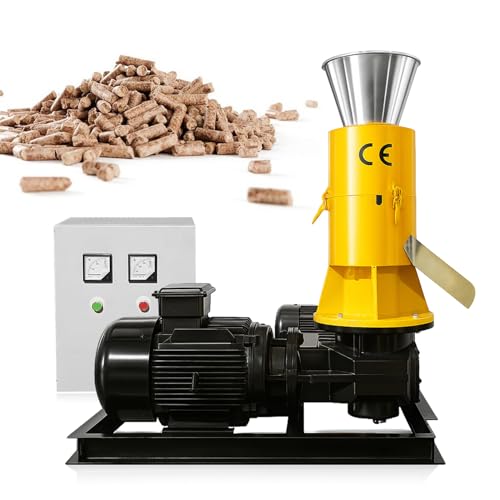
Best for heavy-duty use with higher throughput. This 15 kW industrial motor version delivers around 300 kg/h of pellet output, suitable for farm-scale or small-plant pellet production lines. It uses a 250 mm wide die with 4 mm opening, paired with dual rollers to optimize consistency. The system requires a three-phase 220V, 60 Hz supply for stable operation. Choose this if you anticipate frequent, longer production runs and need robust efficiency.
- Best for: higher-volume biomass pellet production in small plants or farms.
- Why selected: proven high-throughput capability and a durable dual-roller configuration.
Caution: Requires proper three-phase electrical infrastructure and space for installation. Heavyweight equipment may demand reinforced mounting and intake clearance.
Yokoma Wood Pellet Machine 6MM

Best for energy-conscious users who still want solid output. The Yokoma 6MM model mirrors the 60 kg/h range and 7500W power profile, with a widened discharge port to minimize pellet splatter and improve collection. It emphasizes efficient use of straw, waste wood, and other agricultural byproducts. This option is ideal when feedstock quality and moisture are variable but you still need reliable pellet production on a smaller scale.
- Best for: users prioritizing ease of loading and cleaner pellet collection.
- Why selected: consistent 6mm pellets with practical discharge design for cleaner work areas.
Caution: Performance depends on feedstock moisture and uniformity; acclimate to feedstock prep for best results.
JARYANNIX 220V Three-Phase 6mm Wood Pellet Maker

Best for small farms seeking a two-head roller system and 6mm pellets. This unit runs on 220V three-phase power with a 7.5 kW motor and an expanded feed hopper (11 inches) plus a discharge port designed to minimize pellet splash. The calorific value of pellets is in the typical 3000-4300 kcal/kg range, depending on feedstock. It is a solid pick for farmers looking to convert agricultural waste into usable fuel efficiently.
- Best for: small-farm pellet production and handling of diverse agricultural residues.
- Why selected: two-head rollers can improve homogenization and output stability.
Caution: Ensure feedstock is properly sized and dry to maintain pellet quality and machine life.
Yokoma Wood Pellet Machine 8MM
Best for applications needing larger 8mm pellets or varied feedstock sizes. This Yokoma model provides similar electrical requirements and pellet quality profiles while offering an 8mm die option, broadening compatibility with different biomass pellets. It remains a solid choice for users who want flexibility in pellet size for different heating systems or storage options.
- Best for: users who want the option to switch pellet sizes without changing machines.
- Why selected: practical size variation supports different boiler or stove inputs.
Caution: Larger pellet diameter may require adjustments to feed consistency and compression settings for optimum pellets.
Buying Guide: Key Considerations For Biomass Pellet Machines
- Intended output: Estimate daily pellet needs (kg/h) and select a model with sufficient throughput to avoid bottlenecks.
- Feedstock compatibility: Assess whether your typical input materials (sawdust, straw, agricultural residues) are well-suited to the machine’s die size and compression settings.
- Electrical requirements: Check voltage, phase, and amperage; many heavy units need three-phase power and dedicated circuits for stable operation.
- Pellet size and flexibility: If you plan to switch pellet diameters, prefer machines with multiple dies or easy die-swapping features.
- Footprint and installation: Ensure there is adequate space for loading, collection, and maintenance; heavier units may require floor reinforcement and mounting.
- Safety and maintenance: Look for safety switches, clear feeding paths, and straightforward access for cleaning and part replacement.
- Ease of use: A simple control panel, intuitive loading, and clear discharge paths reduce downtime and operator fatigue.
- Cost of ownership: Consider power consumption, maintenance frequency, replacement dies, and potential downtime related to mechanical wear.
Frequently Asked Questions
- What pellet diameter should I choose for my stove? Answer: Typical home stoves use 6mm pellets; larger diameters (8mm) may suit some boilers or storage constraints, but confirm your appliance compatibility.
- Do I need three-phase power for these machines? Answer: Most high-throughput models require three-phase power (often 220V, 60 Hz) for stable operation; check your electrical setup before purchasing.
- What feedstock works best? Answer: Sawdust, wood chips, agricultural residues, and straw are common; moisture content should be controlled to optimize compression and pellet quality.
- Is maintenance labor-intensive? Answer: Regular cleaning of the die area and feed hopper helps maintain performance; check for wear on rollers and dies and replace as needed.
- Can I scale production later? Answer: Some models offer higher-throughput variants or multi-die options, which support scaling; plan for electrical capacity and space when upgrading.
- Are these machines safe for beginners? Answer: Yes, with proper safety practices and training; follow included safety features and manufacturer guidelines during operation.