When choosing a high pressure hydraulic hose, consider compatibility with your system, pressure rating, length, and the environment where the hose will operate. The top products below are best for different buyers: contractors needing long, durable lines; shop floors requiring strong wear resistance; farm and agricultural setups needing versatile fluids; and users wanting quick-connect fittings for complex configurations. The following summary helps compare key options at a glance.
| Product | Length | Max Pressure | Inner Diameter | |
|---|---|---|---|---|
| VEVOR Hydraulic Hose 3/8″ x 100 ft | 100 ft | 4800 PSI | 3/8 inch | |
| VEVOR Flexible Hose 1/2″ x 100 ft | 100 ft | 4000 PSI | 1/2 inch | |
| VEVOR 328 Feet Hose | 328 ft | 5000 PSI | 3/8 inch | |
| Racewill 33 ft 3/8″ Hose | 33 ft | 7687 PSI | 3/8 inch | |
| Racewill 25 ft 1/2″ Hose | 25 ft | 5800 PSI | 1/2 inch |
VEVOR Hydraulic Hose 3/8″ x 100 Ft – 4800 PSI
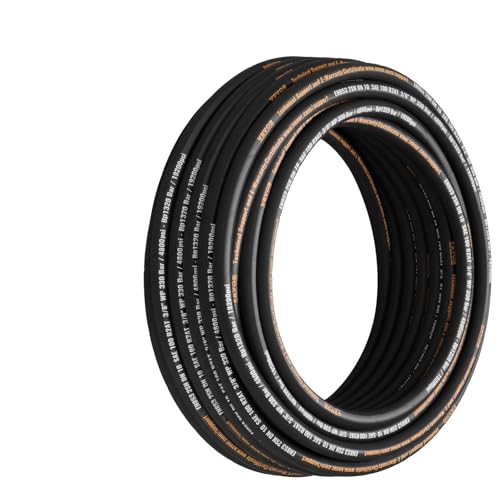
Best for: Contractors and shop workers needing a long, tough line for routine hydraulic tasks. This hose uses two high-tensile steel wire braid reinforcements and a protective outer cover to resist abrasion and weather exposure. The 100-foot coil simplifies routing in workshops or on job sites. It’s suited for systems where a 4800 PSI working pressure is adequate and where oil resistance and chemical compatibility are important.
Why selected: The dual wire braid and synthetic rubber composition provide strength and flexibility, while the fabric outer cover offers additional protection. The long length reduces the need for multiple joints, improving reliability on extended runs. A potential limitation is that the 3/8″ ID size may require careful system matching to maintain flow.
Caution: Ensure proper fittings and crimping are used to prevent leaks under high pressure. Check compatibility with your hydraulic fluid type to avoid material degradation over time.
VEVOR Flexible Hydraulic Hose 1/2″ x 100 ft – 4000 PSI
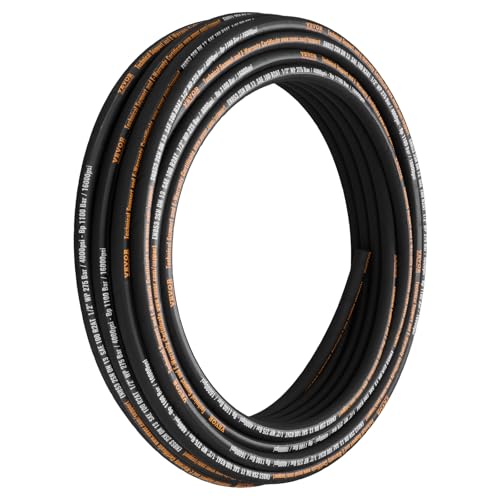
Best for: General hydraulic tasks in industrial or agricultural settings where a mid-size ID and good all-around performance are needed. The 100-foot length supports longer routes, while the 4000 PSI rating is sufficient for many standard hydraulic systems. The dual steel wire braid reinforces durability and abrasion resistance.
Why selected: The hose balances durability with flexibility, and the material resists oil and chemicals. The outer cover improves weather and ozone resistance, making it suitable for outdoor use. A potential limitation is the 4000 PSI limit, which may not fit ultra-high-pressure applications.
Caution: Avoid exposing the hose to incompatible fluids that could degrade synthetic rubber or the braid reinforcement over time.
VEVOR 328 Feet, 3/8″ Hydraulic Hose – 5000 PSI

Best for: Projects requiring very long hose runs with high pressure, such as large machinery setups or expansive hydraulic networks. The 5000 PSI max makes it suitable for demanding systems, while the 3/8″ ID maintains a balanced flow for most applications.
Why selected: The length and reinforced construction enhance system connectivity across extensive areas. The hose’s corrosion resistance helps it endure various hydraulic fluids and environmental conditions. A limitation is its substantial total length, which may require careful storage and handling.
Caution: Long hoses can be heavier and harder to mount; plan routing to minimize sag and bending that could stress the braid under load.
Racewill 33 ft 3/8″ Hydraulic Hose with Fittings – 7687 PSI

Best for: High-pressure short runs where compact routing and quick connections are essential. The included 16 fittings give flexible installation options for JIC and NPTF configurations, making it a good choice for technicians who need fast, varied connections.
Why selected: The exceptionally high working pressure supports systems that push the limits of standard hoses. The 33-foot length is ideal for tight spaces or frequent repositioning. A limitation is the shorter length, which may not suit longer routings without additional hose segments.
Caution: Ensure all fittings are properly crimped and matched to the hose to avoid leaks or stress failures under high pressure.
Racewill 25 ft 1/2″ Hydraulic Hose with Fittings – 5800 PSI

Best for: Mid-length, high-pressure needs with a need for a robust fitting set. The 1/2″ ID supports higher flow requirements in compact spaces, suitable for mobile units or workshops with limited maneuvering room.
Why selected: The 5800 PSI rating and two-wire braid design offer strong resistance to bursting and wear. The included fittings support diverse configurations and facilitate rapid assembly. A limitation is potential stiffness at very low temperatures, which can affect flexibility.
Caution: Use compatible hydraulic fluids and verify that the crimped fittings withstand frequent cycling under high pressure to prevent leaks.
Racewill 33 ft 1/4″ Hydraulic Hose – 10150 PSI

Best for: Very high-pressure, compact installations where space is limited and high quality fittings are required. The 1/4″ ID helps with precise control where high pressure is essential but volume is secondary.
Why selected: This hose handles extreme pressures and remains flexible for tight routing. The 33-foot length is convenient for mobile setups and service calls. A limitation is the smaller inner diameter, which reduces flow volume at a given pressure compared to larger hoses.
Caution: Ensure proper sizing in systems where volume matters; a smaller ID can lead to higher velocity and potential cavitation if not matched to the pump output.
Buying Guide: Key Considerations for High Pressure Hydraulic Hoses
- Pressure rating: Match the hose’s working pressure to your hydraulic system. Exceeding ratings can cause failure or leaks.
- Inner and outer diameters: ID affects flow; choose ID large enough to meet flow requirements without excessive pressure drop. Outer diameter and braid type impact durability and flexibility.
- Reinforcement: Two-wire braid vs. single braid offers different wear resistance and kink protection. Heavily reinforced hoses perform better under high pressure and rough handling.
- Length and routing: Longer hoses reduce joints but add weight and potential sag. Plan routing to minimize sharp bends and abrasion points.
- Fluid compatibility: Synthetic rubber and braid materials should resist the hydraulic fluids used in your system. Some hoses resist oil, solvents, or water-based fluids better than others.
- Temperature range: Ensure the hose operates within your system’s temperature, including ambient and fluid temps. Extreme temperatures can affect flexibility and strength.
- Fittings and compatibility: Confirm JIC, NPTF, or other fittings match your components. Consider including a fitting kit for future repairs or configurations.
- Durability needs: Outdoor or chemical-exposed environments require abrasion and ozone resistance, plus weatherproof outer covers.
FAQ: Quick Answers for Buyers
- What does PSI indicate for hydraulic hoses?
– PSI is the working pressure rating indicating the maximum pressure the hose can safely handle under typical use. - Is a longer hose always better?
– Longer hoses reduce joints but can add weight, require careful routing, and may introduce more potential leak points if not installed properly. - What is the benefit of two-wire braid reinforcement?
– Two-wire braids improve wear resistance, kink resistance, and high-pressure stability in demanding applications. - How do I choose the right inner diameter?
– Choose ID based on required flow and pressure; a larger ID increases flow but may be unnecessary for tight spaces or high-pressure, low-volume tasks. - Can these hoses be used with all hydraulic fluids?
– Material compatibility varies. Check the hose’s stated fluid compatibility to avoid chemical degradation. - Do I need to replace fittings when replacing a hose?
– It’s recommended to verify and, if needed, replace fittings to ensure a secure, leak-free connection and correct pressure handling.