Looking for a reliable 1.5 hp electric motor for air compressors, workshop tools, or agricultural gear? This guide highlights five top 1.5 hp motors, suitable for single-phase or three-phase setups, with practical notes on rotation direction, frame size, and shaft specifications. Ideal buyers include hobbyists upgrading old equipment, small-shop operators, and DIYers needing versatile, durable motors for rotating equipment. The following table summarizes key details to compare at a glance.
| Product | Brand | Voltage | RPM | Frame | Rotation |
|---|---|---|---|---|---|
| VEVOR 1.5HP Electric Motor | VEVOR | 115/230V | 1725 | 56C | CW/CCW |
| 1.5HP Electric Motor 3450RPM | Cuilvu | 115/230V | 3450 | 56C | CW/CCW |
| Electric Motor 1.5HP for 56 Frame | GCCSJ | 115/230V | 3450 | 56 | CW/CCW |
| 1.5HP 1750 RPM Three-Phase Motor | Cuilvu | 230/460V | 1750 | 56C | — (Three-Phase) |
| VEVOR 2HP Air Compressor Motor | VEVOR | 115/230V | 3450 | 56 | CCW/ CW |
VEVOR 1.5HP Electric Motor 1725 RPM

Best for shops needing a simple, reversible single-phase motor. This 56C frame motor runs at 1725 RPM, suitable for lower-speed drives like belt-driven tools and air compressors. The motor supports both CW and CCW rotation for flexible installations. Lightweight frame and dual voltage options (115V/230V) make it a strong all-around choice. Caution: verify wiring and shaft compatibility before mounting.
1.5HP Electric Motor 3450RPM Reversible

Best for higher-speed demands in agricultural machinery and general equipment. With 3450 RPM and a 56C frame, this single-phase motor supports CW/CCW operation and 115/230V input. Its compact TEFC design emphasizes efficient cooling and protection. Choose this if you need snap-in high-speed operation, but avoid if your application requires slower, torque-heavy starts.
Electric Motor 1.5HP, 3450RPM 56 Frame
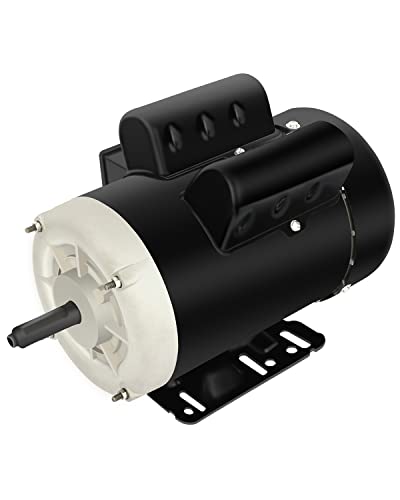
Best for general purpose single-phase applications requiring robust TEFC protection and high efficiency. This GCCSJ motor features a 5/8″ keyed shaft, 1.88″ shaft length, and CW/CCW rotation. It’s well-suited for running small lathes, pumps, or compressors where space is limited. Limitation: data does not specify service factor beyond typical TEFC protection, so plan for standard duty operations.
1.5 HP 1750 RPM Three-Phase Motor

Best for three-phase power setups in larger or climate-controlled shops, especially where 230/460V availability exists. This 56C TEFC frame delivers 1.5 HP at 1750 RPM with a 5/8″ shaft. It’s a reliable choice for belt-driven machines or fans. If your space lacks a three-phase supply, this product is less suitable unless a phase converter is used.
VEVOR 2HP Air Compressor Motor

Best for heavier-duty air compressor applications needing more horsepower. This 2HP motor runs at 3450 RPM with a 56 frame and 5/8″ keyed shaft, offering CCW or CW operation. It handles higher loads and continuous duty in clean environments. Limitation: higher current draw at startup may require a robust electrical supply and proper wiring.
Buying Guide
What should I consider when choosing a 1.5 hp motor?
Key factors include voltage (115V vs 230V), speed (3450 vs 1725 RPM), frame size (56C/56Y), shaft diameter and length, and rotation direction (CW/CCW). For belt-driven tools, a 56C frame with a 1.88″ shaft length is a common match.
Single-phase vs three-phase: which is right?
Single-phase motors (115/230V) are easier to wire for typical home workshops. Three-phase motors (230/460V) offer smoother operation and higher efficiency in larger setups. If you only have single-phase power, focus on 115V/230V single-phase options or prepare for a phase converter if you need three-phase.
Open Drip Proof (ODP) vs totally enclosed fan cooled (TEFC)
TEFC motors protect internal components and are suited for dirty or damp environments. ODP (open drip proof) is best in clean, dry settings. Consider TEFC for shop environments where dust and moisture are possible.
Rotation direction and installation
Opt for CW/CCW reversible motors to simplify wiring and orientation during installation. This flexibility helps when replacing older equipment without reconfiguring mounting hardware.
Mounting and shaft details
Check the shaft diameter (commonly 5/8″) and shaft length (usually 1.88″) to ensure compatibility with pulleys, couplings, or gears. A keyed shaft is important for slip-free power transfer in belt drives.
Durability and installation tips
Look for robust steel frames and corrosion-resistant coatings. Ensure adequate ventilation, secure mounting, and proper electrical protection. Verify that the motor’s amperage at full load aligns with your circuit capacity to avoid breaker trips.
FAQ
- What is the difference between 1725 RPM and 3450 RPM motors? 1725 RPM motors are low-speed, high-torque options suitable for belt-driven machines; 3450 RPM motors provide higher speed and efficiency for lighter, high-speed tasks.
- Do I need a phase converter for three-phase motors? If your power supply is only single-phase, yes, a phase converter or VFD can enable operation of a three-phase motor.
- Is a 56C frame compatible with most pulleys? Yes, the 56C frame is a common standard for many small machines and allows broad compatibility with belts and pulleys.
- Can these motors run continuously? Most are designed for continuous duty in typical workshop environments, but verify the specific motor’s duty rating for your application.
- What maintenance is required? Regularly check lubrication points, terminal connections, and mounting bolts. Keep cooling paths clear and inspect the shaft and keyway for wear.
- Which motor is best for air compressors? Motors marketed as air compressor motors with 56 frame, 5/8″ shaft, and appropriate voltage often provide compatible mounting and torque for compressors; consider 3450 RPM versions for quick cycling compressors and 1725 RPM for torque-heavy setups.