Silicon nitride ball bearings deliver high hardness, excellent wear resistance, and superb stability in demanding environments. This guide highlights top options for buyers seeking precision ceramic balls for micro bearings, hobby projects, or industrial uses. The featured products are ideal for applications requiring low friction, self-lubricating behavior, and resistance to heat and chemicals. Read on to find the best choice for your tolerance, size, and budget, with clear guidance on who each product is best for.
Summary of selected products:
| Product | Diameter (mm) | Material | Best for |
|---|---|---|---|
| uxcell 2.5mm Ceramic Bearing Balls | 2.5 | Si3N4 Silicon Nitride | Small-scale projects needing precise micro-bearings |
| FOCMKEAS 7/32″ Ceramic Bearing Ball | 5.556 | Si3N4 Silicon Nitride | High-precision parts with modest size |
| uxcell 1/4 Inch Ceramic Bearing Balls | 6.35 | Si3N4 Silicon Nitride | General purpose precision components |
| uxcell 2mm Ceramic Bearing Balls | 2.0 | Si3N4 Silicon Nitride | Compact assemblies requiring tight tolerances |
| FOCMKEAS 3mm Ceramic Bearing Ball | 3.0 | Si3N4 Silicon Nitride | Moderate size, high-hardness applications |
| Silicon Carbide Ball Bearings (3mm) | 3.0 | SiC | Extreme chemical or heat resistance needs |
uxcell 2.5mm Ceramic Bearing Balls

Diameter: 2.5 mm. Material: Silicon nitride Si3N4. Finish: G5 precision grade with a smooth surface. Features include self-lubricating behavior and higher hardness than chrome steel. Best for: small, high-precision assemblies where weight and friction must be minimized. Caution: very small size can complicate handling in bulk, and tolerance matters for high-precision setups.
FOCMKEAS 7/32″ Ceramic Bearing Ball

Diameter: 5.556 mm. Material: Si3N4, G5 precision, tolerance 5/1,000,000. Package includes 10 pieces. Features include very high hardness (up to 1700HV), excellent high-temperature resistance (up to 2200°F), and good self-lubrication. Best for: mid-size mechanical parts requiring durable, stable performance under heat. Caution: data indicates high-temperature capability, but check your thermal exposure in real-world use.
uxcell 1/4 Inch Ceramic Bearing Balls

Diameter: 6.35 mm. Material: Si3N4, G5 precision grade, smooth surface. Features include self-lubrication and higher hardness than chrome steel. Best for: mid-size precision components and hobbyist projects needing robust ceramic balls. Caution: ensure compatibility with surrounding components to avoid over-tolerance issues.
uxcell 2mm Ceramic Bearing Balls

Diameter: 2.0 mm. Material: Si3N4, G5 precision, smooth surface. Self-lubricating and higher hardness than chrome steel. Best for: small, precise assemblies where weight reduction is critical and fit tolerances are tight. Caution: very small parts require careful handling to prevent loss or misplacement during assembly.
FOCMKEAS 3mm Ceramic Bearing Ball

Diameter: 3.0 mm. Material: Si3N4, G5 precision, tolerance 5/1,000,000. Package includes 25 pieces. Smooth surface, uniform size, good self-lubricating properties. Best for: moderate-sized precision mechanisms that demand reliable wear resistance. Caution: verify fit with housing to avoid interference in tight assemblies.
uxcell 50pcs Ceramic Bearing Balls 3mm

Diameter: 3.0 mm. Material: Si3N4, G5 precision. Smooth surface and good dimensional stability. Best for: bulk applications where multiple precise balls are needed for small- to mid-sized assemblies. Caution: bulk packs may include minor size variation; check tolerance compatibility with your design.
Silicon Carbide Ball Bearings, 3mm (Pack of 15)
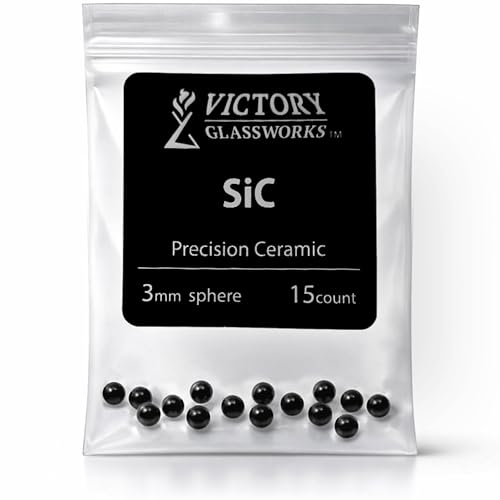
Diameter: 3.0 mm. Material: Silicon Carbide (SiC). Features include high purity, mirror-polished finish, and precision ground surfaces. Best for: applications requiring exceptional chemical resistance and hardness beyond silicon nitride, such as harsh environments or high-temperature settings. Caution: SiC can be less readily self-lubricating in some assemblies compared to Si3N4; plan lubrication strategy accordingly.
Buying Guide: Choosing The Right Silicon Nitride Bearing Balls
- Size and tolerance: Match ball diameter to your bearing housing and required fit. Tighter tolerances (like G5) offer higher precision but may cost more.
- Material and heat resistance: Silicon nitride (Si3N4) provides high hardness and stability; consider silicon carbide (SiC) for extreme chemical or thermal exposure.
- Surface finish: Smooth, crack-free surfaces improve life and reduce friction. Look for fine grinding and uniform sizing.
- Lubrication needs: Ceramic balls are often self-lubricating, but verify system lubrication requirements for your assembly.
- Best-for guidance: Small parts benefit from micro-balls; mid-size parts balance precision and durability; bulk needs favor larger packs with consistent quality.
- Compatibility and housing: Ensure your bearings’ inner and outer races, cages, and seals align with the ball diameter and tolerances you select.
Frequently Asked Questions
- What is the main advantage of silicon nitride balls?
They offer higher hardness, lower density, good wear resistance, and better high-temperature performance compared with chrome steel. - Are silicon nitride balls self-lubricating?
Yes, many Si3N4 balls have self-lubricating properties that reduce friction in bearing assemblies. - Which size should I choose for a small project?
Start with 2.0–3.0 mm range for compact assemblies, then adjust based on housing clearance and required precision. - When would I choose silicon carbide over silicon nitride?
If the environment requires extreme chemical resistance or higher thermal stability beyond Si3N4, SiC may be preferred. - Do these balls require special handling?
Yes, due to their small size and precision, handle with clean tools and avoid dropping to prevent cracks or chipping. - Can I mix different materials in one bearing?
Mixing materials is generally not recommended; match materials to ensure consistent wear and thermal behavior.