Choosing the right spot welder for sheet metal involves balancing power, versatility, and safety. This guide highlights five dependable options that perform well on carbon steel, aluminum, and nickel-sheet assemblies. Each model below is suited for DIY projects, small shops, and professional tasks that require precise, durable welds. Use the buying guide at the end to compare features and make an informed decision.
Summary table of selected products:
| Product | Brand | Notable Feature | Power/Capacity |
|---|---|---|---|
| Stark USA Portable Spot Welder 1/8″ | Stark USA | High output, replacement tips included | 2.5KVA input, up to 6750A |
| Stark USA Portable Spot Welder 1/8″ 110V | Stark USA | Long throat depth, solid steel tips | 1.5KVA input, up to 5500A |
| AWithZ 9000W Battery Spot Welder | AWithZ | Dual pulse, foot pedal option | 9000W |
| 8000W Spot Welder Docreate | Docreate | Dual pulse, wide power knob | 8000W |
| Awgem Battery Spot Welder | Awgem | LCD display, manual/auto modes | 0.1-0.2 mm nickel sheets |
Stark USA Portable Spot Welder 1/8″ 220V Overview
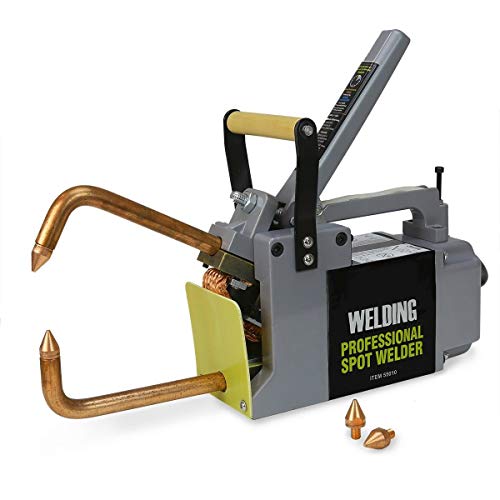
The Stark USA 1/8″ spot welder is designed for metal fabrication tasks requiring robust performance on carbon steel and aluminum sheets. It features a high power outlet capable of delivering swift welds across varying material thicknesses. The unit ships with an extra set of welding tips for easy maintenance and replacement, enabling continuous operation across multiple projects. Its 2.5KVA input rating offers strong weld currents, making it suitable for light to medium-duty welding tasks in a shop or field environment.
Key considerations
– Suitable for carbon steel and aluminum sheet welding
– Includes replacement tips for quick maintenance
Stark USA Portable Spot Welder 1/8″ 110V – Single Phase

This slightly lighter Stark USA model operates at 110V with a 1.5KVA input capacity and up to 5500A output. It provides a practical option for hobbyists and small shops that require reliable spot welding without heavy equipment. Its design emphasizes durability with steel welding tips capable of delivering consistent welds on thin to moderately thick sheets, making it a versatile choice for automotive and electronics applications.
Key considerations
– Lower voltage option for basic workshop use
– Durable tips designed for stable, repeatable welds
AWithZ 9000W Battery Spot Welder

The AWithZ 9000W model targets high-demand battery pack soldering and precision spot welding. It supports a dual pulse output and a rotary control with 100-level power adjustment, enabling delicate work on small-diameter cells and batteries as well as more robust tasks. The unit emphasizes safety with thermal protection and a compact hand-controlled trigger system that can switch between hand-held and foot-pedal modes. It’s particularly well-suited for DIY battery pack assembly and electronics projects where tight control over weld strength matters.
Key considerations
– Precision control for battery packs and electronics
– Safety-focused with thermal monitoring
Docreate 8000W Spot Welder – DIY Kit

The Docreate 8000W spot welder is designed for high-volume or hobbyist battery work, offering a dual pulse output and a foot pedal option. It supports welding of nickel strips and thin sheets within 0.1-0.3 mm and includes a visible control interface with a compact, portable form. An adjustable power knob lets users fine-tune output to suit various materials, making it a flexible option for those building battery packs, electronics assemblies, or metal hardware projects that demand precise welds.
Key considerations
– Strong, adjustable power for precise, small-diameter welds
– Foot pedal option for hands-free operation
Awgem Battery Spot Welder with LCD Display

The Awgem SH2 battery spot welder emphasizes one-handed operation and an LCD real-time display. It supports 0.1-0.2 mm nickel sheet welding with manual and automatic modes, making it suitable for precise battery work and small assemblies. The ergonomic design aims to improve efficiency for repetitive tasks, while the dual-mode functionality provides flexibility across different battery types and cell configurations. This model is notable for its compact form factor and easy control scheme.
Key considerations
– Real-time display for weld timing and temperature
– Flexible modes for precision battery work
Buying Guide: Key Purchase Considerations
- Application type: Determine whether you primarily weld battery packs, nickel sheets, or thicker carbon steel. Higher-wattage units handle thicker or multiple sheets, while precision models excel with delicate battery work.
- Power and pulse options: Look for dual-pulse or single-pulse capabilities and adjustable output ranges. Dual pulses can improve weld consistency and reduce oxidation layers on metals.
- Voltage and input rating: 110V models are common for home shops; 220V variants deliver higher current and faster welds for heavier tasks. Consider your available power supply and electrical setup.
- Tips and consumables: Reusable tips and easy replacement processes minimize downtime. Check availability of compatible tips for your target materials and thicknesses.
- Safety features: Thermal protection, automatic shutoff after inactivity, and overheat alerts help protect both user and workpieces, especially when welding batteries or thin metals.
- Portability vs. capacity: Portable handheld welders are convenient for on-site work; heavier units offer higher current for demanding projects. Choose based on workspace and transport needs.
- Maintenance and support: Look for kits that include replacement parts or offer accessible after-sales support. This reduces downtime during long projects.
When selecting among these options, prioritize the balance between power, control, and the specific sheet metal thickness you expect to weld. For battery pack work, models with precise control and LCD feedback are beneficial. For automotive or metal fabrication tasks, a higher wattage with reliable tips and robust build quality provides the best long-term value.