Choosing the right moisture meter helps homeowners, renovators, and inspectors identify hidden dampness, prevent mold growth, and avoid costly repairs. The following five meters are selected for versatility—pin-type and pinless options, range depths, non-destructive testing, and clear indicators—across walls, ceilings, drywall, wood, and concrete. Each product includes essential features like backlit displays, audible alerts, and easy-to-read indicators to support accurate moisture assessments in American homes.
Summary table of chosen products
| Product | Brand | Key Features | Depth/Material |
|---|---|---|---|
| General Tools MMD4E Digital Moisture Meter | General Tools | Pin-type moisture detection, backlit LCD, audible/visual alerts | Wood, drywall; pins |
| Klein Tools ET140 Pinless Moisture Meter | Klein Tools | Pinless, non-destructive detection, EMF technology | Drywall, wood, masonry; up to 3/4″ deep |
| RDINSCOS Pinless Moisture Meter – Drywall & Concrete | RDINSCOS | 3-color LCD, non-invasive; deep scan | Walls, wood, drywall, concrete |
| General Tools MMD7NP Digital Moisture Meter | General Tools | Pinless, non-invasive; auto-calibration; backlit display | Wood, drywall; up to 3/4″ deep |
| Proster Rechargeable Moisture Meter | Proster | 5 modes (INDEX, concrete, cement, plaster, wood); 40mm depth; rechargeable | Walls, floors, ceilings; non-invasive |
General Tools MMD4E Digital Moisture Meter
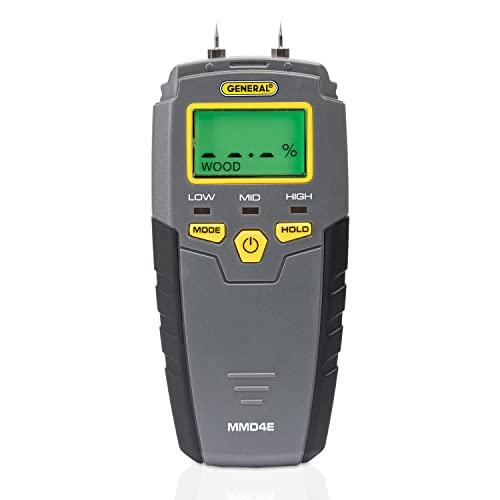
The MMD4E uses pin-type detection to measure moisture levels in materials such as wood and drywall, helping identify remediation needs. It features a backlit LCD display and audible/visual alerts indicating high, medium, or low moisture content. It comes with extra stainless pins and a protective cap that doubles as a calibration checker, plus a 9V battery for operation. This meter enables quick, on-site readings to guide mold prevention and water-damage prevention strategies.
Klein Tools ET140 Pinless Moisture Meter

The ET140 offers pinless, non-destructive moisture detection using electromagnetic field (EMF) technology. It detects relative moisture content in drywall, wood, and masonry, and can read moisture through surfaces without drilling or pin insertion. This is ideal for quick screening to locate damp areas behind walls, floors, or ceilings, reducing surface damage while identifying potential leaks or water intrusion points.
RDINSCOS Pinless Moisture Meter — Drywall & Concrete

RDINSCOS’ pinless meter is designed for drywall and concrete, featuring a 3-color LCD and audible alarm. It provides non-invasive readings to identify hidden moisture in walls and other substrates, making it suitable for home inspections and renovation projects where surface damage is a concern. The device emphasizes deep sensing without leaving marks or holes.
RDINSCOS Pinless Moisture Meter for Walls

This RDINSCOS model focuses on accuracy and ease of use with non-invasive readings and deep sensing up to 0.75 inches. It targets drywall, wood, and masonry, helping detect dampness early to prevent long-term issues during repairs, renovations, or inspections. The device is designed to be simple for real estate professionals and DIY homeowners alike.
General Tools MMD7NP Digital Moisture Meter

The MMD7NP is a pinless, non-invasive meter that reads moisture up to 3/4 inch deep. It features a 2″ diagonal backlit LCD, a 3-color LED bar graph, hold function, and audible alerts. Its design minimizes surface damage while delivering quick, broad-read moisture data across wood, drywall, and masonry substrates, supporting fast decision-making during inspections and renovations.
Proster Rechargeable Moisture Meter

This Proster meter offers five modes (INDEX, concrete, cement, plaster, wood) and a non-invasive measurement with a penetration depth up to 40mm. It features a 3-color display, audible and visual alerts, and a rechargeable battery with Type-C charging. The device is designed for flexible use across walls, ceilings, and floors, enabling quick checks for water stains and potential moisture hotspots without damaging materials.
Buying Guide: Key Considerations For Choosing A Moisture Meter
- Measurement method: Pin vs. pinless. Pin-type meters provide absolute moisture content in a material but require pin penetration, potentially leaving small marks. Pinless meters are non-destructive and ideal for quick surveys on walls, ceilings, and finished surfaces.
- Detection depth: Deeper readings help evaluate moisture behind surfaces such as drywall or plaster. Pinless meters typically offer shallow to moderate depths (up to ~0.75 inches or more in some models), while pin-type meters measure moisture content at the pin locations and can sometimes detect deeper moisture depending on the probe.
- Material compatibility: Choose meters that support common building materials (wood, drywall, concrete, masonry). Some models include modes tailored to concrete, plaster, or wood for more accurate readings.
- Display and alerts: A backlit LCD and color-coded indicators (green/yellow/red) or a 3-color LED bar help interpret results quickly, especially in low-light areas or busy work environments. Audible alerts add an extra layer of immediacy.
- Calibration and durability: Devices with auto-calibration or easy calibration checks reduce user error. Consider protective caps and rugged housing for job-site use.
- Power and usability: Rechargeable batteries and power-saving features extend field use. Look for hold and memory features to document readings during inspections or reports.
- Price-to-value balance: For regular home inspections or DIY projects, balance features such as depth, material modes, and ease of use against budget. Pinless options often appeal to those prioritizing non-destructive testing.
- Professional suitability: Inspectors may prioritize consistent accuracy, longer-term durability, and standardized readings. Homeowners may benefit from intuitive interfaces and clear alerts for quick maintenance decisions.
These considerations help compare the five selected moisture meters across detection methods, materials, and field-read practicality. When choosing, reflect on the target tasks—whether you need rapid spot checks, deep-detecting non-invasive scans, or a combination of both for ongoing home maintenance and safety.